

Many business leaders assume AI security works like traditional software protection, but agentic AI systems operate fundamentally differently. These autonomous agents learn continuously, access diverse data sources, and make independent decisions across your workflows. Unlike conventional automation that follows fixed scripts, agentic AI reasons and adapts, creating new security considerations that demand fresh approaches. Understanding these distinctions is essential for mid-sized companies looking to safely accelerate operational efficiency without compromising data integrity or compliance.
Table of Contents
- Understanding Agentic Ai Systems And Their Security Implications
- Core Architectural Considerations For Secure Agentic Ai Deployment
- Leveraging Agentic Ai For Workflow Automation While Managing Security Risks
- Choosing And Managing Secure Ai Agents: Best Practices And Future Outlook
- Explore Secure Ai Consulting And Managed It Services
- Frequently Asked Questions About Secure Agentic Ai Systems
Key takeaways
| Point | Details |
|---|---|
| Agentic AI transforms workflows | AI agents autonomously execute multi-step tasks, integrating human and AI collaboration across business operations. |
| Security requires new governance | Traditional cybersecurity models fail to address continuous learning and non-deterministic behavior in AI systems. |
| Architecture drives outcomes | Balancing data sovereignty, sub-second latency, and total cost determines long-term success and scalability. |
| Generalist agents need validation | Adaptable AI agents promise flexibility but demand rigorous enterprise testing before production deployment. |
| Adoption accelerates rapidly | Organizations deploying AI agents jumped from 12% in 2023 to 45% in 2025, signaling competitive urgency. |
Understanding agentic AI systems and their security implications
Agentic AI systems represent a fundamental shift in how businesses automate work. These systems don’t just execute predefined tasks. They reason through problems, plan multi-step solutions, and adapt their approach based on context and outcomes. An agentic AI can coordinate schedules, process documents across platforms, update records, handle approvals, and escalate exceptions without human intervention at every step.
This autonomy creates security challenges that traditional software protection cannot address. Conventional cybersecurity focuses on static code with predictable behavior. AI agent security must handle non-deterministic behavior and continuous learning cycles. Your agents access diverse enterprise data silos, synthesize information across boundaries, and make decisions that affect business outcomes in real time.
The risk profile changes dramatically. Agents learn and adapt continuously, meaning their behavior evolves beyond initial programming. They integrate tightly within workflows, touching sensitive data across departments. Their autonomous decision-making capabilities introduce unpredictability that requires new governance frameworks.
Unique security challenges include:
- Continuous learning creates drift from original training parameters
- Access to diverse data silos increases exposure surface area
- Autonomous decisions may conflict with compliance requirements
- Cross-boundary synthesis can inadvertently leak sensitive information
- Non-deterministic outputs complicate audit trails and accountability
Pro Tip: Establish comprehensive logging and traceability of AI agent actions from the design phase to maintain governance and ensure every decision can be reviewed and explained.
The agentic paradigm shift fundamentally changes how you approach enterprise AI adoption. You’re not just installing software. You’re integrating autonomous digital collaborators that require ongoing oversight, validation, and security management. Understanding this distinction helps you build secure AI systems for compliance that protect your operations while delivering measurable efficiency gains.
Core architectural considerations for secure agentic AI deployment
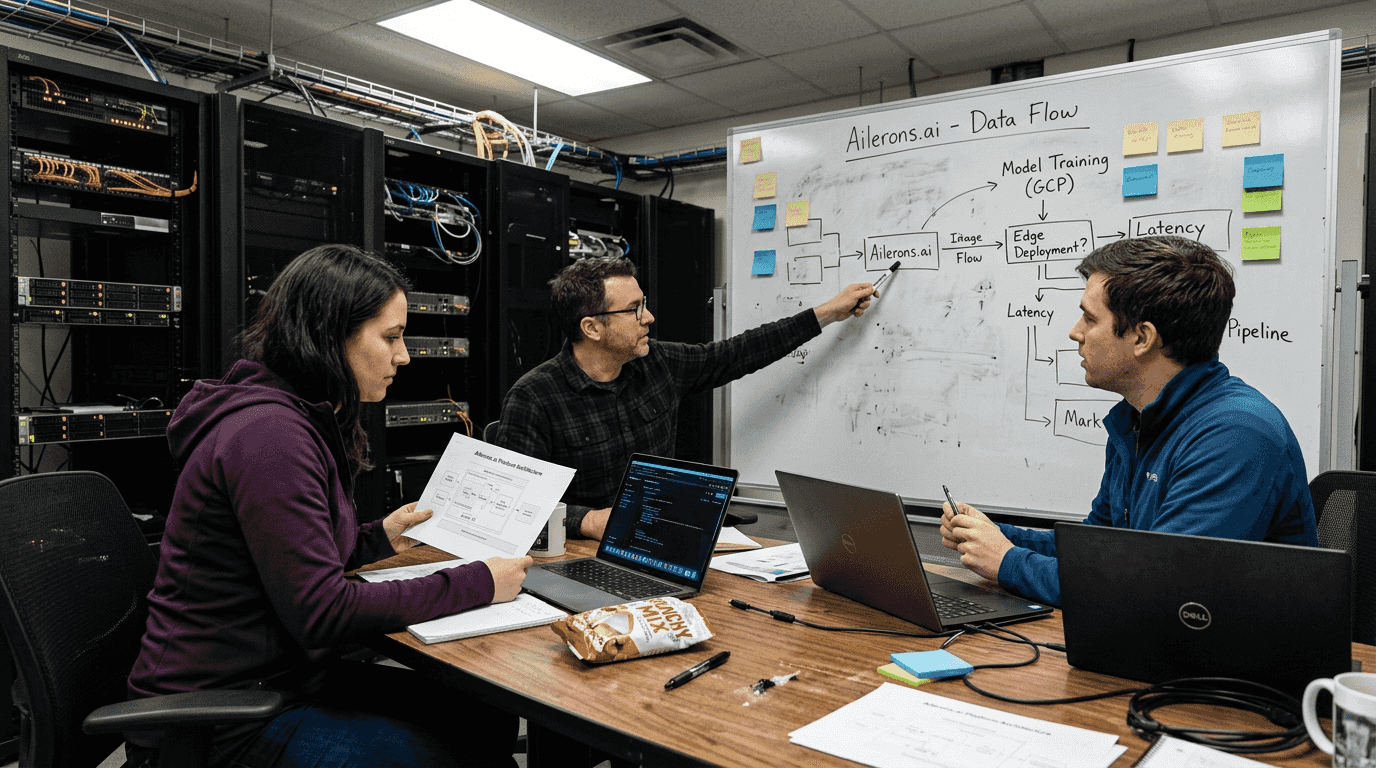
Architecture choices directly determine security outcomes in agentic AI systems. The design decisions you make today shape your ability to maintain control, ensure compliance, and scale efficiently over time. Building secure agentic AI requires deliberate planning across sovereignty, latency, cost, and governance dimensions.
Follow these steps to architect secure systems:
- Choose platforms ensuring data sovereignty and model selection control to prevent vendor lock-in and maintain regulatory compliance across jurisdictions.
- Design for sub-second latency with real-time context and orchestration layers that enable agents to respond immediately within operational workflows.
- Plan total cost of ownership over multi-year horizons, accounting for compute, storage, licensing, and integration expenses to avoid budget surprises.
- Implement shared memory architectures instead of traditional pipelines to support dynamic agent collaboration and context sharing.
- Build lifecycle management into the foundation for traceability, explainability, and continuous validation of agent behavior.
Enterprise AI deployments face a trilemma of data sovereignty, latency, and cost that incremental improvements cannot overcome. You must make deliberate trade-offs based on your specific operational requirements and risk tolerance.
Traditional pipeline architectures fail for agentic AI because they cannot support the dynamic collaboration and context sharing agents require. Shared memory and orchestration layers become essential infrastructure components.
| Dimension | Traditional AI Architecture | Agentic AI Architecture |
|---|---|---|
| Data sovereignty | Often cloud-dependent with limited control | On-premises or hybrid with full control |
| Latency | Batch processing acceptable | Sub-second real-time required |
| Cost structure | Predictable per-query pricing | Variable based on agent complexity |
| Scalability | Linear scaling with load | Dynamic scaling with business needs |
| Governance | Periodic audits sufficient | Continuous monitoring essential |
Pro Tip: Prioritize architectures with built-in lifecycle management for traceability and explainability, ensuring every agent decision can be audited and validated against compliance requirements.
These architectural foundations enable you to explore the future of operational AI with confidence. When you design for security from the start, you create systems that adapt and scale without compromising control. Learn more through our process automation tutorial for agentic AI to see these principles in action.
Leveraging agentic AI for workflow automation while managing security risks
Agentic AI transforms how mid-sized companies handle office workflows and operational efficiency. These systems deliver measurable benefits while introducing security considerations that must be managed proactively. Understanding both dimensions helps you maximize value while minimizing risk.
Practical benefits include:
- Automating repetitive tasks like data entry, document processing, and routine approvals without human intervention
- Dynamic learning and skill updates that improve performance over time without reprogramming
- Anticipating and mitigating security risks through pattern recognition and anomaly detection
- Scaling rapidly with business demand changes without proportional increases in staff or infrastructure
- Coordinating across systems to complete end-to-end workflows that previously required multiple manual handoffs
AI agents automate repetitive work, freeing human workers for creative tasks and enabling continuous skill deployment across your organization. This shift from task execution to outcome orchestration fundamentally changes how you structure teams and allocate resources.
Security risk management becomes a core feature rather than an afterthought. Agentic AI can autonomously anticipate, model, and mitigate operational, compliance, and security risks in real time. The same capabilities that enable workflow automation also support proactive threat detection and response.
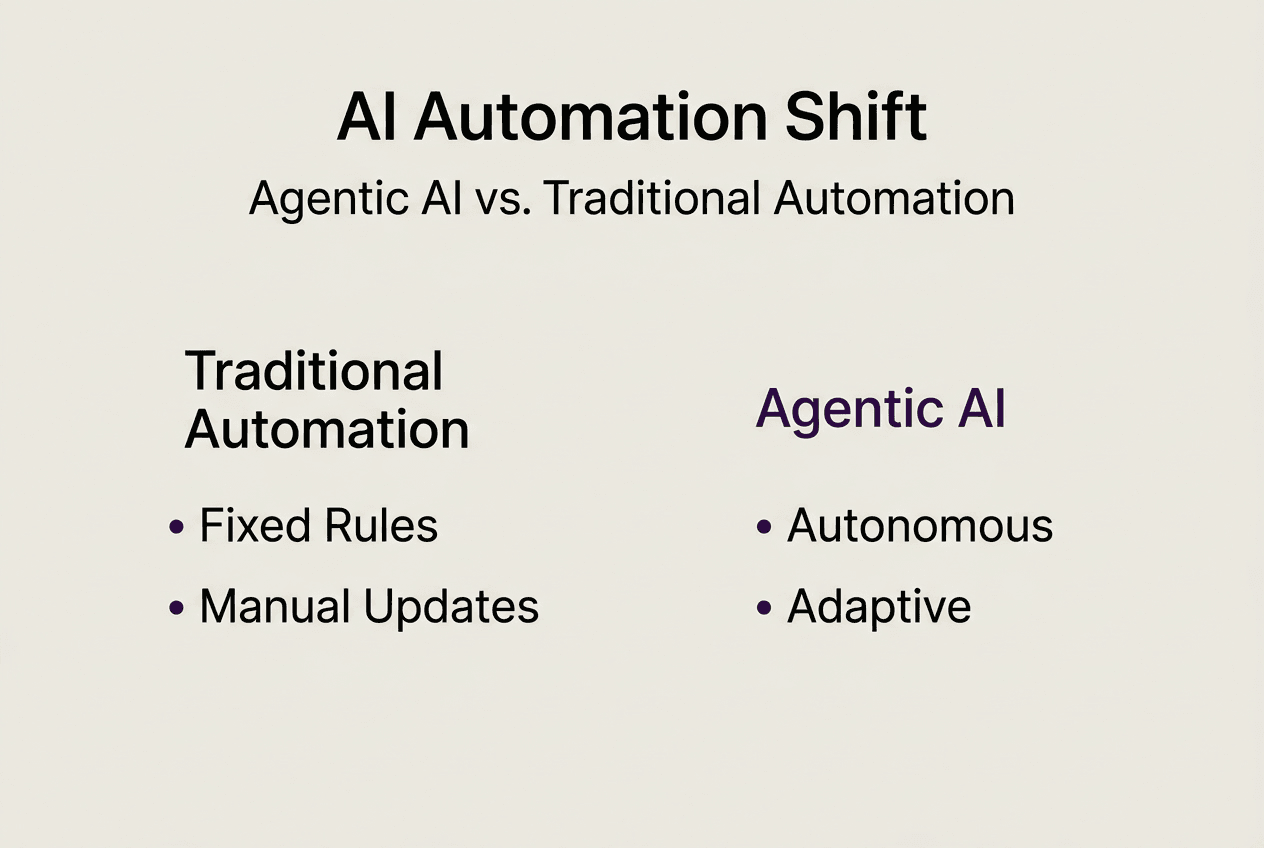
| Dimension | Traditional Automation | Agentic AI Workflows |
|---|---|---|
| Adaptability | Fixed rules require manual updates | Learns and adapts from outcomes |
| Efficiency | Linear improvement with optimization | Exponential gains through reasoning |
| Risk management | Reactive monitoring and alerts | Proactive prediction and mitigation |
| Workforce impact | Replaces specific tasks | Augments human decision-making |
The adoption trajectory confirms this value proposition. In 2025, 45% of organizations adopted AI agents in production compared to 12% in 2023, highlighting rapid acceptance across industries. This growth reflects both the compelling benefits and the maturing security frameworks that make safe deployment possible.
Pro Tip: Combine AI agents with human oversight for the best balance of innovation and control, using agents to handle routine decisions while escalating complex or high-risk situations to experienced team members.
Explore practical applications through our guide on improving business workflows with AI and stay current with office automation trends in agentic AI to understand how leading organizations are deploying these systems successfully.
Choosing and managing secure AI agents: best practices and future outlook
Selecting the right AI agent platform and managing deployment risks requires careful evaluation across multiple dimensions. Business leaders must balance immediate operational needs with long-term strategic considerations while ensuring security and compliance remain non-negotiable priorities.
Best practices for selecting secure platforms:
- Demand data sovereignty and control over models to maintain compliance across jurisdictions and prevent vendor lock-in
- Ensure sub-second response latency in operational workflows so agents can participate in real-time business processes
- Evaluate total cost of ownership and vendor lock-in risks over three to five year horizons, not just initial deployment costs
- Verify built-in governance, traceability, and lifecycle management capabilities that enable continuous validation and audit
- Test generalist agents thoroughly before production deployment to validate behavior across your specific use cases and edge conditions
- Establish clear escalation protocols for when agents encounter situations beyond their decision authority
Generalist AI agents offer adaptability but require rigorous evaluation in production environments. The flexibility that makes these agents valuable also introduces variability that must be validated against your operational requirements and risk tolerance.
The competitive landscape makes early adoption essential. Not adopting agentic AI now means falling behind competitors as adoption reaches 45% in 2025. Organizations that delay face growing gaps in operational efficiency and customer responsiveness.
Pro Tip: Start pilot programs early to adapt and avoid falling behind the rapidly growing adoption curve, focusing on high-value workflows where automation delivers immediate measurable benefits.
The future outlook centers on continual AI agent skill expansion and digital workforce integration. Enterprise success demands governance baked into architecture and ongoing lifecycle management. Agents will handle increasingly complex workflows, but only organizations with robust security and governance frameworks will capture the full value.
Expect agents to evolve from task automation to strategic collaboration. They will participate in planning, coordinate across departments, and provide decision support for complex business challenges. This evolution requires security models that grow with agent capabilities, maintaining control while enabling innovation.
Learn how to navigate compliance in AI automation and explore frameworks for secure AI compliance to build systems that meet both current and future regulatory requirements.
Explore secure AI consulting and managed IT services
Navigating the complexities of secure agentic AI deployment requires specialized expertise and proven methodologies. Ailerons.ai brings deep experience in designing and implementing AI systems that balance innovation with security, compliance, and operational excellence. Our consulting services help mid-sized companies architect solutions tailored to their specific workflows and risk profiles.
We offer managed IT services that support your automation and security needs throughout the deployment lifecycle. From initial assessment through production deployment and ongoing optimization, our team ensures your agentic AI systems deliver measurable value while maintaining governance and compliance standards.
Explore our AI consulting case studies to see how organizations across industries have successfully integrated secure agentic AI into their operations. Contact our team through managed IT and AI consulting services to assess your specific business challenges and develop a roadmap for safe, effective AI adoption.
Frequently asked questions about secure agentic AI systems
What distinguishes agentic AI security from traditional cybersecurity?
Agentic AI security addresses non-deterministic behavior and continuous learning that traditional cybersecurity models cannot handle. While conventional security focuses on static code with predictable behavior, agentic AI requires governance frameworks that monitor evolving agent capabilities, validate decisions against compliance requirements, and maintain traceability across autonomous actions. Learn more about secure AI systems compliance approaches.
How can mid-sized businesses start deploying secure AI agents safely?
Start with pilot programs focused on high-value, low-risk workflows like document processing or routine approvals. Establish clear governance protocols, implement comprehensive logging, and maintain human oversight during initial deployment phases. Choose platforms with built-in lifecycle management and data sovereignty controls. Scale gradually as you validate agent behavior and refine security policies.
What governance practices ensure compliance when using autonomous AI agents?
Implement continuous monitoring of agent decisions, maintain detailed audit trails, and establish clear escalation protocols for complex situations. Verify that your architecture supports traceability and explainability for every agent action. Regular validation against compliance requirements and periodic reviews of agent behavior ensure ongoing adherence to regulatory standards. Explore agentic AI compliance automation frameworks.
What measurable benefits can businesses expect from secure agentic AI integration?
Organizations typically see 40 to 60 percent reduction in time spent on repetitive tasks, improved accuracy in data processing and document management, and faster response times for routine approvals and customer requests. Agents enable scaling without proportional staff increases, reduce operational friction across departments, and free human workers for higher-value strategic activities. Benefits compound over time as agents learn and optimize workflows.
How rapidly is agentic AI adoption growing in enterprise environments?
Adoption jumped from 12% of organizations in 2023 to 45% in 2025, reflecting both maturing technology and proven business value. This growth trajectory indicates agentic AI is moving from early adoption to mainstream deployment across industries. Organizations that delay face growing competitive disadvantages in operational efficiency and customer responsiveness.
Recommended
- Secure AI Systems for Compliance: Minimizing Regulatory Risks | Ailerons IT Consulting
- Improving Business Workflows with AI: Achieve Automation | Ailerons IT Consulting
- Compliance in AI Automation: Reducing Risk and Ensuring Trust | Ailerons IT Consulting
- 6 Steps for an Effective AI Automation Checklist 2026 | Ailerons IT Consulting
- Guide to AI Advertising 2026: Boost ROI by 25% Fast - Palmador Blog