

Keeping up with shifting regulatory expectations can feel relentless, especially as artificial intelligence becomes central to financial operations. Compliance officers across American, Canadian, and European firms face not only traditional cybersecurity threats but also unique vulnerabilities in AI systems. By focusing on secure AI systems, you can simplify risk management and operational compliance while gaining the tools to defend against emerging threats like data poisoning and model obfuscation. This guide explains how specialized AI security features and compliance-driven architectures help transform regulatory burdens into practical business advantage.
Table of Contents
- Defining Secure AI Systems For Compliance
- Types Of Agentic AI In Compliance Workflows
- Core Security And Data Protection Features
- Legal Standards And Global Regulatory Alignment
- Key Risks, Liabilities, And Mitigation Practices
Key Takeaways
| Point | Details |
|---|---|
| Focus on Secure AI Systems | Organizations must integrate specialized protections for AI to address its unique vulnerabilities, such as data protection and model integrity. |
| Adopt Agentic AI in Compliance | Implementing intelligent, adaptive AI can streamline compliance workflows and enhance regulatory adherence. |
| Embrace a Proactive Compliance Approach | Embed compliance requirements into AI system designs to transform them into strategic advantages rather than constraints. |
| Develop Comprehensive Risk Management Strategies | Anticipate technological vulnerabilities by employing multilayered defense strategies across the entire AI lifecycle. |
Defining Secure AI Systems for Compliance
Secure AI systems represent a sophisticated approach to managing technological risk in complex regulatory environments. These systems go beyond traditional cybersecurity measures by integrating specialized protections tailored specifically to artificial intelligence’s unique vulnerabilities and operational characteristics.
According to comprehensive cybersecurity guidelines, secure AI systems must address multiple critical dimensions:
- Data Protection: Preventing unauthorized access and manipulation
- Model Integrity: Safeguarding against adversarial attacks
- Algorithmic Transparency: Enabling clear understanding of decision-making processes
- Continuous Monitoring: Implementing real-time threat detection mechanisms
The lifecycle of a secure AI system encompasses several interconnected stages that demand meticulous attention to compliance requirements. European research publications highlight the importance of a holistic approach that addresses potential risks from design through retirement.
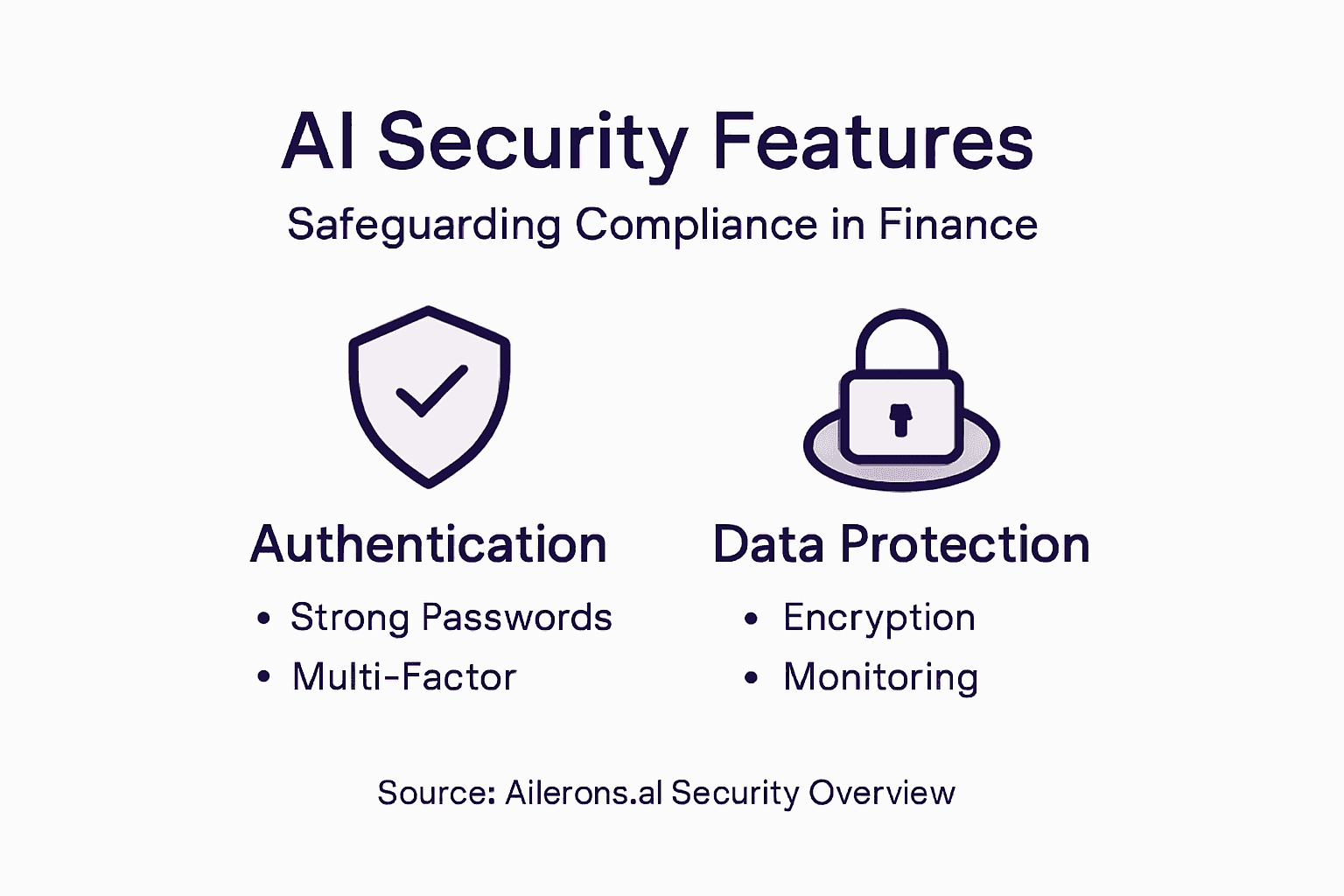
Key components of secure AI systems include robust authentication protocols, encrypted data channels, and adaptive security frameworks that can anticipate and neutralize emerging threats. Financial services firms must prioritize developing AI infrastructure that not only meets current regulatory standards but also remains flexible enough to adapt to future compliance mandates.
Here’s an overview of how AI security features support business goals in financial services:
| Security Feature | Purpose | Business Impact |
|---|---|---|
| Robust Authentication | Verifies user identity and permissions | Reduces risk of data breaches |
| Encrypted Data Channels | Secures data during transmission | Protects sensitive customer records |
| Continuous Monitoring | Tracks system activity for threats | Enables rapid incident response |
| Adaptive Security Frameworks | Updates defenses based on emerging risks | Maintains ongoing regulatory compliance |
Compliance-Driven Architecture represents a strategic methodology where security considerations are embedded into every layer of AI system development. This approach transforms compliance from a reactive constraint into a proactive design principle, ensuring that regulatory requirements are seamlessly integrated rather than awkwardly appended.
Threat Mitigation Strategies for AI systems must account for specialized risks such as:
- Model poisoning attacks
- Prompt injection vulnerabilities
- Unauthorized data extraction
- Algorithmic bias exploitation
Pro tip: Conduct quarterly comprehensive security audits of your AI systems, focusing specifically on emerging AI-related vulnerabilities and regulatory shifts.
Types of Agentic AI in Compliance Workflows
Agentic AI systems represent a transformative approach to managing complex regulatory requirements, moving beyond traditional rule-based automation toward intelligent, adaptive workflow management. Unlike conventional software, these advanced systems can understand context, make nuanced decisions, and dynamically adjust their strategies in real-time.
Academic research on AI agents reveals a sophisticated taxonomy of agentic AI that distinguishes these systems through their unique operational capabilities:
- Autonomous Decision Agents: Self-governing systems that can interpret regulatory requirements and make compliance decisions
- Multi-Agent Collaboration Platforms: Systems enabling coordinated interactions between different AI entities
- Adaptive Workflow Orchestrators: AI systems capable of dynamically decomposing and reassembling complex compliance tasks
- Predictive Risk Assessment Agents: Intelligent systems that anticipate potential regulatory vulnerabilities
In financial services, these agentic AI types play critical roles across different operational domains. Regulatory Monitoring Agents continuously scan internal processes, external communications, and transaction records to identify potential compliance deviations before they become significant issues.
The architecture of these systems is fundamentally different from traditional automation tools. Where legacy systems follow rigid, predefined scripts, agentic AI incorporates advanced capabilities like:
- Contextual understanding
- Dynamic goal adaptation
- Complex reasoning
- Learning from historical compliance data
Intelligent Compliance Frameworks enable organizations to transform regulatory adherence from a reactive, manual process into a proactive, intelligent system. These frameworks leverage machine learning, natural language processing, and adaptive algorithms to create more resilient and responsive compliance infrastructures.

Compliance Workflow Intelligence represents a paradigm shift, where AI doesn’t just execute rules but understands, interprets, and strategically navigates complex regulatory landscapes. This approach allows financial institutions to stay ahead of emerging regulatory challenges with unprecedented agility.
Pro tip: Implement a phased pilot program to test different types of agentic AI in your compliance workflows, starting with low-risk processes and gradually expanding based on performance metrics.
Core Security and Data Protection Features
Secure AI systems demand comprehensive protection strategies that go far beyond traditional cybersecurity approaches. Financial services organizations must implement multilayered security frameworks designed specifically to address the unique vulnerabilities inherent in artificial intelligence technologies.
Comprehensive cybersecurity standards establish critical baseline requirements for protecting AI infrastructure, focusing on several key dimensions of technological defense:
- Data Confidentiality: Encrypting sensitive information at rest and in transit
- Model Integrity: Preventing unauthorized modifications to AI algorithms
- Access Control: Implementing granular authentication mechanisms
- Threat Detection: Continuously monitoring for potential security breaches
The landscape of AI security is complex and rapidly evolving. Adversarial Defense Mechanisms have become crucial, protecting against sophisticated attacks like data poisoning, model manipulation, and prompt injection that can compromise entire AI systems.
According to international AI management frameworks, organizations must adopt a comprehensive approach that encompasses:
- Robust risk management protocols
- Continuous vulnerability assessment
- Transparent algorithmic governance
- Ethical data handling practices
Secure Data Lifecycle Management represents a critical strategy for mitigating risks. This approach involves implementing comprehensive controls that protect data from collection through processing, storage, and eventual deletion. Each stage requires specialized security interventions tailored to potential vulnerabilities.
Regulatory Compliance Architecture transforms security from a technical constraint into a strategic advantage. By embedding compliance directly into AI system design, organizations can create more resilient, trustworthy technological infrastructure that adapts to evolving regulatory landscapes.
Advanced AI security is not just about preventing breaches, but creating intelligent systems that are inherently resistant to manipulation.
Pro tip: Conduct quarterly comprehensive security audits of your AI systems, focusing on emerging vulnerabilities and implementing adaptive defense strategies.
Legal Standards and Global Regulatory Alignment
The global landscape of AI regulation is increasingly complex, requiring financial services organizations to navigate a sophisticated web of evolving legal frameworks that demand unprecedented levels of compliance and accountability. Understanding these intricate regulatory requirements has become a critical strategic imperative for businesses leveraging artificial intelligence technologies.
Global AI regulatory developments reveal a sophisticated approach to managing technological risks across different jurisdictions, characterized by several key principles:
The following table summarizes key regulatory principles for AI and their strategic advantages:
| Regulatory Principle | Definition | Strategic Advantage |
|---|---|---|
| Risk-Based Classification | Grouping systems by impact level | Focuses controls on highest-risk areas |
| Transparency | Requiring explainable AI decisions | Builds trust with regulators and clients |
| Human Oversight | Ensuring critical human involvement | Minimizes unintended system errors |
| Accountability Frameworks | Defining operational responsibilities | Enhances legal defensibility |
- Risk-Based Classification: Categorizing AI systems according to potential harm
- Transparency Requirements: Mandating clear explanations of AI decision-making processes
- Human Oversight: Ensuring meaningful human intervention in critical AI operations
- Accountability Frameworks: Establishing clear lines of responsibility for AI system outcomes
According to comprehensive compliance guides, the emerging global regulatory approach emphasizes several critical dimensions of AI governance that transcend traditional compliance mechanisms. Organizations must develop adaptive strategies that can rapidly respond to jurisdiction-specific requirements while maintaining a coherent, unified approach to technological risk management.
The regulatory landscape encompasses multiple critical domains:
- Data Privacy and Protection
- Algorithmic Fairness and Non-Discrimination
- Ethical AI Design and Implementation
- Continuous Monitoring and Reporting
Regulatory Convergence Strategies represent a sophisticated approach to managing these complex requirements. By developing flexible governance frameworks that anticipate and adapt to evolving standards, organizations can create resilient AI systems that remain compliant across diverse regulatory environments.
Effective AI governance is not about rigid adherence to rules, but creating intelligent systems that inherently respect legal and ethical boundaries.
Proactive Compliance Architecture transforms regulatory requirements from potential obstacles into strategic opportunities. Financial institutions can leverage these frameworks to build trust, demonstrate technological responsibility, and differentiate themselves in an increasingly regulated marketplace.
Pro tip: Develop a dedicated cross-functional AI governance team that combines legal, technical, and compliance expertise to create adaptive regulatory strategies.
Key Risks, Liabilities, and Mitigation Practices
Artificial intelligence systems introduce complex risk landscapes that demand sophisticated, proactive management strategies. Financial services organizations must develop comprehensive approaches that anticipate and neutralize potential technological vulnerabilities before they can escalate into significant operational or legal challenges.
Comprehensive cybersecurity research identifies several critical risk domains that demand strategic attention:
- Adversarial Attacks: Sophisticated manipulation attempts targeting AI model vulnerabilities
- Data Poisoning: Intentional corruption of training datasets
- Model Misuse: Unauthorized deployment or exploitation of AI capabilities
- Supply Chain Vulnerabilities: Potential risks embedded in AI development ecosystems
The risk management approach requires a multilayered defense strategy that goes beyond traditional cybersecurity frameworks. AI security standards emphasize the importance of implementing robust, adaptive protection mechanisms throughout the entire AI system lifecycle.
Organizations must develop comprehensive mitigation strategies that address multiple critical dimensions:
- Continuous Threat Monitoring
- Robust Authentication Protocols
- Advanced Anomaly Detection Systems
- Regular Vulnerability Assessment
Liability Reduction Frameworks represent a critical organizational strategy for managing technological risks. By developing systematic approaches that anticipate potential vulnerabilities, financial institutions can create AI systems that are not just technologically sophisticated, but also legally defensible.
Risk Quantification Models transform abstract technological threats into measurable, manageable organizational challenges. These frameworks enable leadership to make informed decisions about AI deployment, balancing innovation with prudent risk management.
Effective AI risk management is about creating intelligent systems that are inherently resilient, not just protected.
Pro tip: Implement a quarterly cross-functional AI risk assessment involving legal, technical, and compliance teams to proactively identify and mitigate potential vulnerabilities.
Elevate Compliance with Secure Agentic AI Solutions
Navigating the complex web of regulatory requirements while maintaining operational efficiency is a challenge for many financial services organizations. This article highlights the critical need for secure AI systems that offer robust authentication, continuous monitoring, and adaptive security frameworks to minimize risk and ensure compliance. If you are aiming to go beyond traditional automation and deploy AI that understands context and executes multi-step tasks with built-in compliance safeguards, agentic AI is your solution.
At Ailerons.ai, we specialize in designing and deploying agentic AI systems that act as intelligent collaborators across office workflows, including compliance-driven operations. Our AI orchestrates tasks such as document processing, approvals, and regulatory reporting with secure, compliant design aligned to modern identity and cloud standards. This approach empowers your organization to reduce operational friction, stay ahead of evolving regulations, and scale efficiently without increasing your risk exposure. Explore how our agentic AI architecture and deployment transforms compliance from a reactive burden into a proactive asset.
Take control of your regulatory risks now by embracing AI that reasons, plans, and adapts within your compliance workflows. Visit Ailerons.ai to learn how to secure your compliance processes with intelligent automation designed for today’s demanding regulatory landscape.
Frequently Asked Questions
What are secure AI systems and why are they important for compliance?
Secure AI systems are advanced technological frameworks designed to manage risks associated with artificial intelligence in regulatory environments. They integrate specialized protections to address AI-specific vulnerabilities, ensuring compliance with regulations while safeguarding data and maintaining model integrity.
How do secure AI systems protect data?
Secure AI systems utilize various methods to protect data, including encryption of sensitive information, robust authentication protocols, and continuous monitoring for unauthorized access. These measures help prevent data breaches and maintain confidentiality throughout the data lifecycle.
What are some key security features of AI systems that support compliance in financial services?
Key security features include robust authentication, encrypted data channels for secure transmission, continuous monitoring for real-time threat detection, and adaptive security frameworks that evolve with emerging risks. These features ensure compliance while minimizing potential regulatory risks.
How can organizations mitigate risks associated with AI systems?
Organizations can mitigate risks by implementing comprehensive strategies such as continuous threat monitoring, robust authentication protocols, regular vulnerability assessments, and establishing liability reduction frameworks. These approaches help anticipate vulnerabilities and strengthen the overall resilience of AI systems.