

Confusion over what IT consulting actually delivers still lingers for many small and mid-sized business owners. For service professionals in fields like law and medicine, this can mean missing out on vital support that drives efficiency and customer satisfaction. Understanding the true role of IT consulting—beyond troubleshooting—to include strategic planning and digital transformation is essential for making informed decisions about technology investments.
Table of Contents
- Defining IT Consulting and Common Misconceptions
- Types of IT Consulting for Modern Businesses
- How IT Consulting Powers Agentic AI Workflows
- Integrating Front Desk AI With Business Tools
- Security, Compliance, and Human Oversight in AI Automation
- Measuring ROI and Avoiding Common Pitfalls
Key Takeaways
| Point | Details |
|---|---|
| IT Consulting is Strategic | IT consulting transcends basic technical support, focusing on strategic technology integration to drive business transformation. |
| Types of Consulting Services | Various IT consulting types address modern challenges, including strategy, cybersecurity, and digital transformation. |
| AI Automation Requires Governance | Implementing AI automation necessitates robust security and governance frameworks to ensure ethical operations. |
| Holistic ROI Measurement is Essential | Evaluating ROI in AI projects involves assessing both tangible benefits and strategic improvements for comprehensive insight. |
Defining IT Consulting and Common Misconceptions
IT consulting is a strategic professional service designed to help organizations leverage technology effectively and solve complex business challenges. Unlike simplistic perceptions, IT consulting goes far beyond mere technical troubleshooting, representing a nuanced approach to transforming operational capabilities through technological solutions.
According to research, business consulting involves professional services provided by independent experts who interactively work with clients to analyze and resolve business issues. In the IT domain, this translates to a comprehensive methodology where consultants not only diagnose technical problems but also develop strategic roadmaps for technological integration and optimization.
Common misconceptions about IT consulting include reducing it to basic technical support or viewing it as an unnecessary expense. In reality, IT consulting involves strategic planning that transforms technology from a cost center into a strategic business asset. These consultants bring specialized knowledge to help organizations navigate complex technological landscapes, making informed decisions about infrastructure, security, efficiency, and digital transformation.
Here’s how common IT consulting misconceptions compare to the actual reality:
| Misconception | Reality | Business Impact |
|---|---|---|
| Only for troubleshooting | Involves strategy and transformation | Enables tech-driven growth |
| Unnecessary expense | Delivers measurable value | Reduces risk, optimizes costs |
| Same as tech support | Offers expert assessments, solutions | Promotes innovation, efficiency |
Key distinctions of professional IT consulting include:
- Developing long-term technology strategies
- Providing objective, expert technological assessments
- Creating customized solutions aligned with business goals
- Implementing cutting-edge technologies
- Managing technological risks and compliance requirements
Pro tip: When selecting an IT consulting partner, prioritize firms that demonstrate clear understanding of your specific business context and can translate technological capabilities into tangible operational improvements.
Types of IT Consulting for Modern Businesses
IT consulting has evolved into a sophisticated landscape of specialized services designed to address the complex technological challenges facing modern businesses. Systematic research reveals multiple consulting practice areas that go beyond traditional technical support, offering strategic solutions tailored to specific organizational needs.
The primary types of IT consulting services encompass diverse domains critical for business transformation. These include strategy consulting, which helps organizations develop comprehensive technology roadmaps aligned with business objectives; infrastructure services that optimize network and system architectures; cybersecurity consulting to protect against emerging digital threats; cloud services that enable scalable and flexible technological environments; and digital transformation consulting that reimagines business processes through innovative technological integration.

Each consulting type addresses unique organizational challenges. Strategy consultants analyze current technological capabilities and future requirements, creating actionable plans for digital evolution. Infrastructure specialists design robust technological ecosystems that enhance operational efficiency. Cybersecurity experts develop comprehensive protection frameworks to safeguard sensitive data and mitigate potential risks. Cloud service consultants facilitate seamless migration and optimization of cloud-based technologies, while digital transformation consultants help businesses fundamentally reimagine their operational models through strategic technological interventions.
Key IT consulting service categories include:
- Strategic Technology Planning
- Infrastructure Design and Optimization
- Cybersecurity Risk Management
- Cloud Migration and Integration
- Digital Transformation Advisory
- Software Development Consulting
- Enterprise Architecture Design
- Technology Performance Optimization
- Compliance and Regulatory Technology Solutions
- Artificial Intelligence and Automation Strategy
Pro tip: When selecting an IT consulting partner, evaluate their expertise across multiple service categories and their ability to provide holistic, integrated solutions that align with your specific business context and growth objectives.
How IT Consulting Powers Agentic AI Workflows
Agentic AI workflows represent a transformative approach to business automation, enabling sophisticated technological solutions that go far beyond traditional process automation. Agentic AI workflows integrate multiple intelligent systems with advanced reasoning and autonomous decision-making capabilities, creating dynamic technological ecosystems that can adapt and optimize in real time.
IT consulting plays a critical role in designing, developing, and deploying these complex AI-powered workflow systems. Consultants act as strategic architects, bridging the gap between advanced technological potential and practical business implementation. They help organizations navigate the intricate challenges of integrating large language models, specialized tools, and sophisticated orchestration logic into existing technological infrastructures, ensuring that AI agents can operate effectively and securely across different business domains.
The power of IT consulting in agentic AI workflows manifests through several key capabilities. Consultants develop comprehensive strategies for data integration, ensuring clean and compatible information flows between different systems. They design governance frameworks that maintain transparency, accountability, and ethical considerations in AI operations. Consulting firms transform complex automation challenges by creating intelligent workflows that can handle multi-step tasks autonomously, from initial customer onboarding to generating real-time strategic insights.
The following table summarizes how agentic AI workflows differ from traditional automation:
| Attribute | Traditional Automation | Agentic AI Workflows |
|---|---|---|
| Flexibility | Rule-based, limited adaptation | Dynamically adapts and learns |
| Decision-making | Predefined, deterministic | Autonomous, context-aware |
| Integration | Isolated, manual integration | Seamless, multi-platform integration |
| Business Benefit | Reduces manual tasks | Enables end-to-end business innovation |
Key components of agentic AI workflow development include:
- Comprehensive system compatibility analysis
- Advanced data integration techniques
- AI agent design and orchestration
- Robust security and governance frameworks
- Continuous performance monitoring and optimization
- Scalable and adaptable workflow architectures
- Ethical AI implementation strategies
- Cross-platform integration capabilities
- Performance metrics and ROI tracking
- Human-AI collaboration models
Pro tip: When implementing agentic AI workflows, prioritize building flexible, modular systems that can evolve with your technological ecosystem and focus on creating clear governance protocols that enable innovation while maintaining organizational control.
Integrating Front Desk AI With Business Tools
Front Desk AI represents a transformative approach to managing customer interactions and administrative workflows through intelligent automation technologies. AI integration in business environments enables organizations to streamline communication, enhance customer engagement, and optimize operational efficiency across multiple touchpoints.
Successful integration of Front Desk AI requires strategic alignment with existing business tools and technological ecosystems. This process involves carefully mapping AI capabilities to specific organizational workflows, ensuring seamless communication between AI systems and critical business platforms such as Customer Relationship Management (CRM) systems, scheduling tools, communication platforms, and enterprise resource planning (ERP) software. The goal is to create a unified, intelligent interface that can handle complex interactions while maintaining data integrity and operational consistency.
Secure interoperability between AI and business tools demands a comprehensive approach that addresses technical compatibility, data security, and user experience. Organizations must develop robust integration strategies that enable AI systems to access and process information across multiple platforms while maintaining strict governance protocols. This involves implementing sophisticated data mapping, establishing secure authentication mechanisms, and creating flexible API connections that allow intelligent agents to retrieve, update, and process information in real-time.
Key considerations for Front Desk AI integration include:
- Comprehensive system compatibility assessment
- Secure data transfer protocols
- Role-based access controls
- Real-time synchronization capabilities
- Intelligent workflow automation
- Multi-platform communication support
- Performance monitoring and optimization
- Compliance with data privacy regulations
- Scalable integration architecture
- Continuous learning and adaptation mechanisms
Pro tip: When implementing Front Desk AI integrations, prioritize developing a phased rollout strategy that allows for incremental testing, validation, and refinement of AI interactions across your existing business tool ecosystem.
Security, Compliance, and Human Oversight in AI Automation
AI Automation represents a powerful technological advancement that requires carefully designed security and governance frameworks to ensure responsible implementation. Human oversight models provide critical governance mechanisms that balance technological innovation with ethical considerations, creating a robust approach to managing intelligent systems.
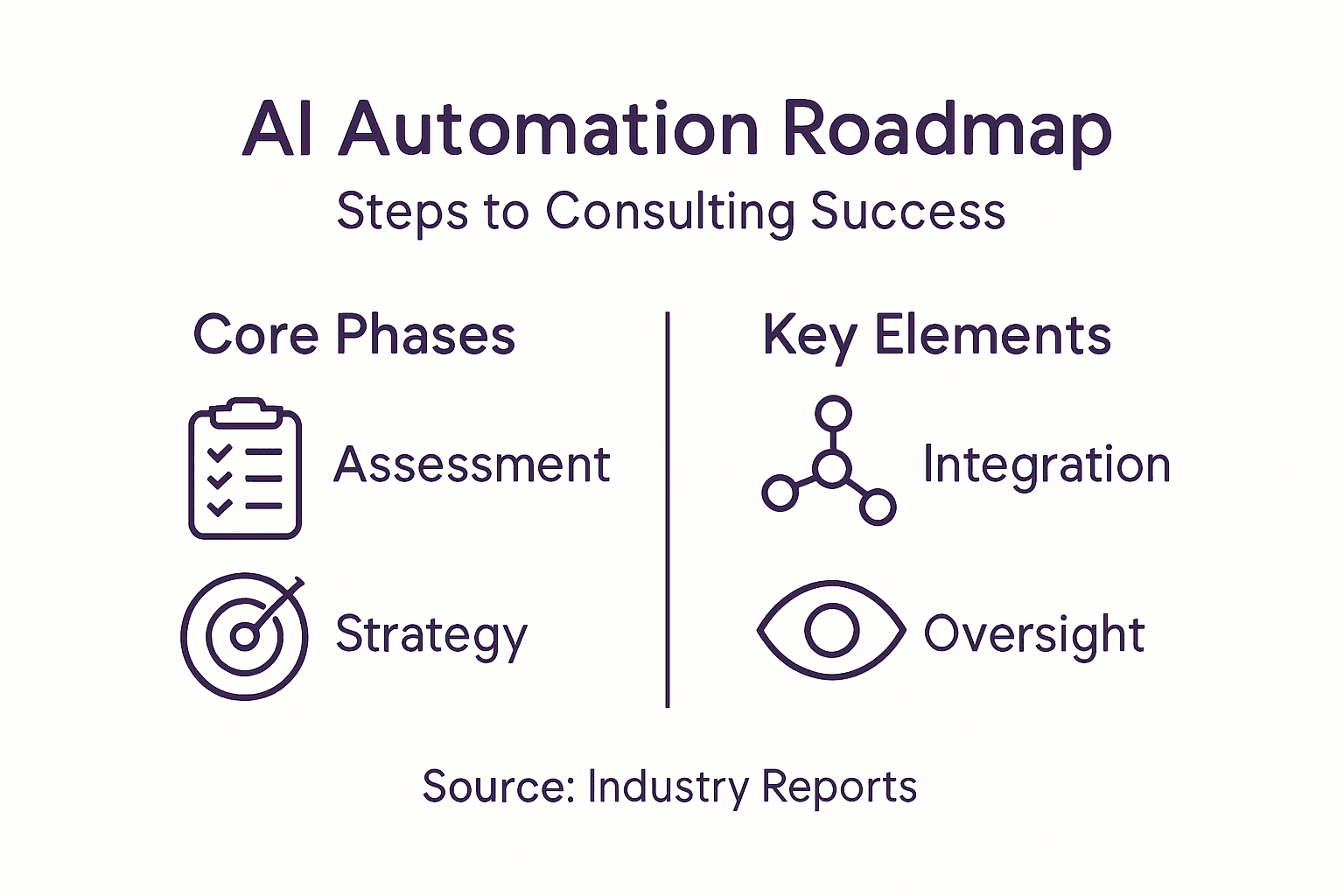
The complexity of AI automation demands multilayered security strategies that extend beyond traditional technological safeguards. Organizations must develop comprehensive compliance frameworks that integrate role-based access controls, transparent decision-making processes, and continuous monitoring mechanisms. These approaches ensure that AI systems operate within predefined ethical boundaries, maintaining accountability and preventing potential misuse or unintended consequences that could compromise organizational integrity.
Ethical considerations in AI-driven systems require sophisticated oversight models that enable human intervention and validation. Key oversight approaches include:
- Human-in-Command: Humans define core operational parameters
- Human-in-the-Loop: Direct intervention during critical decision points
- Human-on-the-Loop: Continuous monitoring and retrospective validation
- Transparent AI decision tracking
- Diverse and representative training data
- Regular algorithmic bias assessments
- Comprehensive audit trails
- Dynamic risk management protocols
- Ethical review boards
- Ongoing training and certification programs
Pro tip: Develop a comprehensive AI governance framework that includes clear escalation paths, periodic human review processes, and transparent documentation of AI system decision-making logic to maintain organizational trust and regulatory compliance.
Measuring ROI and Avoiding Common Pitfalls
Return on Investment (ROI) in AI automation represents a complex calculation that extends far beyond simple financial metrics. Evaluating investment accuracy requires comprehensive analysis of both tangible and intangible benefits, demanding a nuanced approach that captures the full spectrum of technological transformation’s potential value.
Organizations must develop sophisticated measurement frameworks that go beyond traditional cost-saving calculations. This involves identifying key performance indicators that reflect meaningful operational improvements, such as increased efficiency, reduced human error, enhanced customer experience, and strategic agility. Successful ROI measurement requires establishing clear baseline metrics before implementation, tracking granular performance changes, and understanding the long-term strategic implications of technological investments.
Key performance indicators for IT consulting projects provide a comprehensive view of technological investment value. Critical metrics for evaluating AI automation success include:
- User adoption rates
- System uptime and reliability
- Task completion speed
- Error reduction percentages
- Customer satisfaction scores
- Operational cost savings
- Process efficiency improvements
- Employee productivity metrics
- Scalability potential
- Compliance and risk mitigation indicators
Pro tip: Develop a structured ROI evaluation framework that combines quantitative financial metrics with qualitative performance indicators, establishing clear benchmarks and conducting periodic comprehensive assessments to capture the full value of AI automation investments.
Transform AI Automation Challenges Into Real Business Success
The article highlights how crucial expert IT consulting is for overcoming misconceptions and unlocking the full potential of AI automation through agentic AI workflows and secure integration across platforms. If your business struggles with workflow complexity, lack of strategic planning, or concerns about governance and human oversight in AI projects, these are common challenges that require specialized, thoughtful solutions.
At Ailerons IT Consulting, we address these pain points by building reliable, agent-first AI automation that performs multi-step tasks seamlessly across tools like Microsoft 365, CRMs, and scheduling systems. Our approach emphasizes secure AI governance, end-to-end integrations, and measurable ROI so your teams can focus on high-value decisions while AI agents handle repetitive work within strict compliance boundaries. Learn how we transform AI from experimental to operational by visiting our IT Solutions page.
Discover the difference a strategic IT consulting partner can make in accelerating your AI automation success by exploring the power of Agentic AI workflows and seamless Front Desk AI integrations. Ready to move beyond manual bottlenecks and scale with confidence? Contact Ailerons today and unlock the true business advantage of AI automation.
Frequently Asked Questions
What is IT consulting in the context of AI automation?
IT consulting for AI automation involves strategic services that help organizations integrate and implement advanced AI technologies to improve operational efficiency, decision-making, and overall business performance.
How does IT consulting enhance AI automation success?
IT consulting enhances AI automation success by providing expertise in system integration, designing effective workflows, ensuring security and compliance, and aligning AI capabilities with business objectives to drive growth and innovation.
What are common misconceptions about IT consulting for AI?
Common misconceptions include believing that IT consulting is only for troubleshooting technical issues or that it is an unnecessary expense. In reality, IT consulting is integral to strategic planning and helps transform technology into a valuable business asset.
How can companies measure the ROI of AI automation?
Companies can measure the ROI of AI automation by establishing key performance indicators (KPIs) that reflect operational improvements, such as increased efficiency, reduced human error, customer satisfaction scores, and overall cost savings.