

Over 60 percent of American small and medium-sized businesses cite IT complexity as their top operational challenge. With technology woven into every part of daily work, even minor disruptions can slow growth and undermine security. Understanding what effective IT support really means can help American IT managers make smarter decisions, minimize risks, and keep business operations running smoothly and securely.
Table of Contents
- Defining IT Support for Businesses
- Types of IT Support Services Explained
- Core Functions and Technology Integration
- Cybersecurity and Compliance Responsibilities
- Costs, Risks, and Common Pitfalls
Key Takeaways
| Point | Details |
|---|---|
| Importance of IT Support | IT support is essential for leveraging technology effectively, focusing on comprehensive management rather than just troubleshooting. |
| Types of IT Support Services | Various IT support services, such as Help Desk, Remote Support, and Managed Services, cater to different operational needs and complexities. |
| Cybersecurity as a Priority | Cybersecurity is crucial for safeguarding digital assets, requiring strategic planning and compliance with regulations. |
| Risk Management and Financial Planning | Businesses must assess and mitigate risks associated with technology investments to avoid significant financial pitfalls and operational disruptions. |
Defining IT Support for Businesses
IT Support represents the strategic foundation that enables businesses to leverage technology effectively and efficiently. At its core, IT service management focuses on designing, delivering, and controlling technology services that meet critical business needs. This comprehensive approach goes far beyond simple technical troubleshooting, encompassing a holistic strategy for managing technological resources and supporting organizational goals.
Businesses today rely on intricate technological ecosystems that demand specialized expertise. Technical support fundamentals involve monitoring complex digital infrastructure, resolving hardware and software challenges, and ensuring seamless operational continuity. IT support professionals serve as critical intermediaries who diagnose technical issues, implement solutions, and proactively maintain systems to minimize disruptions.
The scope of IT support includes several key functional areas:
- Incident management and rapid problem resolution
- Hardware and software maintenance
- Network security and data protection
- User support and technology training
- Strategic technology planning and consultation
Modern IT support transcends reactive problem solving, emerging as a strategic partner that drives business innovation and technological resilience. By understanding organizational objectives and technological capabilities, IT support teams transform technical challenges into opportunities for enhanced productivity and competitive advantage.
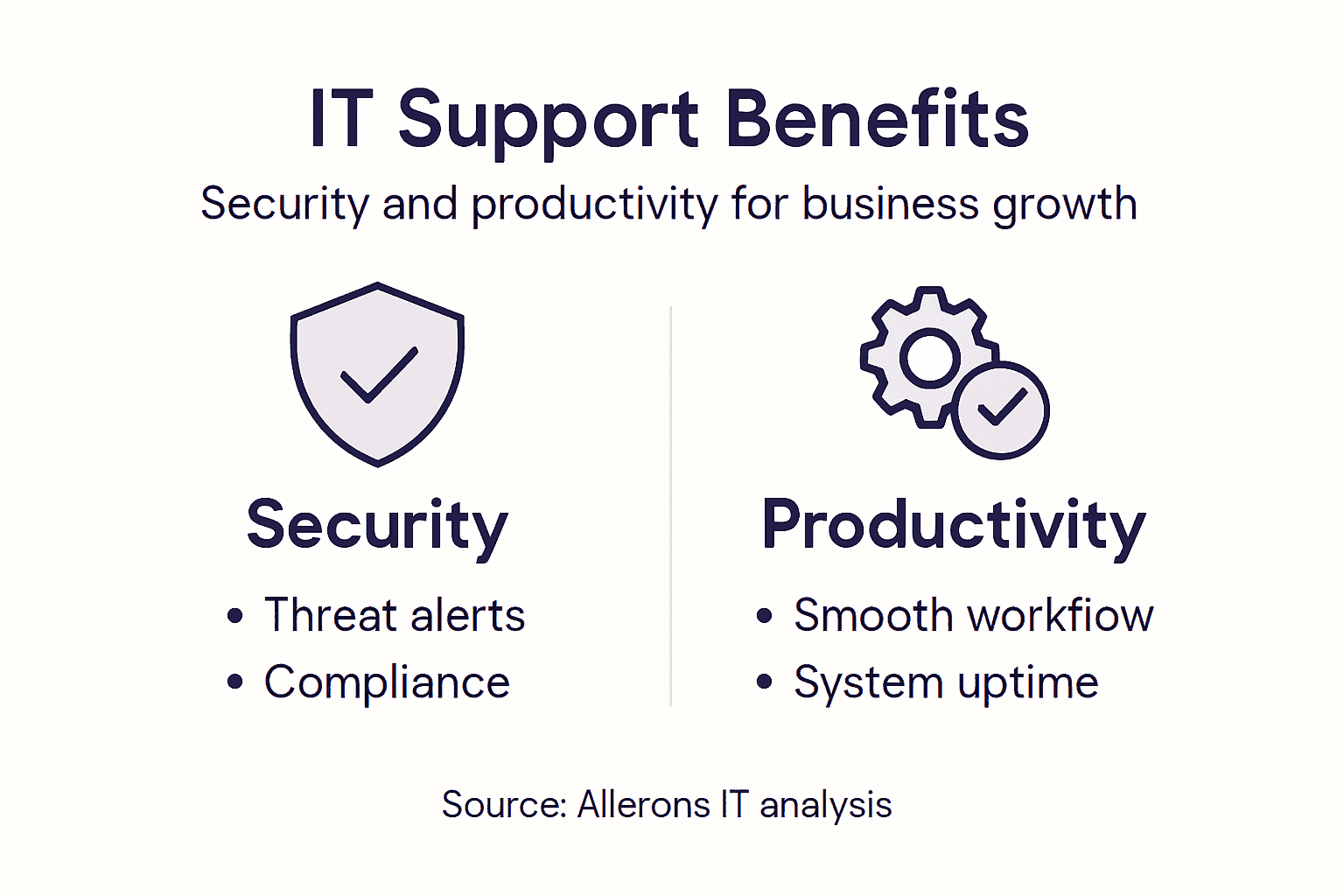
Pro tip: Schedule quarterly technology assessments to proactively identify potential system vulnerabilities and optimize your IT infrastructure before critical issues emerge.
Types of IT Support Services Explained
IT support services have evolved significantly, moving beyond basic troubleshooting to become comprehensive technological solutions for businesses. Technical support structures typically organize services into strategic tiers that address varying complexity levels, enabling organizations to manage technological challenges efficiently.
Businesses can access multiple types of IT support services, each designed to meet specific operational needs:
- Help Desk Support
- First point of contact for technology issues
- Handles basic troubleshooting and user inquiries
- Provides immediate initial problem resolution
- Remote Support Services
- Technical assistance delivered through digital platforms
- Enables quick diagnostics and problem solving
- Reduces downtime and travel expenses
- Onsite Technical Support
- Physical presence for complex hardware issues
- Comprehensive system diagnostics and repair
- Critical for infrastructure-intensive environments
- Managed Service Provider (MSP) Solutions
- Comprehensive IT management services under subscription models
- Proactive monitoring and maintenance
- Long-term strategic technological planning
These diverse support models allow businesses to select services matching their technological complexity, budget, and operational requirements. By understanding these options, organizations can design a tailored IT support strategy that maximizes efficiency and minimizes technological disruptions.
Here’s a comparison of IT support service types and their ideal business use cases:
| Service Type | Typical Use Case | Business Benefit |
|---|---|---|
| Help Desk | Small firms, basic inquiry handling | Quick issue resolution |
| Remote Support | Distributed teams, remote fixes | Reduced operational downtime |
| Onsite Support | Large offices, hardware repairs | Thorough hands-on diagnostics |
| Managed Services | Growth-focused, tech-reliant firms | Long-term strategic advantage |
Pro tip: Conduct a comprehensive technology audit annually to determine which IT support model best aligns with your organization’s evolving technological infrastructure and strategic goals.
Core Functions and Technology Integration
Technology integration represents the strategic backbone of modern business operations, transforming how organizations leverage digital resources. IT infrastructure components form the critical foundation that enables businesses to operate efficiently, securely, and adaptively in an increasingly complex technological landscape.
The core functions of technology integration encompass several key strategic areas:
-
Network Architecture
- Designing robust communication frameworks
- Ensuring seamless data transmission
- Implementing scalable connectivity solutions
-
System Compatibility
- Connecting diverse technological platforms
- Enabling cross-platform communication
- Reducing technological fragmentation
-
Security Implementation
- Developing comprehensive protection strategies
- Monitoring potential technological vulnerabilities
- Creating multi-layered defense mechanisms
Businesses increasingly rely on advanced system integration techniques to streamline operational workflows. These approaches enable organizations to create interconnected technological ecosystems that respond dynamically to changing business requirements, ultimately reducing operational costs and enhancing overall performance.

Successful technology integration demands a holistic approach that balances technical capabilities with strategic business objectives. By treating technology as a flexible, adaptive resource, companies can transform potential infrastructure challenges into competitive advantages.
Pro tip: Conduct quarterly technology compatibility assessments to identify potential integration challenges and proactively develop solutions that align with your evolving business strategy.
Cybersecurity and Compliance Responsibilities
Cybersecurity has transformed from a technical afterthought to a critical business imperative that demands comprehensive strategic planning. Cybersecurity framework guidelines provide organizations with structured approaches to managing digital risk, emphasizing proactive protection and adaptive security strategies.
Companies must address multiple dimensions of cybersecurity and compliance responsibilities:
-
Risk Assessment
- Identifying potential technological vulnerabilities
- Evaluating threat landscapes
- Developing predictive security models
-
Regulatory Compliance
- Understanding industry-specific security regulations
- Implementing standardized protection protocols
- Maintaining documented compliance evidence
-
Security Governance
- Establishing clear security policies
- Creating accountability frameworks
- Training employees on cybersecurity best practices
Cybersecurity compliance strategies require coordinated efforts across multiple organizational departments. This holistic approach ensures that technological safeguards align with legal requirements, protecting both digital assets and organizational reputation.
Effective cybersecurity is not about eliminating all risks but managing them intelligently. By developing adaptive, comprehensive security frameworks, businesses can create resilient technological environments that respond dynamically to emerging threats.
Pro tip: Implement a quarterly cross-departmental cybersecurity review to ensure continuous alignment between technological capabilities and evolving regulatory requirements.
Costs, Risks, and Common Pitfalls
Technology investments require strategic financial planning and comprehensive risk assessment. Economic cybersecurity costs extend far beyond immediate technological expenditures, encompassing potential financial losses from security breaches and operational disruptions.
Businesses frequently encounter several critical risks and potential pitfalls:
-
Financial Risks
- Unexpected technology replacement expenses
- Potential revenue loss during system failures
- Substantial cybersecurity breach recovery costs
-
Operational Challenges
- Technology compatibility complications
- Workforce adaptation and training requirements
- Productivity interruptions during system transitions
-
Security Vulnerabilities
- Unaddressed system weaknesses
- Inadequate employee security awareness
- Complex threat landscape management
IT risk management strategies demand proactive identification and mitigation of potential technological threats. Successful organizations develop flexible frameworks that balance operational efficiency with robust security protocols, transforming potential vulnerabilities into strategic opportunities for improvement.
Understanding these multifaceted risks requires continuous assessment and adaptive technological strategies. By maintaining a holistic perspective that integrates financial considerations, operational capabilities, and security requirements, businesses can navigate complex technological landscapes more effectively.
To clarify cost and risk considerations, here’s a summary of common financial and operational pitfalls:
| Category | Example Challenge | Mitigation Strategy |
|---|---|---|
| Financial Risk | Breach recovery expenses | Invest in security readiness |
| Operational Issue | Workforce adaptation delays | Ongoing employee technology training |
| Security Threat | System vulnerabilities exposed | Regular proactive risk assessments |
Pro tip: Develop a comprehensive technology risk assessment matrix that updates quarterly, tracking potential financial impacts and mitigation strategies for emerging technological challenges.
Elevate Your Business Security and Productivity with Expert IT Support
The article highlights critical challenges businesses face today such as managing complex technology systems while ensuring robust cybersecurity and operational efficiency. Key pain points include handling incident management, integrating advanced security frameworks, and preventing costly operational disruptions. With terminology like IT Service Management, cybersecurity compliance, and technology integration, it is clear organizations need strategic IT support that goes beyond basic troubleshooting to protect assets and accelerate growth.
At Ailerons IT, we understand these pressing needs and offer tailored IT consulting and managed support solutions that transform your technology infrastructure into a competitive advantage. Our services focus on proactive system monitoring, comprehensive security governance, and seamless user support to minimize downtime and guard against evolving cyber threats. Discover how our expert team can customize your technology strategy by visiting our Blog for insights and resources. Ready to secure your business while boosting productivity Take the next step now and Book a Consultation to develop an IT support plan designed specifically for your organization’s unique challenges.
Frequently Asked Questions
What is IT support and why is it important for business security and productivity?
IT support encompasses the management, maintenance, and troubleshooting of technology services within a business. It is essential for ensuring security and maximizing productivity by preventing downtime and addressing technical issues proactively.
How can IT support enhance network security for a business?
IT support enhances network security by implementing comprehensive protection strategies, conducting regular risk assessments, and ensuring compliance with industry regulations to safeguard digital assets from potential threats and vulnerabilities.
What are the different types of IT support services available for businesses?
Different types of IT support services include help desk support, remote support services, onsite technical support, and managed service provider (MSP) solutions. Each type caters to varying technical needs and operational requirements.
How can a business assess its IT support needs effectively?
A business can assess its IT support needs by conducting a comprehensive technology audit, identifying current challenges, evaluating future goals, and determining which support models align with its operational requirements and technological infrastructure.