

Managing technology for a growing business can feel overwhelming when every update, security risk, and support request lands on your desk. For many United States IT managers, limited in-house resources often mean juggling too many tasks while critical projects stall. Adopting managed IT services lets you delegate technical workloads to specialized providers, giving your team access to expert support, advanced tools, and a more stable infrastructure without the burden of expanding your internal staff.
Table of Contents
- Defining Managed IT Services For SMBs
- Types Of Managed IT Service Providers
- Core Features And Service Models
- Pricing, Contracts, And Cost Factors
- Risks, Drawbacks, And Legal Protections
- Alternatives To Managed IT Services
Key Takeaways
| Point | Details |
|---|---|
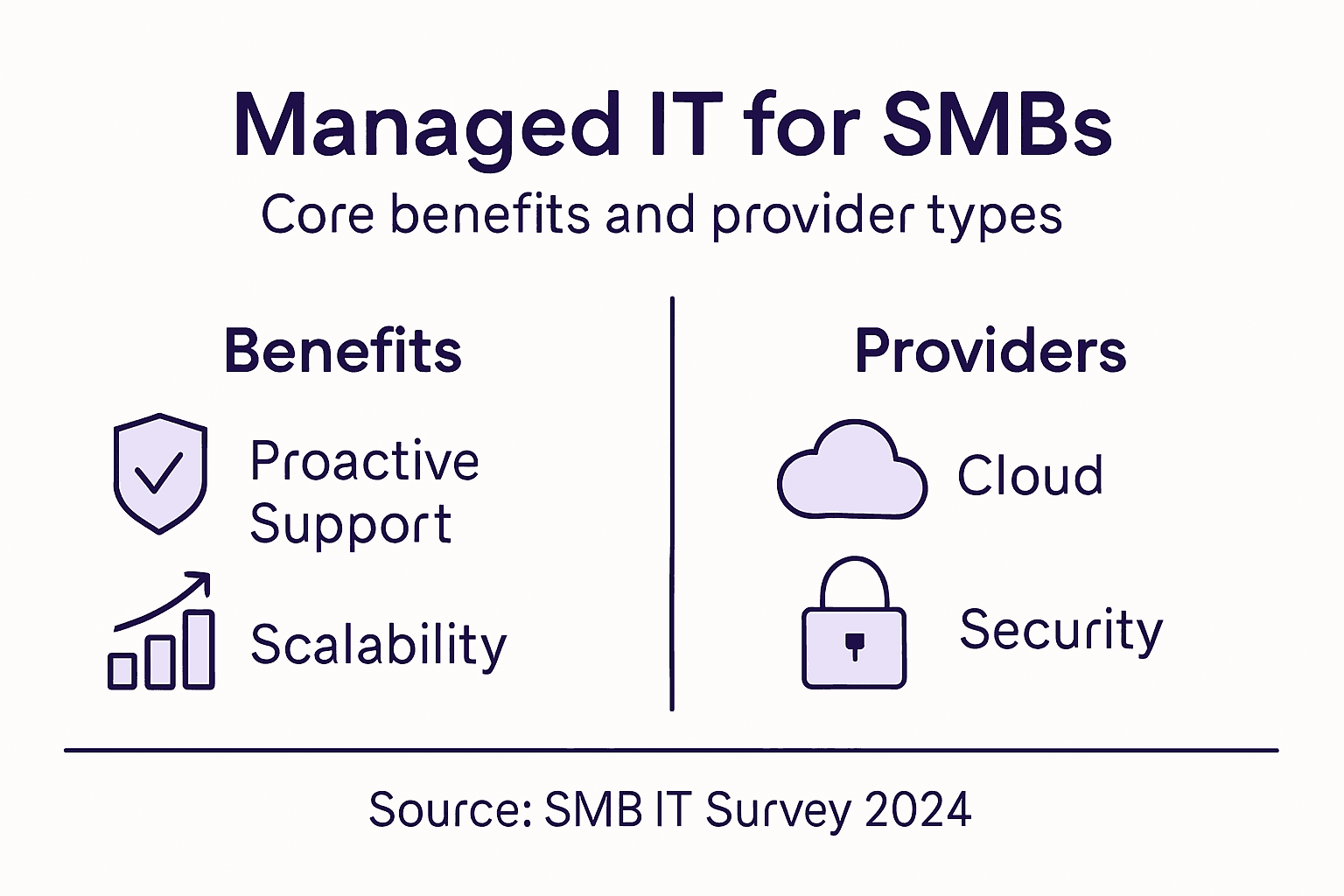
| Comprehensive Proactive Support | Managed IT services provide small and medium-sized businesses with proactive technology management instead of reactive problem-solving. |
| Diverse Provider Options | SMBs can choose from various managed IT service providers, including Cloud Service Providers and Managed Security Service Providers, based on their specific needs. |
| Flexible Pricing Models | Managed IT service pricing includes options like flat-rate, tiered, or pay-as-you-go arrangements, allowing businesses to align costs with their technology use. |
| Risk Management Importance | SMBs must actively manage the risks associated with outsourcing IT, including technological vulnerabilities and legal compliance, by ensuring robust service contracts and SLAs. |
Defining Managed IT Services for SMBs
Managed IT services represent a strategic approach where professional technology firms handle an organization’s entire technology infrastructure and support needs. Unlike traditional break-fix models, these services provide comprehensive, proactive technology management designed specifically for small and medium-sized businesses (SMBs) with limited internal IT resources.
At its core, managed IT services operate through standardized support solutions that allow businesses to outsource complex technology requirements. These services typically encompass several critical technological domains:
- Network monitoring and maintenance
- Cybersecurity protection
- Cloud infrastructure management
- Help desk and technical support
- Hardware and software lifecycle management
For SMBs, managed IT services offer a transformative solution that bridges the technology expertise gap. By partnering with specialized providers, smaller organizations can access enterprise-grade technology support without maintaining expensive internal IT departments. This model enables businesses to shift from reactive problem-solving to strategic, proactive technology planning.
Pro tip: When evaluating managed IT service providers, request detailed service level agreements (SLAs) that clearly outline response times, support coverage, and specific technology management responsibilities.
Types of Managed IT Service Providers
Managed IT service providers have evolved to offer specialized solutions tailored to different business needs, creating a diverse ecosystem of technology support options. These providers range from comprehensive full-service firms to niche specialists focused on specific technological domains. Cloud service providers represent one of the most dynamic segments in this landscape, offering flexible and scalable technology solutions for modern businesses.
The primary categories of managed IT service providers include:
-
Cloud Service Providers: Offering public, private, and hybrid cloud infrastructure
- Software as a Service (SaaS) platforms
- Platform as a Service (PaaS) solutions
- Infrastructure as a Service (IaaS) environments
-
Managed Security Service Providers (MSSPs): Specializing in cybersecurity and threat protection
- Network security monitoring
- Threat detection and response
- Compliance management
-
Traditional IT Infrastructure Providers: Managing on-premise and legacy technology systems
- Hardware maintenance
- Network infrastructure management
- Desktop and server support
Small and medium-sized businesses benefit from understanding these provider types, as each offers unique advantages depending on organizational technology requirements. Some providers offer hybrid models that combine multiple service types, allowing businesses to create customized technology support strategies that align with their specific operational needs.
Here’s a comparison of managed IT service provider types and their strategic benefits for SMBs:
| Provider Type | Unique Advantage | Best For |
|---|---|---|
| Cloud Service Provider | Scalability and remote access | Rapidly growing firms |
| Managed Security Service Provider | Specialized threat protection | Highly regulated industries |
| Traditional IT Infrastructure | Stability for legacy systems | Companies with on-premise tech |
| Hybrid Service Provider | Customized support models | Organizations with diverse needs |
Pro tip: When selecting a managed IT service provider, assess your organization’s specific technology requirements and evaluate providers based on their expertise, service flexibility, and ability to scale with your business growth.
Core Features and Service Models
Managed IT services encompass a comprehensive suite of technological support designed to address the complex infrastructure needs of small and medium-sized businesses. Core service features represent a strategic approach to technology management that goes beyond traditional reactive support models.

The fundamental components of managed IT service models typically include:
Proactive Monitoring and Management
- Continuous network and system surveillance
- Real-time performance tracking
- Predictive maintenance and issue identification
Security and Compliance
- Automated patch management
- Advanced threat detection
- Comprehensive cybersecurity protocols
- Regulatory compliance monitoring
Infrastructure Support
- Operating system deployment
- Application software management
- Hardware lifecycle management
- Endpoint device protection
Service models range from fully outsourced solutions to flexible co-managed approaches, allowing businesses to customize their technology support strategy. This flexibility enables organizations to retain internal control while leveraging expert external support, creating a tailored technology management approach that adapts to specific business requirements.
The evolving landscape of managed IT services emphasizes scalability, allowing businesses to adjust their technology support as they grow and their technological needs change. By implementing these comprehensive service models, small and medium-sized businesses can access enterprise-grade technology management without substantial internal investment.
Pro tip: When evaluating managed IT service models, prioritize providers offering transparent service level agreements and demonstrable flexibility in adapting to your organization’s unique technological ecosystem.
Pricing, Contracts, and Cost Factors
Managed IT service pricing represents a complex landscape of strategic financial considerations for small and medium-sized businesses. Pricing models have evolved to provide flexible solutions that accommodate diverse technological needs and budgetary constraints.
The primary pricing structures for managed IT services include:
Pricing Models
-
Flat-Rate Monthly Subscriptions
- Predictable monthly expenses
- Comprehensive service package
- Ideal for consistent technology needs
-
Tiered Service Levels
- Scalable pricing based on service complexity
- Customizable support options
- Allows businesses to match services to budget
-
Pay-As-You-Go Arrangements
- Flexible billing based on actual usage
- Variable cost structure
- Suitable for businesses with fluctuating IT requirements
Contract considerations extend beyond simple pricing, encompassing critical elements that protect both service providers and businesses. These typically include detailed service level agreements (SLAs), performance metrics, compliance requirements, and specific technological deliverables.
Cost factors are multifaceted, involving direct expenses like service fees and indirect costs such as potential productivity gains, risk mitigation, and technological efficiency. Small and medium-sized businesses must carefully evaluate these comprehensive cost implications, considering not just the immediate financial investment but the long-term strategic value of professional IT management.
Below is a summary of managed IT service pricing models and their business implications:
| Pricing Model | Predictability | Suitability |
|---|---|---|
| Flat-Rate Subscription | Highly predictable budgeting | Firms with stable IT usage |
| Tiered Service Levels | Flexible cost control | Growing companies needing scalability |
| Pay-As-You-Go | Cost varies by usage | Businesses with changing IT demands |
Pro tip: When negotiating managed IT service contracts, request detailed breakdowns of all potential costs and seek transparent performance metrics that align directly with your business objectives.
Risks, Drawbacks, and Legal Protections
Managed IT services, while offering substantial technological advantages, also introduce complex risk landscapes that small and medium-sized businesses must carefully navigate. Cybersecurity risks represent a critical consideration in evaluating potential managed service partnerships, requiring comprehensive understanding and proactive management strategies.
Key risk categories for SMBs include:
Technological Vulnerabilities
- Cloud infrastructure misconfiguration
- Potential vendor security breaches
- Ransomware and advanced persistent threats
- Data exposure through third-party access
Legal and Compliance Risks
- Regulatory non-compliance penalties
- Data privacy protection requirements
- Contractual liability limitations
- Intellectual property protection challenges
Operational Drawbacks
- Potential loss of direct technological control
- Dependency on external service provider performance
- Integration challenges with existing systems
- Communication and responsiveness gaps
Legal protections become paramount in mitigating these risks. Businesses must develop robust contracts that explicitly outline service responsibilities, performance metrics, security protocols, and clear liability boundaries. Comprehensive service level agreements (SLAs) should include specific provisions for data protection, incident response, and compensation mechanisms in case of service failures or security breaches.
Effective risk management requires a proactive approach that balances technological innovation with stringent protective measures. Small and medium-sized businesses must conduct thorough due diligence, including vendor security assessments, compliance audits, and continuous monitoring of technological partnerships.
Pro tip: Always request and thoroughly review a potential managed IT service provider’s incident response plan, independent security certifications, and historical performance data before signing any contracts.
Alternatives to Managed IT Services
Small and medium-sized businesses have multiple strategic alternatives to traditional managed IT services that can provide technological support while maintaining greater control and flexibility. Professional IT solutions offer innovative approaches that empower organizations to develop internal capabilities and leverage emerging technologies.
Key alternatives to managed IT services include:
Internal IT Development Strategies
- Building dedicated in-house IT teams
- Implementing comprehensive staff training programs
- Pursuing professional technology certifications
- Developing internal technology management skills
Technology-Driven Alternatives
- Cloud-native automation tools
- AI-enabled IT support platforms
- Software-as-a-Service (SaaS) solutions
- Modular infrastructure management systems
Hybrid IT Management Models
- Partial outsourcing with retained internal control
- Consulting-based technology guidance
- Targeted technology skill augmentation
- Flexible service engagement frameworks
The evolving landscape of technological support enables SMBs to design customized approaches that balance external expertise with internal technological autonomy. By strategically combining professional development, advanced tools, and selective external support, businesses can create robust IT management strategies that align precisely with their operational requirements.
Successful implementation of these alternatives requires careful assessment of organizational technology needs, existing infrastructure capabilities, and long-term strategic objectives. Businesses must continuously evaluate their technological support model to ensure optimal performance, cost-effectiveness, and strategic alignment.
Pro tip: Conduct a comprehensive internal technology skills audit before selecting an alternative IT management approach to identify existing capabilities and potential skill development opportunities.
Unlock Your SMB’s Potential with Expert Managed IT Solutions
Managing complex IT needs can feel overwhelming for small and medium-sized businesses navigating cybersecurity risks and fluctuating technology demands. The challenge of finding the right blend of proactive monitoring, flexible service models, and cost-effective pricing often slows growth and increases risk. Concepts like service level agreements and hybrid IT management models are critical to getting the support your business deserves.
At Ailerons IT, we understand these pain points and specialize in delivering tailored managed IT services designed to keep your infrastructure secure, compliant, and scalable. Explore how our experienced team can provide clear SLAs and flexible service offerings that grow with your needs. Dive deeper into industry insights and best practices on our blog to make informed decisions.
Ready to transform your IT management from a cost center to a strategic advantage Act now and visit Ailerons IT to book a personalized consultation. Let us help you build a resilient IT foundation with expert guidance and cutting-edge solutions that fit your business goals perfectly.
Frequently Asked Questions
What are managed IT services?
Managed IT services refer to a comprehensive approach where professional technology firms handle an organization’s entire technology infrastructure and support needs. This proactive management helps businesses, particularly small and medium-sized ones, access expert technology support without maintaining expensive internal IT departments.
What types of managed IT service providers are available for SMBs?
There are several types of managed IT service providers, including Cloud Service Providers, Managed Security Service Providers (MSSPs), and Traditional IT Infrastructure Providers. Each type specializes in different areas, allowing SMBs to choose a provider that aligns with their specific technology needs.
What are the core features of managed IT services?
Core features of managed IT services include proactive monitoring and management, security and compliance measures, and comprehensive infrastructure support. These components help SMBs ensure efficient, secure, and compliant technology operations.
How do pricing models for managed IT services work?
Managed IT services come with various pricing models, including flat-rate monthly subscriptions, tiered service levels, and pay-as-you-go arrangements. Each model offers different benefits, allowing SMBs to choose a pricing structure that fits their budget and technological requirements.