

Facing decisions about technology investments can feel overwhelming for small and medium-sized businesses in the United States, especially when growth and efficiency are top priorities. The role of information technology consulting has become critical as organizations seek expert advice for aligning digital strategies with business goals. This overview provides practical insights into the definition, purpose, and core benefits of IT consulting, helping you make informed choices for your company’s future.
Table of Contents
- Defining IT Consulting And Its Purpose
- Types Of IT Consulting Services Explained
- Core Roles And Responsibilities Of Consultants
- Benefits And Real-World Applications For SMBs
- Costs, Common Risks, And How To Avoid Pitfalls
- Choosing IT Consulting Versus Other Alternatives
Key Takeaways
| Point | Details |
|---|---|
| Strategic Alignment | IT consulting helps organizations align technology with business goals to achieve operational efficiency and competitive advantages. |
| Diverse Service Types | Consultants provide specialized services such as cybersecurity, cloud solutions, and data analytics tailored to unique organizational needs. |
| Risk Management | Engaging with IT consultants involves navigating potential financial and operational risks, necessitating effective risk assessment and clear communication. |
| Cost-Effective Solutions | SMBs can benefit from tailored technology strategies that reduce costs and enhance productivity by leveraging expert guidance. |
Defining IT Consulting and Its Purpose
IT consulting represents a specialized professional service designed to help organizations strategically leverage technology for achieving business objectives. At its core, information technology consulting focuses on providing expert guidance that transforms complex technological challenges into strategic opportunities for growth and efficiency.
Technical consultants serve as critical problem solvers who possess deep knowledge of computer systems and technological infrastructures. These professionals assist organizations by diagnosing technology issues and developing targeted software solutions that address specific business needs. Their expertise spans multiple domains, including system architecture, network design, cybersecurity, and digital transformation strategies.
The primary responsibilities of IT consultants typically include:
- Analyzing current technological environments
- Identifying potential system improvements
- Recommending cost-effective technology solutions
- Developing implementation roadmaps
- Providing ongoing technical support and guidance
By bridging the gap between technological capabilities and business strategy, IT consultants help organizations optimize their digital infrastructure, reduce operational inefficiencies, and create sustainable competitive advantages in an increasingly technology-driven marketplace.
Pro Tip: When selecting an IT consultant, prioritize professionals with demonstrated experience in your specific industry and a proven track record of delivering measurable technological improvements.
Types of IT Consulting Services Explained
IT consulting encompasses a diverse range of specialized services designed to address the complex technological needs of modern organizations. Information Technology Enabled Services) represent a comprehensive approach to leveraging technology across multiple business domains, helping companies optimize their operational capabilities and strategic performance.
The primary categories of IT consulting services include:
- Strategic IT Consulting: Helping organizations align technology with business goals
- Technology Infrastructure Consulting: Designing and optimizing network and system architectures
- Cybersecurity Consulting: Developing comprehensive security strategies and risk management protocols
- Cloud Services Consulting: Guiding digital transformation and cloud migration strategies
- Software Implementation Consulting: Supporting the selection and deployment of enterprise software solutions
- Data Analytics and Business Intelligence Consulting: Transforming raw data into actionable business insights
Each type of IT consulting service addresses unique organizational challenges. Strategic consultants work closely with leadership to develop technology roadmaps, while infrastructure experts ensure robust and scalable technological foundations. Cybersecurity consultants protect critical digital assets, and cloud services specialists help businesses navigate complex digital transformation journeys.
These consulting services are not one-size-fits-all solutions but carefully tailored approaches that consider an organization’s specific technological ecosystem, business objectives, and growth potential. By providing expert guidance and technical expertise, IT consultants help businesses stay competitive, innovative, and technologically resilient in a rapidly evolving digital landscape.
Pro Tip: When engaging IT consulting services, request detailed case studies and industry-specific experience to ensure the consultants truly understand your unique technological challenges and business context.
Core Roles and Responsibilities of Consultants
IT consultants play a critical role in bridging technology and business strategy, with diverse professional responsibilities that extend far beyond traditional technical support. These professionals serve as strategic advisors, problem solvers, and technological architects who help organizations navigate complex digital transformations.
The core responsibilities of IT consultants typically encompass several key areas:
- Comprehensive Needs Assessment: Conducting thorough evaluations of existing technological infrastructures
- Strategic Planning: Developing tailored technology roadmaps aligned with business objectives
- Solution Design: Crafting innovative technological solutions to address specific organizational challenges
- Implementation Support: Guiding seamless integration of new technologies and systems
- Performance Optimization: Continuously monitoring and improving technological ecosystems
According to industry experts, IT operations roles require multifaceted expertise across various technological domains. Consultants must demonstrate proficiency in areas such as infrastructure management, cybersecurity, cloud computing, data analytics, and emerging technological trends. They act as translators between technical complexities and business leadership, ensuring that technological investments directly contribute to organizational growth and efficiency.
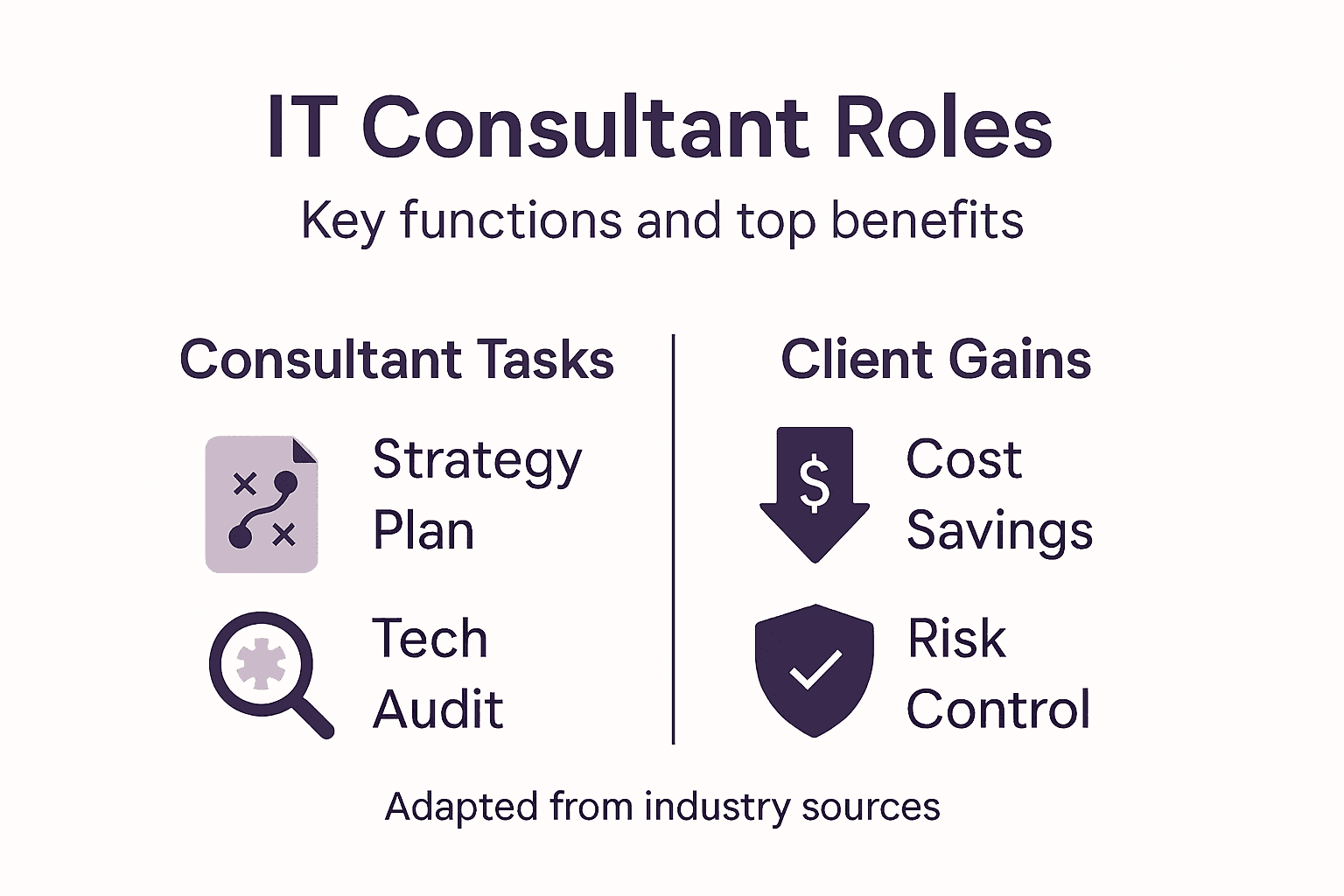
Successful IT consultants combine deep technical knowledge with exceptional communication and strategic thinking skills. They must be able to diagnose complex technological challenges, recommend cost-effective solutions, and support organizations through complete digital transformation processes. Their work involves continuous learning, adapting to rapidly evolving technological landscapes, and maintaining a holistic understanding of how technology can drive business innovation.
Pro Tip: Develop a versatile skill set that combines technical expertise with strong communication and business strategy understanding to maximize your effectiveness as an IT consultant.
Benefits and Real-World Applications for SMBs
SMBs in the U.S. are increasingly investing in technology to drive strategic growth, operational efficiency, and competitive advantage. For small and medium-sized businesses, IT consulting represents a critical pathway to navigating complex technological landscapes, enabling organizations to leverage digital solutions that were previously accessible only to larger enterprises.
The primary benefits of IT consulting for SMBs include:
- Cost-Effective Technology Implementation: Reducing unnecessary technological expenses
- Strategic Technology Roadmapping: Developing long-term digital transformation strategies
- Cybersecurity Enhancement: Protecting critical business data and infrastructure
- Operational Efficiency: Streamlining business processes through targeted technological solutions
- Scalable Technology Architecture: Creating flexible systems that grow with the business
SMBs often face significant technology stack challenges that can impede growth and productivity. These challenges typically include limited IT resources, complex tool integrations, and emerging cybersecurity risks. IT consultants provide specialized expertise that helps businesses audit their existing technologies, consolidate redundant tools, and develop comprehensive strategies that align technological investments with core business objectives.
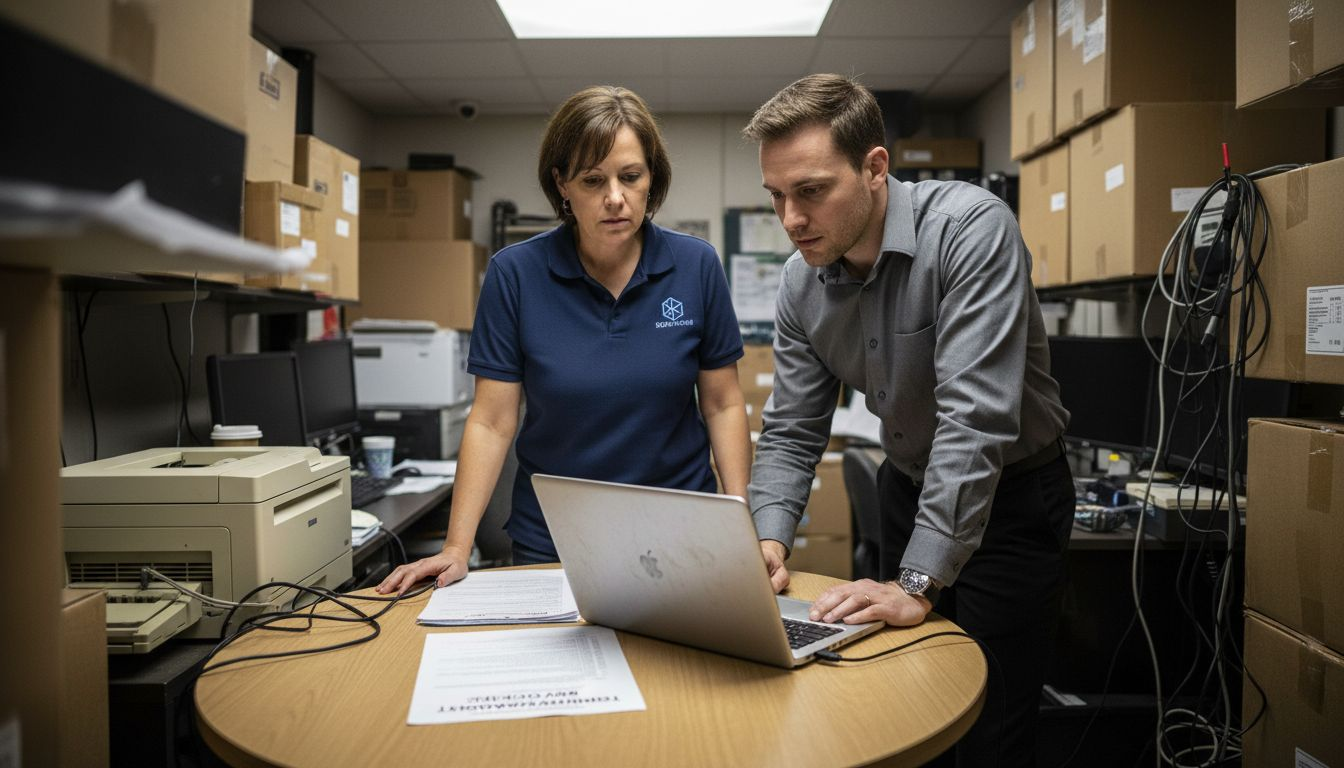
By partnering with experienced IT consultants, small businesses can transform technological obstacles into strategic opportunities. These professionals offer tailored solutions that address unique organizational needs, help businesses stay competitive in rapidly evolving digital markets, and provide the technological foundation necessary for sustainable growth and innovation.
The following table summarizes how IT consulting directly impacts SMB business outcomes:
| Business Area | Consulting Impact | Long-Term Benefit |
|---|---|---|
| Cybersecurity | Tailored security protocols | Reduced data breach risk |
| Efficiency | Process streamlining | Higher productivity |
| Cost Control | Eliminates redundant tools | Improved profit margins |
| Growth | Scalable tech foundations | Easier market expansion |
Pro Tip: Conduct a comprehensive technology audit annually to identify potential inefficiencies, security gaps, and opportunities for strategic technological investments.
Costs, Common Risks, and How to Avoid Pitfalls
IT consulting engagements come with inherent financial and operational risks that organizations must carefully navigate. Outsourcing IT services introduces complex risk considerations that extend beyond simple cost calculations, requiring strategic planning and proactive management.
The primary risks associated with IT consulting include:
- Budget Overruns: Unexpected expenses and scope creep
- Technology Misalignment: Solutions that don’t match organizational needs
- Security Vulnerabilities: Potential third-party access points
- Vendor Lock-In: Difficulty switching between technology providers
- Performance Inconsistencies: Gaps between promised and delivered outcomes
Effective risk management requires comprehensive enterprise strategies that integrate technological risks within broader organizational frameworks. Businesses must develop robust governance structures, implement continuous risk assessment protocols, and maintain transparent communication channels with their IT consulting partners. This approach helps mitigate potential disruptions and ensures that technological investments directly support strategic business objectives.
To minimize potential pitfalls, organizations should conduct thorough due diligence, establish clear performance metrics, maintain flexible contract terms, and develop comprehensive exit strategies. Successful risk management involves creating a collaborative partnership with IT consultants, where expectations are clearly defined, performance is regularly evaluated, and both parties remain committed to achieving mutually beneficial outcomes.
Pro Tip: Develop a comprehensive risk assessment matrix before engaging any IT consulting service, documenting potential vulnerabilities, mitigation strategies, and financial impact scenarios.
Choosing IT Consulting Versus Other Alternatives
Decision makers evaluate technological alternatives through complex assessment processes that consider organizational capabilities, strategic objectives, and resource constraints. Understanding the pros and cons of IT consulting versus internal development or alternative solutions requires a nuanced approach that goes beyond simple cost comparisons.
The key alternatives to traditional IT consulting include:
- In-House IT Development: Building internal technology teams
- Freelance Technology Support: Hiring individual specialists
- Software-as-a-Service (SaaS) Solutions: Utilizing pre-built technological platforms
- Managed Service Providers: Outsourcing comprehensive technology management
- DIY Technology Implementation: Leveraging internal resources and learning
Entrepreneurs analyzing technology strategies must consider multiple dimensions beyond immediate cost. These include long-term scalability, expertise requirements, implementation complexity, ongoing maintenance needs, and potential competitive advantages. IT consulting stands out when organizations require specialized knowledge, rapid deployment, and strategic technological guidance that internal teams might struggle to provide.
Successful technology strategy selection involves comprehensive evaluation of organizational readiness, technological complexity, and strategic alignment. While IT consulting offers structured expertise and comprehensive support, alternatives like SaaS solutions or internal development might provide more cost-effective approaches for organizations with specific, well-defined technological requirements and robust internal capabilities.
Here’s a side-by-side look at common IT consulting alternatives and their typical advantages and limitations:
| Approach | Main Advantages | Main Limitations |
|---|---|---|
| IT Consulting | Expert guidance, rapid deployment | Potentially higher costs, dependency risk |
| In-House Team | Direct control, builds culture | Slow to scale, skill gaps possible |
| Freelancers | Flexible, cost-effective for small tasks | Quality varies, little strategic input |
| SaaS Solutions | Lower upfront cost, quick setup | Less customization, ongoing subscription |
| Managed Services | End-to-end support, predictable spend | Less internal tech ownership |
| DIY Implementation | Cost savings, full control | High resource strain, risk of errors |
Pro Tip: Conduct a thorough capability assessment of your internal technology team before deciding between IT consulting and alternative approaches, focusing on skill gaps and strategic technology objectives.
Harness the Power of Expert IT Consulting for Your Business
Many small and medium-sized businesses struggle with complex technology challenges that slow growth and drain resources. The article “What Is IT Consulting and Why It Matters” highlights common pain points such as technology misalignment, cybersecurity risks, and inefficient technology stacks that prevent companies from reaching their full potential. At Ailerons IT, we understand these obstacles and specialize in delivering tailored IT consulting services that create scalable, secure, and cost-effective technology solutions.
Discover how strategic IT consulting can transform your business by:
- Aligning technology with your core business goals
- Enhancing cybersecurity to protect your critical data
- Streamlining operations to boost productivity and profitability
Start overcoming your technology challenges today. Explore insightful resources at our blog and see how our expert consultants can guide your digital transformation. Don’t wait until risks become costly. Visit Ailerons IT now to schedule your personalized consultation and take the first step toward a smarter technology strategy.
Frequently Asked Questions
What is IT consulting?
IT consulting is a specialized professional service that helps organizations leverage technology to achieve their business objectives by providing expert guidance on overcoming complex technological challenges.
What are the main types of IT consulting services?
The primary types of IT consulting services include strategic IT consulting, technology infrastructure consulting, cybersecurity consulting, cloud services consulting, software implementation consulting, and data analytics consulting.
What benefits can IT consulting provide for small and medium-sized businesses (SMBs)?
IT consulting can help SMBs by offering cost-effective technology implementation, strategic technology roadmapping, enhanced cybersecurity, increased operational efficiency, and scalable technology architecture to support growth.
What are the common risks associated with IT consulting?
Common risks of IT consulting include budget overruns, technology misalignment, security vulnerabilities, vendor lock-in, and performance inconsistencies. It is crucial to have a robust risk management strategy to address these challenges.