

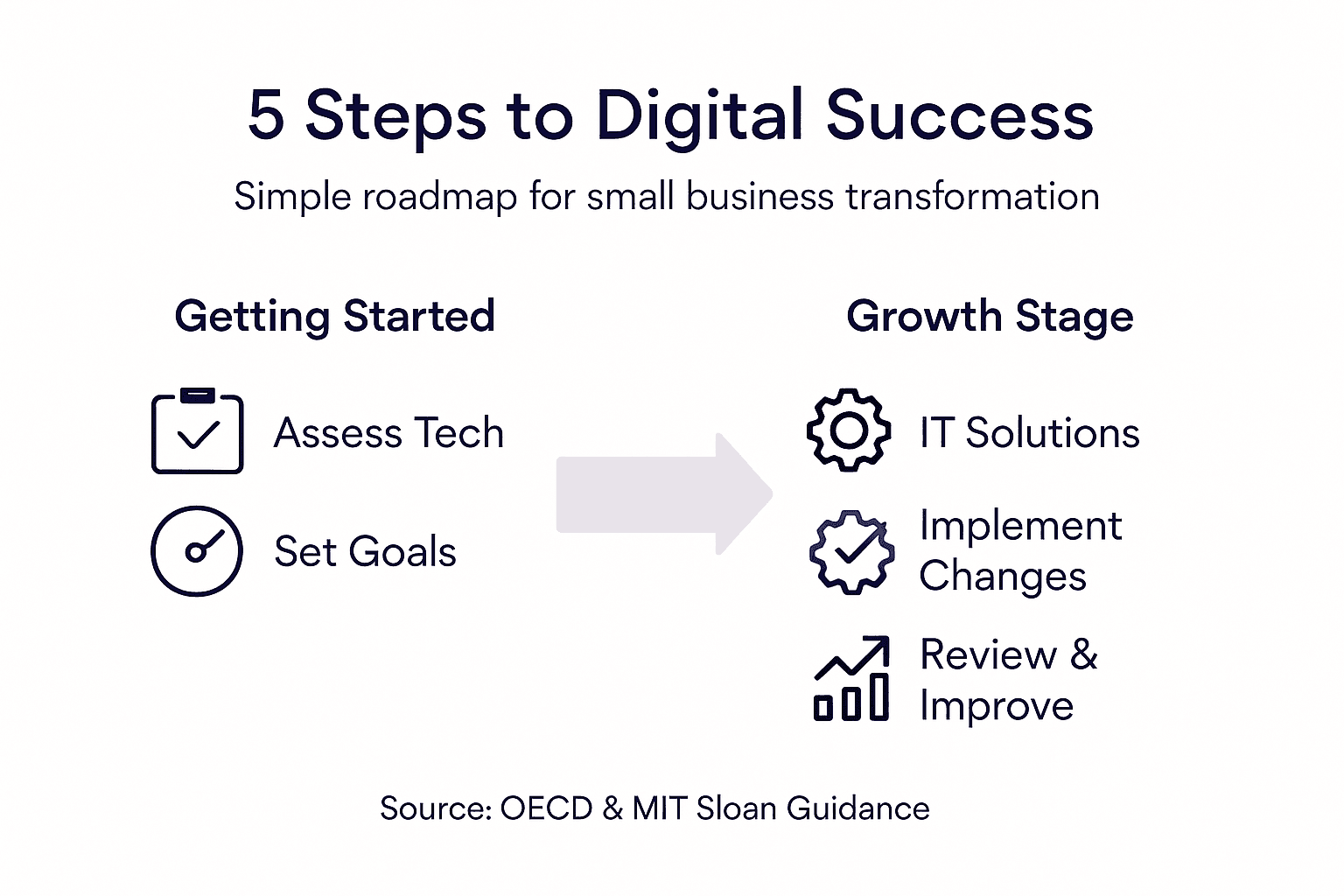
Over 60 percent of American small businesses report challenges when matching their technology to their real business needs. For IT managers and owners, falling behind on digital transformation can hold back profitability and growth. This guide brings a practical roadmap to help you assess your current technology, set clear objectives, select the right IT solutions, and foster ongoing improvement for a successful American business transformation.
Table of Contents
- Step 1: Assess Current Technology and Business Needs
- Step 2: Define Clear Digital Transformation Objectives
- Step 3: Select Appropriate IT Solutions and Partners
- Step 4: Implement Changes Across All Operations
- Step 5: Evaluate Results and Optimize Continuously
Quick Summary
| Key Insight | Explanation |
|---|---|
| 1. Conduct a Technology Audit | Assess existing infrastructure to identify areas for improvement and operational efficiency. |
| 2. Set Clear Transformation Goals | Define specific, measurable objectives tied to business needs and opportunities for maximum impact. |
| 3. Evaluate IT Solutions Carefully | Select IT technologies and partners based on scalability, security, and alignment with business objectives. |
| 4. Implement Strategically | Use phased rollouts and training to ease transitions and foster employee engagement. |
| 5. Continuously Measure and Optimize | Regularly review performance metrics and adapt strategies to maximize digital transformation value. |
Step 1: Assess Current Technology and Business Needs
Successfully navigating your small business’s digital transformation starts with a thorough understanding of your existing technology infrastructure and business requirements. This critical first step helps you pinpoint exactly where technology can boost your operational efficiency and growth potential.
Begin by conducting a comprehensive technology audit that maps out your current systems, software, hardware, and digital capabilities. According to the Digital Progress and Trends Report, businesses often lag in digital adoption when they skip this foundational assessment. Review your current tools across key areas: communication platforms, customer relationship management systems, financial software, cybersecurity measures, and operational workflows. Create an inventory that details each technology’s age, performance, integration capabilities, and potential limitations.
Next, align your technology assessment with specific business objectives. The OECD digital transformation guidelines recommend an evidence-based approach that connects technological capabilities directly to strategic goals. Identify pain points in your current processes where technology could provide meaningful improvements. Ask yourself targeted questions: Are customer communications inefficient? Do manual data entry tasks consume excessive staff time? Are reporting and analytics challenging? These insights will help you prioritize digital investments that deliver tangible business value.
Pro Tip: Involve team members from different departments during your technology assessment to gain comprehensive insights and ensure widespread buy-in for upcoming digital transformation initiatives.
Here is a summary of key technology elements to assess during your digital transformation audit:
| Technology Area | Common Tools/Systems | Typical Limitations |
|---|---|---|
| Communication Platforms | Email, chat, video conferencing | Siloed systems, slow response |
| CRM Systems | Salesforce, HubSpot, Zoho CRM | Limited integration, outdated data |
| Financial Software | QuickBooks, Xero, FreshBooks | Manual entry, reporting gaps |
| Cybersecurity Measures | Antivirus, firewalls, monitoring | Low coverage, lack of automation |
| Operational Workflows | Project management, ERP, task apps | Duplication, inefficiency |
Step 2: Define Clear Digital Transformation Objectives
Defining precise digital transformation objectives is your strategic roadmap for turning technological potential into real business value. This crucial step transforms vague aspirations into actionable, measurable goals that will guide your entire digital journey.

Start by crafting objectives that directly address your business’s unique challenges and opportunities. Stanford Online’s digital transformation strategy recommends focusing on specific areas like enhancing customer experience, streamlining internal processes, and improving decision making capabilities. Break down your objectives into concrete, quantifiable targets. For instance, instead of a generic goal like “improve customer service,” set a specific objective such as “reduce customer response time by 40% through implementing an integrated communication platform” or “increase online sales conversion rates by 25% using personalized digital marketing tools.”
Ensure your digital transformation objectives align with broader business strategies and market realities. The OECD digital transformation guidelines emphasize creating objectives that support sustainable growth and competitive advantage. Consider objectives across multiple dimensions: operational efficiency, innovation capacity, customer engagement, and risk management. Prioritize goals that not only solve current challenges but also position your business for future market adaptations.
Pro Tip: Create a visual objective tracking dashboard that allows your team to monitor progress and quickly identify areas needing adjustment during your digital transformation journey.
This table compares digital transformation objective categories and their typical business benefits:
| Objective Category | Example Objective | Business Benefit |
|---|---|---|
| Customer Experience | Reduce response time by 40% | Higher satisfaction |
| Internal Process | Automate data entry tasks | Increased efficiency |
| Decision Making | Improve analytics accuracy | Better strategic choices |
| Innovation Capacity | Launch new digital services | Expanded market reach |
Step 3: Select Appropriate IT Solutions and Partners
Choosing the right IT solutions and technology partners is a critical decision that can make or break your digital transformation journey. This step requires careful evaluation to ensure you select technologies and collaborators that align perfectly with your business goals and growth potential.
Begin by thoroughly analyzing your specific business needs through the lens of digital connectivity requirements. Look beyond surface level features and assess each potential solution’s scalability, security, and integration capabilities. The World Bank emphasizes the importance of selecting platforms that offer affordability, reliability, and future adaptability. Consider factors like ease of use, compatibility with existing systems, potential for customization, and the vendor’s track record of supporting small businesses. Pay special attention to technical support offerings, implementation timelines, and ongoing maintenance services.
When evaluating potential IT partners, the OECD digital transformation guidelines recommend a comprehensive assessment of their expertise, cultural fit, and alignment with your business objectives. Look for partners who demonstrate deep understanding of your industry, offer transparent pricing models, and provide clear implementation roadmaps. Request detailed case studies from businesses similar to yours, check references, and consider scheduling initial consultation calls to assess their communication style and problem solving approach.
Pro Tip: Create a weighted scoring matrix to objectively evaluate potential IT solutions and partners, assigning numerical values to key selection criteria like cost, functionality, support quality, and strategic alignment.
Step 4: Implement Changes Across All Operations
Implementing digital transformation requires a strategic and comprehensive approach that touches every aspect of your business operations. This step is about creating a holistic transition that aligns technology, people, and processes to drive meaningful change.
Start by developing a phased implementation strategy that addresses organizational cultural shifts. MIT Sloan Management Review emphasizes the importance of an iterative approach that prioritizes employee engagement and adaptability. Begin with pilot programs in select departments to test new technologies and workflows, gathering feedback and refining your approach before full scale rollout. This approach allows you to identify potential challenges, build internal confidence, and create internal champions who can help drive broader adoption. Focus on providing comprehensive training programs that not only teach new technological skills but also help employees understand the strategic rationale behind the transformation.
The OECD digital transformation guidelines recommend a systematic approach to integrating digital technologies across customer interactions, internal processes, and supply chain management. Map out each operational area and identify specific digital solutions that can improve efficiency, communication, and data driven decision making. Prioritize changes that deliver immediate tangible benefits while also building a foundation for long term digital capabilities. Establish clear metrics to track progress, create feedback loops, and remain flexible enough to adjust your implementation strategy based on real world performance and emerging technological opportunities.
Pro Tip: Create a dedicated digital transformation task force with representatives from different departments to ensure comprehensive visibility and collaborative implementation across your organization.
Step 5: Evaluate Results and Optimize Continuously
Digital transformation is not a one time event but an ongoing journey of strategic adaptation and continuous improvement. This final step focuses on creating a dynamic feedback mechanism that allows your business to learn, adjust, and maximize the value of your digital investments.
Establish a robust system for ongoing performance measurement that goes beyond traditional metrics. MIT Sloan Management Review recommends developing a comprehensive dashboard that tracks both quantitative and qualitative indicators of digital transformation success. This means looking beyond simple financial metrics to assess changes in employee productivity, customer satisfaction, operational efficiency, and technological readiness. Implement regular review sessions where you analyze these metrics, challenge existing assumptions, and identify areas for potential optimization. Be prepared to pivot quickly based on the insights you uncover.
The OECD digital transformation guidelines emphasize the importance of creating adaptive mechanisms that enable continuous learning and strategic recalibration. Develop a culture of experimentation where small scale tests and pilot programs are encouraged, and failure is viewed as a learning opportunity. Regularly benchmark your digital capabilities against industry standards, emerging technologies, and competitor innovations. Create cross functional feedback channels that enable insights from different departments to inform your digital strategy, ensuring that your transformation remains agile, responsive, and aligned with your evolving business objectives.
Pro Tip: Implement a quarterly digital transformation review process that brings together key stakeholders to systematically assess progress, share learnings, and collaboratively develop optimization strategies.
Take Your Small Business Digital Transformation Further with Expert IT Solutions
Digital transformation can feel overwhelming when facing challenges like outdated technology, inefficient workflows, and unclear objectives. This guide highlights the importance of a thorough technology assessment, clear goal setting, and selecting the right IT partners. If you identify with struggling to connect these steps seamlessly or worry about how to implement changes effectively across your operations, you are not alone.
Ailerons IT specializes in helping small businesses conquer these exact pain points. Our professional IT consulting and tailored technology services empower you to streamline processes, secure your data, and embrace new digital tools that align with your unique business goals. Explore how you can accelerate your digital journey with insights and practical support by visiting our blog. Ready to transform your vision into measurable results? Book a personalized consultation today and take the next confident step in your digital transformation strategy at Ailerons IT.
Frequently Asked Questions
What is the first step in my small business’s digital transformation?
Begin by assessing your current technology and business needs. Conduct a comprehensive technology audit to identify existing systems, software, and limitations that impact your operations.
How do I define clear digital transformation objectives for my business?
Define specific and measurable objectives that address your unique challenges. For example, instead of aiming to “improve customer service,” set a target to “reduce customer response time by 40% through an integrated communication platform.”
What should I consider when selecting IT solutions and partners?
Evaluate potential IT solutions based on scalability, security, and integration capabilities. Ensure the chosen technology aligns with your business goals and has a strong track record in supporting small businesses.
How can I implement digital transformation changes across my operations?
Develop a phased implementation strategy that tests new technologies in pilot programs before full rollout. Focus on employee engagement and provide training to help teams adapt to the changes.
How do I evaluate results and optimize my digital transformation process?
Establish a system for ongoing performance measurement that includes both quantitative and qualitative indicators. Schedule regular review sessions to assess progress and identify areas for improvement, adjusting your strategy as necessary.
How can I encourage a culture of continuous improvement in my business?
Promote an environment where experimentation is encouraged, and small-scale tests are routine. Regularly share insights and feedback between departments to ensure your digital strategy remains agile and aligned with your business objectives.