

Nearly 60 percent of American small and mid-sized firms experience major technology setbacks each year. For IT managers working in fast-paced Southern California environments, these challenges can drain resources and expose businesses to cyber threats. Understanding the full scope of IT consulting empowers tech leaders to sharpen their competitive edge, harness expert cybersecurity solutions, and make informed choices for managed IT services that strengthen operations and drive lasting growth.
Table of Contents
- What IT Consulting Means for Businesses
- Types of IT Consulting Services Explained
- Key Benefits for Small and Mid-Size Firms
- Consultant Responsibilities and Engagement Models
- Risks, Costs, and Mistakes to Avoid
Key Takeaways
| Point | Details |
|---|---|
| Strategic Partnership | IT consulting offers a strategic partnership that helps businesses align technology with their objectives for competitive advantage. |
| Customized Solutions | Consultants provide tailored recommendations based on thorough assessments of existing technology to drive innovation and efficiency. |
| Risk Management | Understanding potential risks and costs in IT consulting engagements is crucial for successful outcomes and avoiding common pitfalls. |
| Expertise Access | Small and mid-sized enterprises benefit from specialized expertise in cybersecurity and technology strategy, enhancing their capabilities without the need for full-time resources. |
What IT Consulting Means for Businesses
IT consulting represents a strategic partnership where technology experts help organizations transform their digital capabilities and achieve competitive advantages. At its core, IT consulting goes beyond simple technical advice, providing comprehensive guidance that aligns technological solutions with business objectives. Strategic digital transformation involves analyzing current technological infrastructures, identifying potential improvements, and developing roadmaps for sustainable technological growth.
Businesses engage IT consultants to navigate complex technological challenges that traditional internal teams might struggle to address. These professionals bring specialized knowledge in critical areas like enterprise resource planning (ERP) systems, customer relationship management (CRM) platforms, and cybersecurity frameworks. By offering objective, expert perspectives, IT consultants help companies make informed technology investment decisions that drive operational efficiency and support long-term strategic goals.
The primary value of IT consulting lies in its ability to bridge technological gaps and translate complex technical concepts into actionable business strategies. Consultants conduct thorough assessments of existing technological infrastructures, identifying potential vulnerabilities, inefficiencies, and opportunities for innovation. They provide customized recommendations that consider an organization’s unique operational requirements, budget constraints, and future growth potential. This tailored approach ensures that technological investments are not just technically sound but also strategically aligned with the company’s broader business objectives.
Pro tip: Before engaging an IT consulting firm, prepare a comprehensive overview of your current technological infrastructure and clearly define your strategic business objectives to maximize the consulting engagement’s effectiveness.
Types of IT Consulting Services Explained
IT consulting encompasses a diverse range of specialized services designed to help organizations leverage technology strategically. Consulting services span multiple critical domains, addressing complex technological challenges businesses face in today’s rapidly evolving digital landscape. The primary categories include strategic consulting, operations consulting, security consulting, and implementation services, each targeting specific organizational technology needs and objectives.
Strategic consulting focuses on aligning technological initiatives with broader business goals. This service helps companies develop comprehensive technology roadmaps, assess digital transformation potential, and create long-term technology strategies. Operations consulting addresses internal process optimization, examining how technological solutions can streamline workflows, enhance productivity, and reduce operational inefficiencies. Security consulting emerges as a particularly critical service, providing specialized expertise in identifying and mitigating cybersecurity risks, developing robust protection frameworks, and ensuring compliance with industry regulations.
Implementation services represent another crucial aspect of IT consulting, involving hands-on support for deploying complex technological systems. These services cover critical areas like enterprise resource planning (ERP) implementations, cloud migration strategies, customer relationship management (CRM) platform integrations, and data analytics solutions. Consultants work closely with organizational teams to ensure smooth technological transitions, minimize disruption, and maximize the value of technological investments. By offering tailored guidance and technical expertise, IT consulting services help businesses navigate technological complexity and transform digital capabilities.
Here’s a summary of major IT consulting service types and their strategic impact:
| Service Type | Core Focus | Typical Outcomes | Business Impact |
|---|---|---|---|
| Strategic Consulting | Technology roadmap planning | Alignment with objectives | Drives long-term growth |
| Operations Consulting | Process and workflow optimization | Increased efficiency | Reduces overhead, boosts output |
| Security Consulting | Cybersecurity assessments | Regulatory compliance | Protects data, builds trust |
| Implementation Services | System deployment and integration | Seamless system launches | Minimizes downtime, enables scalability |
Pro tip: Before selecting an IT consulting service, conduct a comprehensive internal technology audit to clearly define your specific needs and expected outcomes.
Key Benefits for Small and Mid-Size Firms
Digital transformation challenges for small businesses create unique opportunities for targeted IT consulting services. Small and mid-sized enterprises (SMEs) often struggle with limited resources, technological complexity, and competitive pressures that demand sophisticated yet affordable technological solutions. IT consulting emerges as a critical strategic partner, providing specialized expertise that helps these organizations overcome technological barriers and unlock growth potential.
The most significant benefits for SMEs include cost-effective technology adoption, enhanced operational efficiency, and robust cybersecurity strategies. By leveraging external expertise, small businesses can access advanced technological insights without maintaining expensive full-time technology teams. Consultants help SMEs develop scalable technology roadmaps, implement enterprise-grade security protocols, and optimize internal processes. Strategic technology guidance allows these organizations to make intelligent investment decisions, reducing waste and maximizing return on technological expenditures.
Cybersecurity and risk management represent particularly crucial consulting advantages for smaller organizations. Many SMEs lack dedicated security teams, making them vulnerable to technological risks and potential cyber threats. Professional IT consultants provide comprehensive risk assessments, develop tailored security frameworks, and implement proactive defense mechanisms. These services enable smaller businesses to establish enterprise-level protection strategies, ensuring data integrity, regulatory compliance, and maintaining customer trust in an increasingly complex digital landscape.

Pro tip: Request a comprehensive technology assessment from potential IT consulting partners to identify your most critical technological vulnerabilities and opportunities for strategic improvement.
Consultant Responsibilities and Engagement Models
IT consultants play complex roles in technological transformation, serving as strategic advisors who bridge technological capabilities with business objectives. Their responsibilities extend far beyond simple technical recommendations, encompassing comprehensive analysis, strategic planning, and hands-on implementation support. Consultants must possess a unique blend of technical expertise, communication skills, and business acumen to effectively diagnose organizational challenges and design tailored technological solutions.
Engagement models represent critical frameworks that define how consultants interact with client organizations. Flexible collaboration approaches include fixed-price contracts, time and materials arrangements, dedicated team models, and outcome-based engagements. Each model offers distinct advantages depending on project complexity, organizational needs, and budgetary constraints. Fixed-price models provide clear cost predictability, while time and materials contracts allow more adaptive problem-solving. Dedicated team models enable deeper organizational integration, allowing consultants to function almost as extended internal technology departments.
Compare common IT consultant engagement models to choose the best fit for your organization:
| Model | Structure | Benefits | When to Use |
|---|---|---|---|
| Fixed-Price | Set deliverables and budget | Cost certainty | Defined scope projects |
| Time & Materials | Flexible, billable hours | Adaptive to changes | Evolving requirements |
| Dedicated Team | Full-time consultants | Deep integration | Ongoing support needed |
| Outcome-Based | Payment on results | Performance-driven | Precise, measurable goals |
The core responsibilities of IT consultants involve comprehensive technological assessments, strategic recommendations, and seamless implementation support. This includes conducting thorough infrastructure evaluations, identifying potential technological vulnerabilities, developing robust transformation roadmaps, and providing ongoing guidance throughout implementation phases. Successful consultants must demonstrate exceptional analytical skills, technical proficiency, and the ability to translate complex technological concepts into actionable business strategies. They serve as critical translators between technological possibilities and practical business requirements, ensuring that technological investments deliver measurable organizational value.
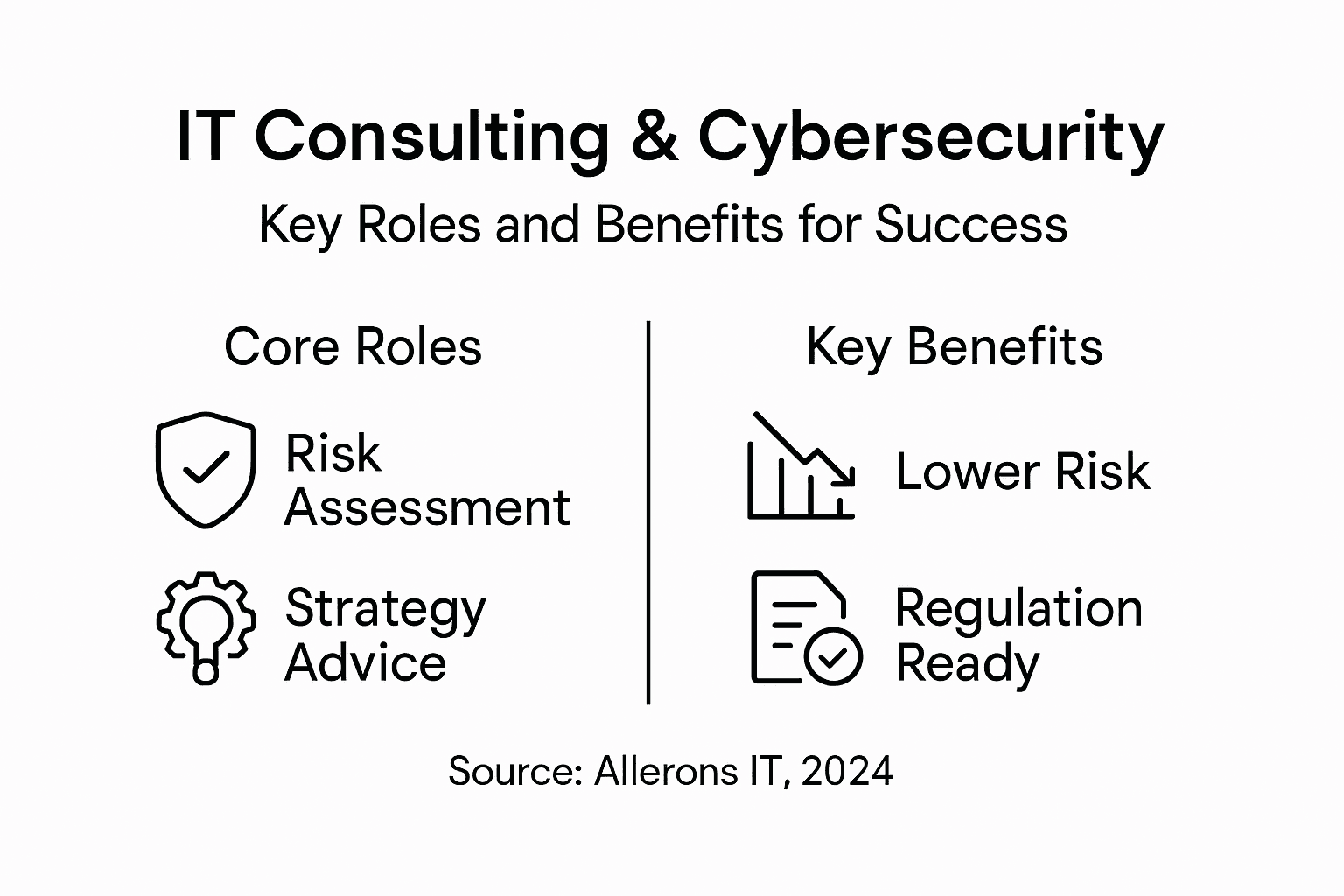
Pro tip: Request detailed case studies and reference checks to understand a consultant’s track record of successfully navigating complex technological transformations.
Risks, Costs, and Mistakes to Avoid
Complex IT project risks emerge from multiple interconnected organizational dynamics, requiring strategic understanding and proactive management. Technological consulting engagements carry inherent financial and operational risks that can significantly impact business performance if not carefully navigated. Organizations must recognize that potential pitfalls extend beyond simple technical challenges, encompassing communication breakdowns, misaligned expectations, and strategic implementation gaps.
The most critical risks include budget overruns, scope creep, and technological incompatibility. Hidden implementation costs represent a substantial threat, with many organizations underestimating the complexity of integrating new technological solutions. Common mistakes involve inadequate initial assessment, poor stakeholder communication, and unrealistic timeline expectations. Consultants may inadvertently introduce complexity by recommending overly sophisticated solutions that exceed an organization’s technological maturity or absorptive capacity, leading to failed implementations and wasted resources.
Financial risk management demands meticulous planning and transparent communication between consulting partners and client organizations. Successful risk mitigation involves establishing clear project boundaries, defining precise deliverables, implementing robust monitoring mechanisms, and maintaining flexibility in project approaches. Organizations should develop comprehensive contingency plans, conduct thorough vendor assessments, and establish clear performance metrics that allow for ongoing evaluation and course correction throughout the consulting engagement.
Pro tip: Request a detailed risk assessment document and comprehensive cost breakdown before finalizing any IT consulting engagement to identify potential hidden expenses and implementation challenges.
Strengthen Your Cybersecurity with Expert IT Consulting
The article highlights critical challenges businesses face with cybersecurity including hidden risks, regulatory compliance, and protecting valuable data against evolving threats. These pain points require specialized knowledge and tailored strategies that align technological solutions with your unique business goals. At Ailerons IT, we understand how overwhelming it can be to secure your infrastructure while balancing operational efficiency and budget constraints. Our IT consulting services focus on comprehensive cybersecurity assessments and customized protection frameworks to build your resilience.
Trusting seasoned experts who can navigate complex digital transformation and implementation challenges reduces the risks of costly mistakes and downtime. If your business is ready to close technological gaps and fortify defenses with clear strategic guidance, explore our IT solutions and consulting services. Don’t wait for a breach to make security a priority. Protect your business today with Ailerons IT and experience the confidence of expert-driven cybersecurity support.
Secure your future now by booking a consultation with our experienced team. Visit Ailerons IT to take the first step toward a safer and more efficient technology landscape.
Frequently Asked Questions
What is the role of IT consulting in enhancing cybersecurity?
IT consulting provides organizations with specialized expertise to assess vulnerabilities, develop robust protection frameworks, and ensure compliance with industry regulations, thereby boosting cybersecurity measures effectively.
How do IT consultants identify cybersecurity risks?
IT consultants conduct comprehensive risk assessments that analyze existing systems, identify potential threats, and evaluate compliance with security standards, helping organizations understand their vulnerabilities and action steps.
What specific cybersecurity strategies can IT consultants recommend for small businesses?
IT consultants may recommend tailored security frameworks, data protection protocols, and regular risk assessments to establish robust cybersecurity strategies that align with small business needs and budgets.
How can companies ensure successful implementation of cybersecurity solutions recommended by IT consultants?
Successful implementation involves clear communication with consultants, comprehensive planning, and establishing performance metrics to monitor effectiveness, allowing for adjustments and ensuring solutions are adopted effectively.