

Managing the daily flow of patient appointments and front desk inquiries can overwhelm even the most dedicated teams. For operations managers, the struggle to balance patient needs and administrative workload often leads to stressful bottlenecks. AI-driven automation solutions now offer practical relief, promising smarter appointment scheduling, reduced no-shows, and streamlined communication. This article helps you identify technology trends and integration strategies that bring real efficiency gains to your healthcare front desk.
Table of Contents
- Defining IT Trends in 2026 Healthcare
- Agentic AI and End-to-End Workflow Automation
- Front Desk AI and Appointment Management
- System Integrations and Data Flow Automation
- Governance, Security, and Human Oversight
- Measuring ROI and Implementation Success
Key Takeaways
| Point | Details |
|---|---|
| Rise of AI in Healthcare | Intelligent automation and AI are set to transform medical operations, enhancing diagnostic accuracy and streamlining processes. |
| Agentic AI Implementation | Advanced systems will improve decision-making and efficiency in managing complex medical workflows with minimal human intervention. |
| Data Integration Technologies | Healthcare organizations must leverage advanced integration technologies to enable seamless data flow and improve clinical decision-making. |
| Commitment to Governance | Effective governance frameworks are essential to ensure responsible AI deployment, balancing innovation with patient safety and ethical practices. |
Defining IT Trends in 2026 Healthcare
Healthcare technology is poised for dramatic transformation in 2026, driven by intelligent automation and artificial intelligence. Emerging technologies will fundamentally reshape medical operations, patient care, and clinical workflows.
The healthcare sector is experiencing a nuanced technological evolution that balances innovation with rigorous clinical standards. While historically cautious about adopting new technologies, medical institutions are now recognizing the potential of AI-driven solutions to enhance diagnostic accuracy, streamline administrative processes, and improve patient outcomes.
Key technological trends emerging in 2026 include:
- Autonomous AI Agents: Intelligent systems capable of real-time health monitoring and therapeutic adjustments
- Adaptive Clinical Workflows: Smart technologies that dynamically optimize medical processes
- Image-Based Diagnostic Enhancements: Advanced AI algorithms for radiology and dermatological assessments
- Operational Efficiency Technologies: Automated systems reducing routine administrative workloads
Healthcare technology adoption remains carefully measured, with innovations requiring extensive validation before widespread implementation. Medical professionals and technologists are collaborating to ensure that emerging technologies meet stringent performance and safety standards.
The most promising developments will likely emerge in specialties with robust digital infrastructure, such as radiology, where AI can augment human expertise with unprecedented precision. Machine learning algorithms are becoming increasingly sophisticated at analyzing complex medical imaging, detecting subtle anomalies that might escape human observation.
Pro tip: Start exploring AI integration strategies now to position your healthcare organization at the forefront of technological innovation.
Here’s a comparison of key IT trends shaping healthcare in 2026:
| Trend | Main Advantage | Primary Challenge |
|---|---|---|
| Autonomous AI Agents | Real-time health monitoring | Regulatory compliance |
| Adaptive Clinical Workflows | Streamlined processes | Integration complexity |
| Diagnostic Enhancements | Improved accuracy in imaging | Data privacy concerns |
| Operational Efficiency Tech | Reduced admin workload | Staff training requirements |
Agentic AI and End-to-End Workflow Automation
Healthcare organizations are rapidly transforming their operational models through advanced autonomous systems, moving beyond traditional AI applications toward intelligent, goal-driven workflow automation. These agentic AI platforms represent a revolutionary approach to managing complex medical processes with unprecedented efficiency and precision.

At the core of this technological shift are intelligent agents capable of multi-step planning and decision-making with minimal human intervention. Autonomous healthcare technologies now enable sophisticated workflows that can adapt, learn, and execute complex tasks across different medical systems and communication channels.
Key characteristics of agentic AI in healthcare include:
- Autonomous Decision Making: Ability to make context-aware decisions without constant human supervision
- Multi-System Integration: Seamless communication across different medical platforms and databases
- Adaptive Learning: Continuous improvement of performance based on real-world interactions
- Goal-Oriented Execution: Structured approach to completing complex medical workflows
The implementation of these systems requires robust governance frameworks to ensure reliability, accountability, and ethical operation. Healthcare organizations must develop comprehensive strategies that balance technological innovation with stringent safety protocols.
Advanced agentic AI systems are particularly transformative in areas requiring complex coordination, such as clinical documentation, patient monitoring, and early warning systems. These intelligent agents can process vast amounts of information, identify critical patterns, and generate actionable insights far more rapidly than traditional manual approaches.
Pro tip: Develop a phased implementation strategy that allows gradual integration of agentic AI technologies while maintaining human oversight and validation.
Front Desk AI and Appointment Management
Healthcare organizations are revolutionizing patient interactions through intelligent scheduling technologies, transforming traditional front desk operations with sophisticated AI-driven appointment management systems. These advanced platforms leverage machine learning to optimize patient flow, reduce administrative burden, and enhance overall healthcare accessibility.
The core functionality of modern front desk AI extends far beyond simple scheduling. Administrative AI applications now incorporate complex algorithms that analyze patient behavior, predict potential no-shows, and dynamically adjust appointment slots to maximize clinical efficiency.
Key capabilities of Front Desk AI systems include:
- Intelligent Scheduling: Automated appointment booking with real-time optimization
- Predictive No-Show Analysis: Machine learning models that anticipate potential patient cancellations
- Patient Communication Automation: Automated reminders, confirmations, and rescheduling capabilities
- Workflow Integration: Seamless connection with existing medical record and scheduling systems
These AI-powered solutions address critical challenges in healthcare administration by minimizing scheduling errors, reducing wait times, and creating more responsive patient engagement mechanisms. The technology enables healthcare providers to allocate resources more effectively and improve overall patient experience.
Modern Front Desk AI systems represent a significant leap in operational efficiency, transforming traditional administrative workflows through intelligent automation. By leveraging data-driven insights, these platforms help medical practices optimize their scheduling strategies, reduce operational friction, and create more streamlined patient interactions.
Pro tip: Implement a phased AI adoption strategy that allows gradual integration and continuous performance monitoring of front desk automation technologies.
System Integrations and Data Flow Automation
Healthcare organizations are experiencing a transformative shift in data management through advanced integration technologies, enabling unprecedented connectivity and interoperability across complex medical systems. These sophisticated platforms leverage artificial intelligence to break down traditional data silos and create seamless, intelligent workflows that enhance clinical decision-making and operational efficiency.
Big data analytics now serve as the backbone of modern healthcare information systems, facilitating automated data processing and real-time insights across multiple platforms. The ability to integrate heterogeneous data sources represents a critical advancement in healthcare technology, allowing medical professionals to access comprehensive patient information with unprecedented speed and accuracy.
Key capabilities of modern system integration platforms include:
- Cross-Platform Data Synchronization: Seamless information exchange between disparate healthcare systems
- Real-Time Analytics: Instantaneous processing and interpretation of complex medical data
- Automated Workflow Routing: Intelligent data flow management across organizational boundaries
- Interoperability Standards: Compliance with advanced healthcare data exchange protocols
The strategic implementation of these integration technologies addresses fundamental challenges in healthcare information management. By creating intelligent data pipelines, organizations can reduce manual data entry, minimize errors, and create more responsive clinical environments that prioritize patient care over administrative complexity.
Advanced system integration approaches go beyond simple data transfer, enabling sophisticated AI-driven insights that can predict patient needs, optimize resource allocation, and support more personalized medical interventions. These technologies represent a fundamental reimagining of how healthcare information can be collected, processed, and utilized to improve patient outcomes.
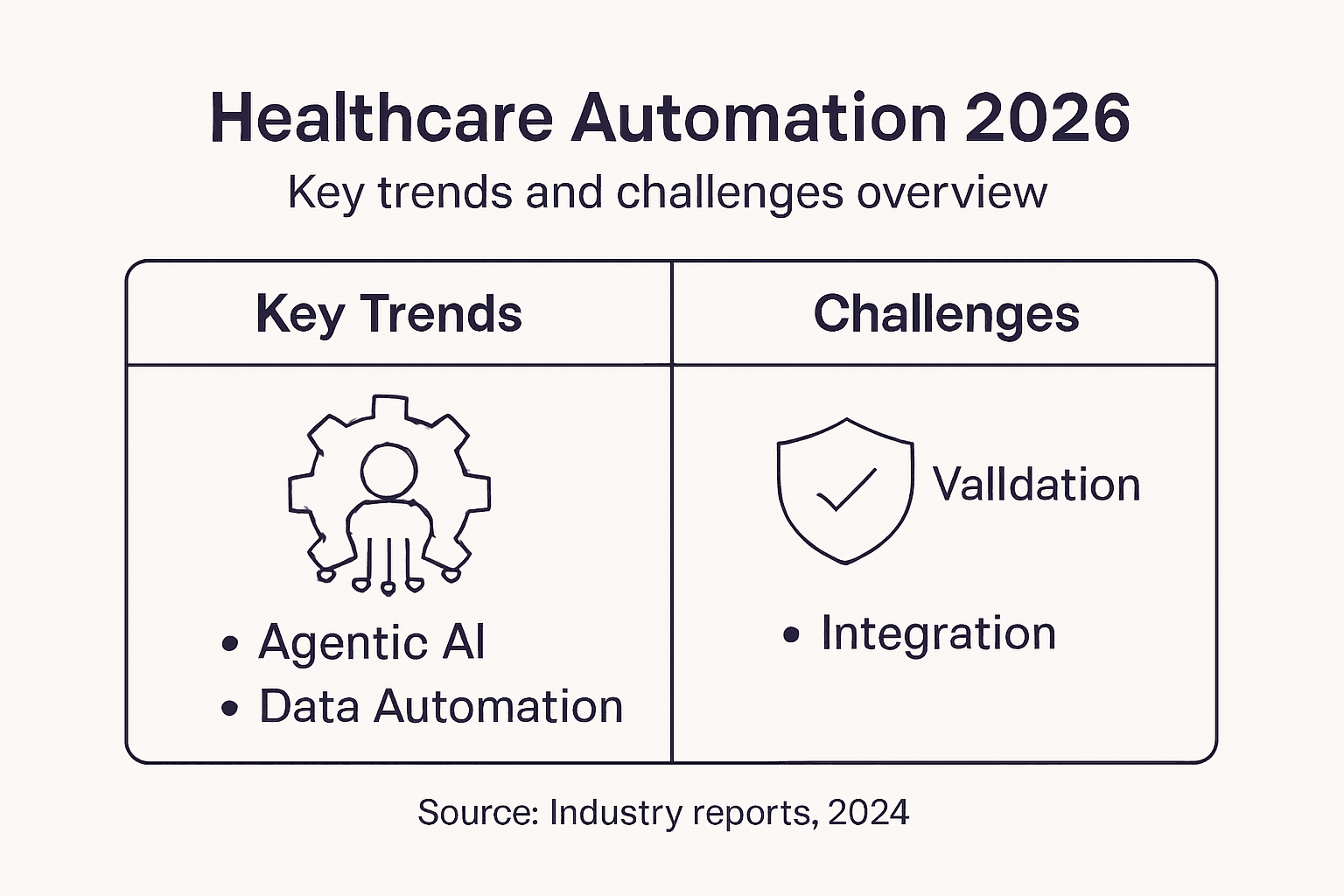
Pro tip: Develop a comprehensive data governance framework that establishes clear protocols for system integration, ensuring security, compliance, and seamless information exchange.
Governance, Security, and Human Oversight
Healthcare organizations are reimagining technological governance through comprehensive leadership frameworks that balance technological innovation with critical human oversight. These advanced governance models ensure that artificial intelligence and automation technologies are deployed responsibly, maintaining the highest standards of patient safety and ethical practice.
Global healthcare systems are developing sophisticated strategies to integrate emerging technologies while preserving human decision-making authority. The goal is to create adaptive governance structures that can manage risks, ensure data privacy, and maintain the fundamental trust between healthcare providers and patients.
Key components of effective AI governance in healthcare include:
- Role-Based Access Controls: Granular permissions limiting system interactions
- Continuous Monitoring Protocols: Real-time tracking of AI system performance
- Ethical Decision Frameworks: Clear guidelines for AI deployment and intervention
- Transparent Accountability Mechanisms: Documented processes for human review and intervention
The intersection of technology and human expertise requires nuanced approaches that go beyond traditional compliance models. Governance frameworks must be dynamic, allowing for rapid adaptation while maintaining stringent safety standards and protecting patient information.
Successful implementation depends on creating multilayered oversight mechanisms that blend technological capabilities with human judgment. This approach ensures that AI systems serve as powerful tools that augment human expertise, rather than replacing critical human decision-making processes in healthcare delivery.
Pro tip: Develop a multidisciplinary governance committee with representatives from IT, clinical staff, legal, and ethics departments to create comprehensive AI oversight strategies.
Measuring ROI and Implementation Success
Healthcare organizations are increasingly focusing on rigorous methodologies for evaluating AI implementation outcomes, recognizing that successful technological adoption requires comprehensive measurement strategies beyond traditional financial metrics. These advanced assessment frameworks enable leaders to understand the multidimensional impact of technological investments across operational, clinical, and financial domains.
Implementation outcome measurement has evolved to provide nuanced insights into technological interventions, moving beyond simple cost-reduction analyses to holistic evaluations of organizational transformation. Modern healthcare leaders must consider complex metrics that capture efficiency gains, clinical improvements, and long-term strategic value.
Key performance indicators for measuring AI implementation success include:
- Operational Efficiency Metrics: Reduction in administrative processing times
- Clinical Outcome Improvements: Enhanced diagnostic accuracy and patient care quality
- Cost Reduction Analysis: Direct and indirect financial impact assessments
- Adoption Rate Tracking: Organizational technology integration and user acceptance levels
- Workflow Optimization Measurements: Changes in staff productivity and process streamlining
Successful ROI measurement requires a sophisticated, multi-dimensional approach that considers both quantitative financial indicators and qualitative organizational transformation markers. Healthcare leaders must develop robust frameworks that capture the comprehensive value of technological investments, understanding that true implementation success extends far beyond immediate financial returns.
The following table summarizes common ROI metrics used for healthcare AI projects:
| Metric | What It Measures | Example Insight |
|---|---|---|
| Operational Efficiency | Time saved on admin tasks | 20% reduction in processing time |
| Clinical Outcome Quality | Accuracy of diagnoses | Fewer misdiagnosed cases |
| Adoption Rate | User engagement levels | 75% of staff use new tools |
| Cost Impact | Direct/indirect savings | Annual savings of $500,000 |
Technological implementations demand continuous monitoring and adaptive strategies. Organizations must create flexible measurement systems that can evolve alongside emerging technologies, ensuring that performance assessments remain relevant and meaningful in a rapidly changing healthcare landscape.
Pro tip: Develop a comprehensive, balanced scorecard approach that integrates financial, operational, and clinical metrics to holistically evaluate AI technology investments.
Transform Healthcare IT Trends into Real-World Automation Success
The article highlights how healthcare is embracing agentic AI and intelligent automation to improve operational efficiency while maintaining stringent safety and governance standards. If you are facing challenges with complex multi-step workflows, system integration, or securing human oversight in your healthcare operations, these are exactly the pain points that Ailerons IT Consulting solves daily. By designing AI agents that plan, execute, and improve workflows across scheduling, front desk automation, CRM, and accounting systems, we help healthcare organizations move beyond experimental projects to reliable, consistent results.
Unlock faster appointment management, improved data flow automation, and secure AI governance by partnering with experts who understand the nuances of healthcare technology transformation. Explore how our agent-first approach and comprehensive AI governance and security strategies ensure your AI systems meet clinical standards while reducing manual workload. Ready to boost operational efficiency and enhance patient care with proven AI solutions? Discover the power of agentic AI workflows tailored for healthcare and start your journey toward smarter automation at Ailerons IT Consulting. Take action now to lead your organization through this critical shift and deliver measurable ROI in 2026 and beyond.
Frequently Asked Questions
What are the key IT trends in healthcare for 2026?
The key IT trends in healthcare for 2026 include autonomous AI agents, adaptive clinical workflows, image-based diagnostic enhancements, and operational efficiency technologies aimed at improving patient care and streamlining administrative processes.
How can autonomous AI agents benefit healthcare organizations?
Autonomous AI agents can provide real-time health monitoring and therapeutic adjustments, enhancing patient outcomes by enabling continuous and proactive care without constant human supervision.
What challenges do healthcare organizations face when adopting adaptive clinical workflows?
Healthcare organizations face challenges such as integration complexity and the need for extensive validation of new technologies before implementation, which can slow down the adoption of adaptive clinical workflows.
How can organizations measure the return on investment (ROI) from AI implementations in healthcare?
Organizations can measure ROI from AI implementations by evaluating metrics such as operational efficiency improvements, clinical outcome enhancements, cost reductions, and user adoption rates, providing a comprehensive view of the technology’s impact.