

More than 60 percent of American small and medium-sized businesses experience cyber attacks each year, disrupting operations and putting sensitive data at risk. For busy IT managers, keeping infrastructure both secure and efficient can feel like aiming at a moving target. This guide delivers practical solutions designed to help American organizations uncover hidden weaknesses, tighten cybersecurity controls, and maintain peak performance across every system.
Table of Contents
- Step 1: Assess Existing Infrastructure And Identify Vulnerabilities
- Step 2: Implement Robust Cybersecurity Measures And Controls
- Step 3: Upgrade Hardware And Software For Optimal Performance
- Step 4: Streamline Network Configurations And Access Management
- Step 5: Verify Enhancements Through Monitoring And Testing
Quick Summary
| Key Insight | Explanation |
|---|---|
| 1. Assess and Document Vulnerabilities | Conduct a thorough evaluation of your IT infrastructure to identify weak points and document their risk levels. |
| 2. Implement Strong Cybersecurity Measures | Adopt comprehensive security controls like multi-factor authentication and an incident response plan to protect against breaches. |
| 3. Prioritize Hardware and Software Upgrades | Strategically update software and hardware to enhance security and performance, focusing on critical needs first. |
| 4. Establish Controlled Network Access | Manage user permissions and device authentication to protect your network from unauthorized access and breaches. |
| 5. Continuously Monitor and Test Systems | Implement ongoing security testing and monitoring to validate improvements and maintain resilience against threats. |
Step 1: Assess existing infrastructure and identify vulnerabilities
Understanding your current IT infrastructure’s security landscape is the critical first step in protecting your organization from potential cyber threats. This process involves a comprehensive evaluation of your existing systems, networks, and potential weak points that could be exploited by malicious actors.
Begin by conducting a thorough vulnerability assessment using systematic scanning techniques. This means mapping out all network devices, servers, workstations, and cloud services. Pay special attention to legacy systems, outdated software, and misconfigured network components. Use automated scanning tools to identify open ports, unpatched software, and potential entry points for cybercriminals. Look for misconfigurations in firewalls, weak password policies, and unprotected network segments. Document every discovered vulnerability with its potential impact and risk level.
Next, prioritize your findings based on potential business impact and exploitation likelihood. Not all vulnerabilities are equally critical. Focus on high risk issues that could compromise sensitive data or critical business operations. Work with your IT team to develop a remediation strategy that addresses the most significant risks first. Categorize vulnerabilities into immediate, medium, and low priority actions based on potential damage and complexity of resolution.
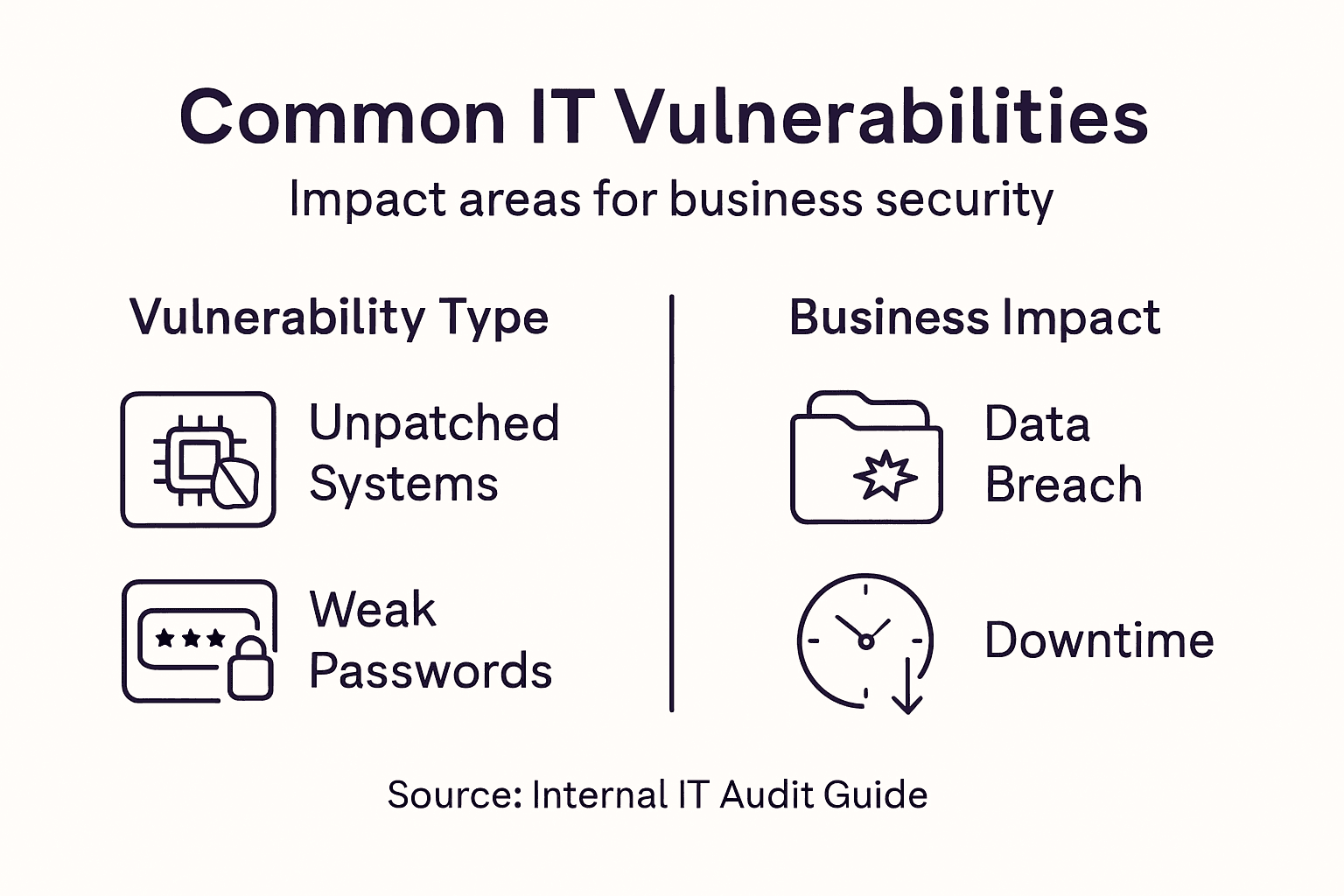
Here’s a summary of common vulnerability types and their potential impact:
| Vulnerability Type | Example Issue | Potential Business Impact |
|---|---|---|
| Unpatched Software | Outdated OS version | Data breach via known exploits |
| Misconfigured Devices | Open firewall ports | Unauthorized network access |
| Weak Passwords | Default credentials | Account takeover and data theft |
| Legacy Systems | Unsupported servers | Critical system downtime |
| Unsecured Network Segments | No internal firewalls | Lateral movement by attackers |
Pro tip: Create a living document that tracks all infrastructure vulnerabilities, including discovery date, risk level, and resolution status to maintain continuous security awareness.
Step 2: Implement robust cybersecurity measures and controls
Strengthening your organization’s cybersecurity requires implementing comprehensive and strategic protective measures across your entire IT infrastructure. This critical phase transforms your vulnerability assessment into actionable security protocols that shield your systems from potential cyber threats.
Start by adopting comprehensive security controls that provide a structured approach to defending your digital assets. Begin with fundamental access management strategies such as implementing multi factor authentication, role based access controls, and strict password policies. Ensure every user account has the minimum necessary permissions to perform their job functions. Use advanced endpoint protection solutions that include real time monitoring, behavioral analysis, and automated threat detection. Update all software and systems regularly, applying security patches immediately upon release to close potential vulnerabilities.

Create a formal incident response plan that outlines clear procedures for detecting, responding to, and mitigating potential security breaches. This plan should include defined roles, communication protocols, and step by step guidelines for different types of cybersecurity incidents. Conduct regular training sessions for your team to ensure everyone understands their role in maintaining security and can recognize potential threats. Implement continuous monitoring systems that provide real time insights into your network activities, allowing you to identify and respond to suspicious behavior quickly.
Pro tip: Develop a comprehensive security baseline that includes mandatory security configurations and regularly audit your systems against these standards to maintain consistent protection.
Below is a concise comparison of essential cybersecurity controls and their core benefits:
| Security Control | Main Function | Key Business Benefit |
|---|---|---|
| Multi-factor Authentication | Verify user identity | Prevents unauthorized logins |
| Endpoint Protection | Monitor device activities | Detects and blocks threats |
| Role-based Access Control | Limit data access | Reduces insider risks |
| Automated Patching | Deploy security updates | Closes known vulnerability gaps |
| Incident Response Plan | Guide breach handling | Minimizes breach impacts |
Step 3: Upgrade hardware and software for optimal performance
Optimizing your IT infrastructure requires a strategic approach to hardware and software upgrades that balances performance, security, and cost effectiveness. This step is about methodically enhancing your technological ecosystem to support your business operations more efficiently.
Begin by systematically updating software across all systems. Start with your operating systems, ensuring you have the latest versions that provide critical security patches and performance improvements. Evaluate each software application used in your organization and check for available updates. Pay special attention to programs handling sensitive data or critical business functions. For hardware upgrades, assess your current equipment performance by monitoring system resources like CPU usage, memory consumption, and storage capacity. Consider upgrading RAM to improve multitasking capabilities, replacing traditional hard drives with solid state drives for faster data access, and upgrading processors in systems that handle resource intensive tasks.
Develop a structured upgrade roadmap that prioritizes critical systems and aligns with your budget constraints. This means categorizing upgrades into immediate necessities, near term improvements, and long term investments. Involve your IT team in creating this roadmap to ensure technical feasibility and minimal operational disruption. Schedule upgrades during low activity periods and always maintain comprehensive system backups before implementing any changes. Test upgraded systems thoroughly in a controlled environment before full deployment to identify and resolve potential compatibility or performance issues.
Pro tip: Create a quarterly technology review schedule to proactively identify potential upgrade opportunities and prevent unexpected system failures.
Step 4: Streamline network configurations and access management
Creating a robust and secure network infrastructure requires strategic management of access controls and network configurations. This critical step transforms your network from a potential vulnerability into a well-organized, tightly controlled digital environment that supports your business operations securely.
Implement comprehensive network access control strategies that define precise user permissions and device authentication protocols. Begin by conducting a thorough audit of your current network architecture, identifying all user accounts, device types, and access points. Develop a role based access model that assigns specific network permissions based on job responsibilities, ensuring employees have only the minimum access necessary to perform their work. Use advanced authentication mechanisms like multi factor authentication, biometric verification, and contextual access rules that consider factors such as device type, location, and time of access.
Establish a centralized identity management system that provides granular control over user credentials and privileges. This includes creating automated processes for onboarding new employees, modifying access rights during role changes, and immediately revoking access for departing staff members. Implement network segmentation techniques that divide your infrastructure into distinct security zones, limiting potential breach impacts. Regularly review and update access policies, conducting periodic access audits to ensure compliance with your organization’s security standards. Monitor network traffic continuously, using advanced logging and alerting systems to detect and respond to suspicious access attempts or unusual user behaviors.
Pro tip: Develop a comprehensive access management policy document that clearly outlines authorization procedures, and schedule quarterly reviews to maintain its relevance and effectiveness.
Step 5: Verify enhancements through monitoring and testing
Validating the effectiveness of your IT infrastructure improvements requires a systematic and comprehensive approach to monitoring and testing. This critical final stage ensures that all previous security and performance upgrades deliver the intended results and continue to protect your organization.
Begin by implementing comprehensive security testing methodologies that go beyond basic surface level checks. Develop a structured testing framework that includes vulnerability scanning, penetration testing, and simulation of real world cyber attack scenarios. Use automated scanning tools to continuously assess your systems for potential weaknesses, but complement these with manual expert reviews that can identify nuanced security risks that automated tools might miss. Create detailed test scenarios that challenge your network defenses, examining how your systems respond to different types of potential security threats.
Establish a continuous monitoring system that provides real time insights into your infrastructure performance and security status. Set up comprehensive logging mechanisms that track system activities, network traffic, user access, and potential anomalies. Define clear performance benchmarks and security metrics that allow you to quantitatively measure the impact of your infrastructure improvements. Schedule regular comprehensive audits that review these metrics, comparing current performance against your original optimization goals. Create a feedback loop where testing results directly inform future improvement strategies, ensuring your IT infrastructure remains adaptive and resilient.
Pro tip: Implement a dedicated test environment that mirrors your production systems, allowing you to conduct thorough evaluations without risking operational disruption.
Strengthen Your IT Infrastructure Security with Expert Guidance
Are you struggling with vulnerabilities in your IT infrastructure or looking to enhance your cybersecurity controls? This guide highlights critical challenges like unpatched software, weak password policies, and unsecured network segments that put your business at risk. Addressing these issues requires a strategic approach to access management, hardware upgrades, and continuous monitoring.
At Ailerons IT, we specialize in helping small and medium-sized businesses transform these security gaps into strengths. Our tailored IT consulting services focus on comprehensive cybersecurity measures and controls, effective network access management, and ongoing performance validation. Don’t wait for costly breaches or system failures. Visit our blog to explore insights or connect with us directly to schedule a personalized consultation today. Secure your business infrastructure now and gain peace of mind with Ailerons IT.
Frequently Asked Questions
How do I assess my existing IT infrastructure for vulnerabilities?
Assess your current IT infrastructure by conducting a comprehensive vulnerability assessment. Map out all devices, servers, and networks, using automated tools to identify open ports and unpatched software. Aim to complete this assessment within a few weeks to quickly identify and address potential risks.
What cybersecurity measures should I implement first?
Start by adopting fundamental cybersecurity controls such as multi-factor authentication and strong password policies. These measures significantly reduce the chances of unauthorized access and should be prioritized in your immediate security enhancements.
How often should I update my hardware and software?
Regularly update your hardware and software based on performance needs and security updates. Create a quarterly review schedule to identify necessary upgrades, allowing you to stay ahead of potential vulnerabilities and ensure optimal system performance.
What is network segmentation and why is it important?
Network segmentation involves dividing your IT infrastructure into distinct security zones to limit potential breach impacts. Implementing this technique helps contain threats and reduces the risk of widespread damage; prioritize this in your access management strategy.
How can I verify that my IT enhancements are effective?
Verify your IT enhancements by implementing continuous monitoring and conducting regular security tests, including vulnerability scanning and penetration testing. Establish clear performance metrics to evaluate improvements and plan to review these metrics monthly to ensure ongoing security effectiveness.
What should I include in my incident response plan?
Your incident response plan should outline clear procedures for detecting and responding to security breaches, including defined roles and communication protocols. Make it a priority to test this plan regularly with your team to ensure everyone understands their role in case of an incident.