

Over half of American small and medium-sized businesses report unexpected downtime due to avoidable infrastructure issues. Managing servers, cloud systems, and networks can quickly overwhelm even the most skilled American IT manager. Clear infrastructure management strategies help cut costs, reduce risk, and support ambitious digital transformation projects, giving businesses a critical edge in a crowded market.
Table of Contents
- Defining Infrastructure Management In IT
- Types Of IT Infrastructure Solutions
- Essential Processes And Management Tools
- Service Models And Outsourcing Options
- Risks, Costs, And Common Pitfalls
Key Takeaways
| Point | Details |
|---|---|
| Effective IT Infrastructure Management | Involves continuous monitoring and optimization of IT resources to ensure operational efficiency and security. |
| Infrastructure Model Selection | Organizations should assess their operational needs to choose between on-premises, cloud-based, or hybrid infrastructure models. |
| Importance of Comprehensive Risk Management | Developing a robust risk mitigation strategy is crucial to address potential cybersecurity threats and operational vulnerabilities. |
| Benefit of Outsourcing Models | Evaluating outsourcing strategies can enhance expertise and flexibility while balancing internal capabilities with external resources. |
Defining infrastructure management in IT
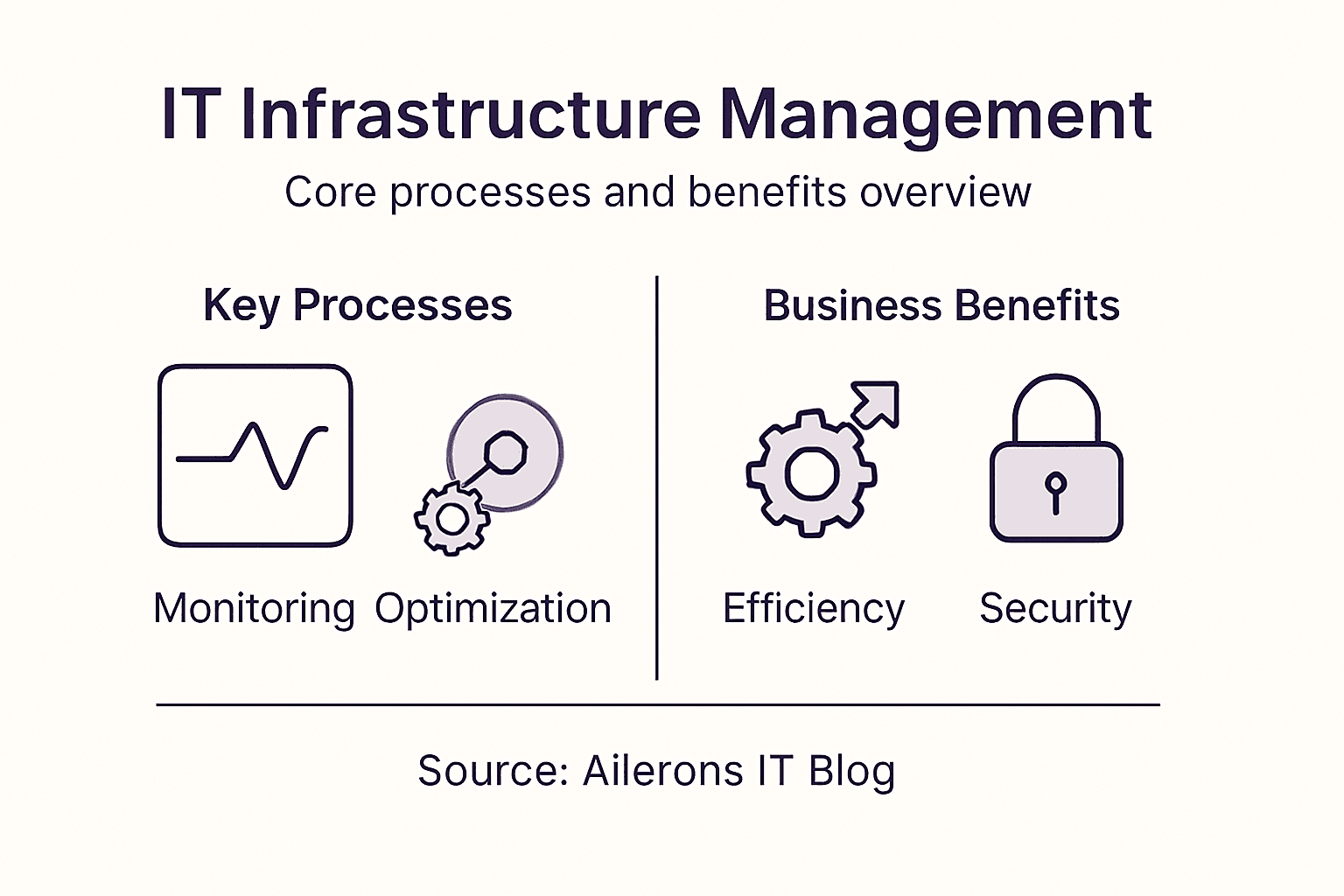
IT infrastructure management is the strategic process of overseeing, maintaining, and optimizing an organization’s entire technological ecosystem. Operational management of IT components involves coordinating hardware, software, networks, and data centers to ensure smooth and secure digital operations.
At its core, infrastructure management encompasses several critical responsibilities. Organizations must monitor and maintain technological resources, ensuring maximum performance and minimal disruption. This includes managing physical equipment like servers and networking devices, software applications, cloud resources, and digital storage systems. The goal is to create a robust, scalable infrastructure that supports business objectives while maintaining security and operational efficiency.
Key components of effective infrastructure management typically include:
- Continuous system monitoring
- Performance optimization
- Security implementation
- Resource allocation
- Compliance management
- Disaster recovery planning
Infrastructure administration strategies require a holistic approach that balances technical capabilities with business requirements. Successful managers understand that infrastructure is not just about technology, but about enabling organizational productivity and innovation.
Pro tip: Develop a comprehensive infrastructure inventory and regularly audit your technological resources to identify potential optimization opportunities and prevent unexpected system failures.
Types of IT infrastructure solutions
Organizations today have multiple IT infrastructure approaches to choose from, each with unique characteristics and strategic implications. Traditional infrastructure models primarily consist of two key types: on-premises systems and cloud-based solutions, which offer distinct advantages for businesses of different sizes and technological requirements.
On-premises infrastructure represents the traditional model where companies maintain physical hardware and software within their own facilities. This approach provides maximum control and direct management of technological resources. Companies purchase, install, and maintain their own servers, networking equipment, and data storage systems. While offering complete governance, on-premises solutions typically require significant upfront capital investment, ongoing maintenance costs, and dedicated physical space for technological infrastructure.
Cloud infrastructure, by contrast, represents a more flexible and scalable approach. Modern IT infrastructure systems enable businesses to access computational resources remotely through third-party providers. This model offers several critical advantages:
- Reduced capital expenditure
- Rapid scalability
- Enhanced disaster recovery capabilities
- Simplified maintenance
- Global accessibility
- Pay-as-you-go pricing structures
Hybrid infrastructure models have also emerged, allowing organizations to blend on-premises and cloud-based solutions strategically. This approach enables businesses to optimize their technological investments while maintaining specific security or compliance requirements.
Here’s a quick comparison of major IT infrastructure models to help guide decision-making:
| Model Type | Control & Customization | Scalability | Initial Investment |
|---|---|---|---|
| On-Premises | Full, highly customizable | Limited by hardware | High upfront cost |
| Cloud-Based | Provider-managed, less control | Rapid, on-demand | Low initial outlay |
| Hybrid | Balanced internal/external | Flexible, case-based | Moderate, variable |
Pro tip: Conduct a comprehensive technology audit to determine which infrastructure model best aligns with your organization’s specific operational needs, budget constraints, and long-term strategic objectives.
Essential processes and management tools
IT infrastructure management requires a comprehensive approach to maintaining and optimizing technological resources. Technical management processes provide a structured framework for organizations to effectively control and monitor their technological ecosystems.
ITIL framework processes represent a critical foundation for systematic IT service management. These processes encompass a wide range of critical operational activities, including:
- Incident management
- Problem management
- Configuration management
- Change management
- Release management
- Service desk operations
- Capacity management
- Availability management
- Security management
- Service continuity planning
Technical management processes dive deeper into the strategic aspects of infrastructure governance. These include technical planning, decision analysis, requirements management, risk assessment, and interface management. Each process plays a crucial role in ensuring that IT systems align with organizational objectives, maintaining operational efficiency, cost-effectiveness, and technological resilience.
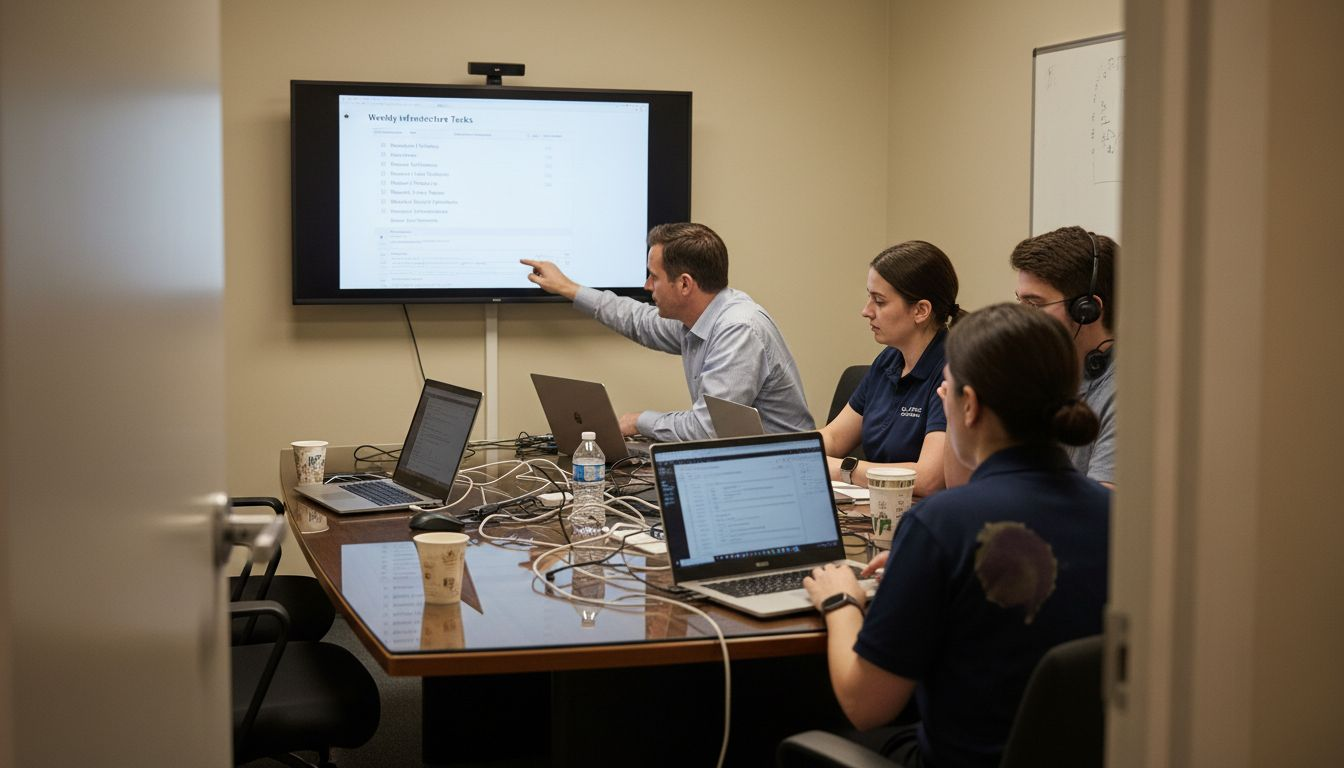
Modern management tools have evolved to support these complex processes, integrating advanced technologies like artificial intelligence and machine learning. These tools enable real-time monitoring, predictive maintenance, automated incident response, and comprehensive performance analytics, transforming traditional reactive approaches into proactive, intelligent infrastructure management strategies.
Use this table to understand the roles of technical and ITIL processes in infrastructure management:
| Process Category | Focus Area | Key Business Benefit |
|---|---|---|
| ITIL Processes | Service operation & delivery | Consistent, reliable service |
| Technical Management | Strategic system alignment | Supports business objectives |
| Modern Tools | Automation & analytics | Proactive problem resolution |
Pro tip: Implement a centralized management dashboard that integrates multiple IT infrastructure processes, providing a holistic view of your technological ecosystem and enabling quick, data-driven decision making.
Service models and outsourcing options
IT service delivery has evolved dramatically, offering organizations multiple strategies for managing technological resources. Service integration approaches have transformed how businesses design and implement their technological ecosystems, providing flexible pathways for managing complex IT environments.
IT outsourcing models present businesses with diverse options for technology management. These models typically fall into three primary categories:
- Single-source outsourcing
- Multi-source outsourcing
- Hybrid service delivery
Single-source outsourcing involves partnering with one comprehensive service provider who manages multiple aspects of IT infrastructure. This approach simplifies vendor management and can reduce complexity. Multi-source outsourcing, by contrast, allows organizations to select specialized providers for different technological domains, enabling more targeted expertise and potentially greater flexibility.
Hybrid service models have emerged as a sophisticated approach, blending internal capabilities with external expertise. These models enable organizations to retain critical technological functions internally while leveraging external providers for specialized services. Strategic considerations include cost efficiency, technological complexity, security requirements, and organizational strategic objectives.
Pro tip: Conduct a comprehensive capability assessment before selecting an outsourcing model, evaluating your organization’s internal technological strengths and identifying specific areas where external expertise can provide maximum strategic value.
Risks, costs, and common pitfalls
IT infrastructure management involves navigating a complex landscape of potential challenges and vulnerabilities. Infrastructure security risks represent critical areas that demand strategic attention and proactive mitigation strategies.
The economic implications of technological vulnerabilities extend far beyond immediate financial losses. Cyber incident economic impacts encompass both direct and indirect costs that can significantly disrupt organizational operations. Key risk categories include:
- Cybersecurity breaches
- Data integrity compromises
- Operational disruption
- Reputational damage
- Compliance violations
- Unauthorized system access
Common infrastructure management pitfalls often stem from inadequate planning, insufficient monitoring, and reactive rather than proactive approaches. Organizations frequently encounter challenges such as outdated software configurations, poor asset management, ineffective threat detection mechanisms, and weak cryptographic implementations. These vulnerabilities can create systemic weaknesses that compromise entire technological ecosystems.
Risk mitigation requires a comprehensive strategy that balances technological investment, continuous monitoring, and adaptive security protocols. Successful organizations develop robust frameworks that integrate advanced threat detection, regular security assessments, employee training, and agile response mechanisms to address potential infrastructure vulnerabilities.
Pro tip: Conduct quarterly comprehensive security audits and maintain a dynamic risk registry that continuously tracks and prioritizes potential infrastructure vulnerabilities across your technological ecosystem.
Unlock Greater Efficiency in IT Infrastructure Management Today
Managing IT infrastructure involves complex challenges like maintaining security, optimizing performance, and ensuring business continuity. If you are facing difficulties balancing your technology resources with evolving business goals, know that you are not alone. Key concerns such as disaster recovery, system monitoring, and scalable solutions often demand expert guidance to avoid costly pitfalls and stay ahead of risks.
At Ailerons IT, we specialize in addressing these exact challenges. Our professional IT consulting services empower U.S. businesses to streamline infrastructure management through strategic planning, proactive monitoring, and tailored solutions across cloud and on-premises models. Discover how comprehensive infrastructure management can elevate your operational efficiency by visiting our blog where we share insights and proven strategies. Ready to transform your IT environment? Book a personalized consultation now to start building a resilient, future-proof technology ecosystem with Ailerons IT.
Explore more about effective infrastructure strategies on our blog and take control of your IT success today.
Frequently Asked Questions
What is IT infrastructure management?
IT infrastructure management is the strategic process of overseeing and optimizing an organization’s entire technological ecosystem, including hardware, software, networks, and data centers, to ensure secure and efficient digital operations.
What are the main types of IT infrastructure solutions?
The primary types of IT infrastructure solutions include on-premises systems, which involve maintaining physical hardware and software within an organization, and cloud-based solutions, which provide remote access to computational resources through third-party providers. Hybrid models also combine both approaches for optimized strategies.
What are key processes involved in effective IT infrastructure management?
Effective IT infrastructure management involves various key processes, including incident management, change management, configuration management, and security management. These processes help ensure that IT systems align with business objectives and maintains operational efficiency.
How can organizations mitigate risks in IT infrastructure management?
Organizations can mitigate risks in IT infrastructure management by implementing comprehensive security strategies, conducting regular security audits, maintaining a dynamic risk registry, and ensuring continuous monitoring of technological resources to identify and address vulnerabilities proactively.