

Over half of American small and medium-sized businesses report that digital transformation ranks among their top strategic priorities. For IT managers tasked with leading real change, the pressure to rethink business operations through advanced technology feels immediate and real. If you are searching for practical, expert-backed direction on reshaping your organization for greater efficiency and global competitiveness, this guide breaks down what digital transformation truly means and how it delivers lasting results.
Table of Contents
- Defining Digital Transformation In Business
- Major Types Of Digital Transformation Initiatives
- Core Technologies Powering Transformation
- Steps To Plan And Implement Solutions
- Common Pitfalls And How To Avoid Them
Key Takeaways
| Point | Details |
|---|---|
| Holistic Approach is Essential | Digital transformation should integrate technology, culture, and strategy rather than just focusing on technological upgrades. |
| Continuous Learning Environment | Organizations must foster a culture that encourages innovation and adaptability to navigate technological disruptions effectively. |
| Strategic Implementation Plans | A structured implementation process, including assessment, vision development, and execution, is crucial for successful transformation initiatives. |
| Awareness of Common Pitfalls | Recognizing potential challenges such as cultural resistance and resource mismanagement can help organizations avoid setbacks during transformation efforts. |
Defining Digital Transformation in Business
Digital transformation represents a profound strategic shift where organizations reimagine their core business operations through technological innovation. Digital technologies fundamentally reshape organizational structures by integrating advanced digital capabilities across every aspect of business performance.
At its core, digital transformation goes far beyond simply adopting new technologies. It involves a comprehensive approach that reimagines business models, operational processes, and organizational culture. Organizations must recognize that true transformation requires more than surface-level technological upgrades - it demands a holistic strategy that aligns technology with strategic objectives and workforce capabilities.
Key Components of Digital Transformation include:
- Strategic technology integration
- Organizational cultural adaptation
- Process optimization through digital tools
- Data-driven decision making
- Customer experience enhancement
Organizational change remains crucial for successful digital transformation, emphasizing that technological implementation alone cannot guarantee meaningful business evolution. Leaders must foster an environment of continuous learning, adaptability, and innovation to effectively navigate digital disruption.
Pro tip: Start your digital transformation journey by conducting a comprehensive technology audit to identify current capabilities and potential innovation opportunities.
Major Types of Digital Transformation Initiatives
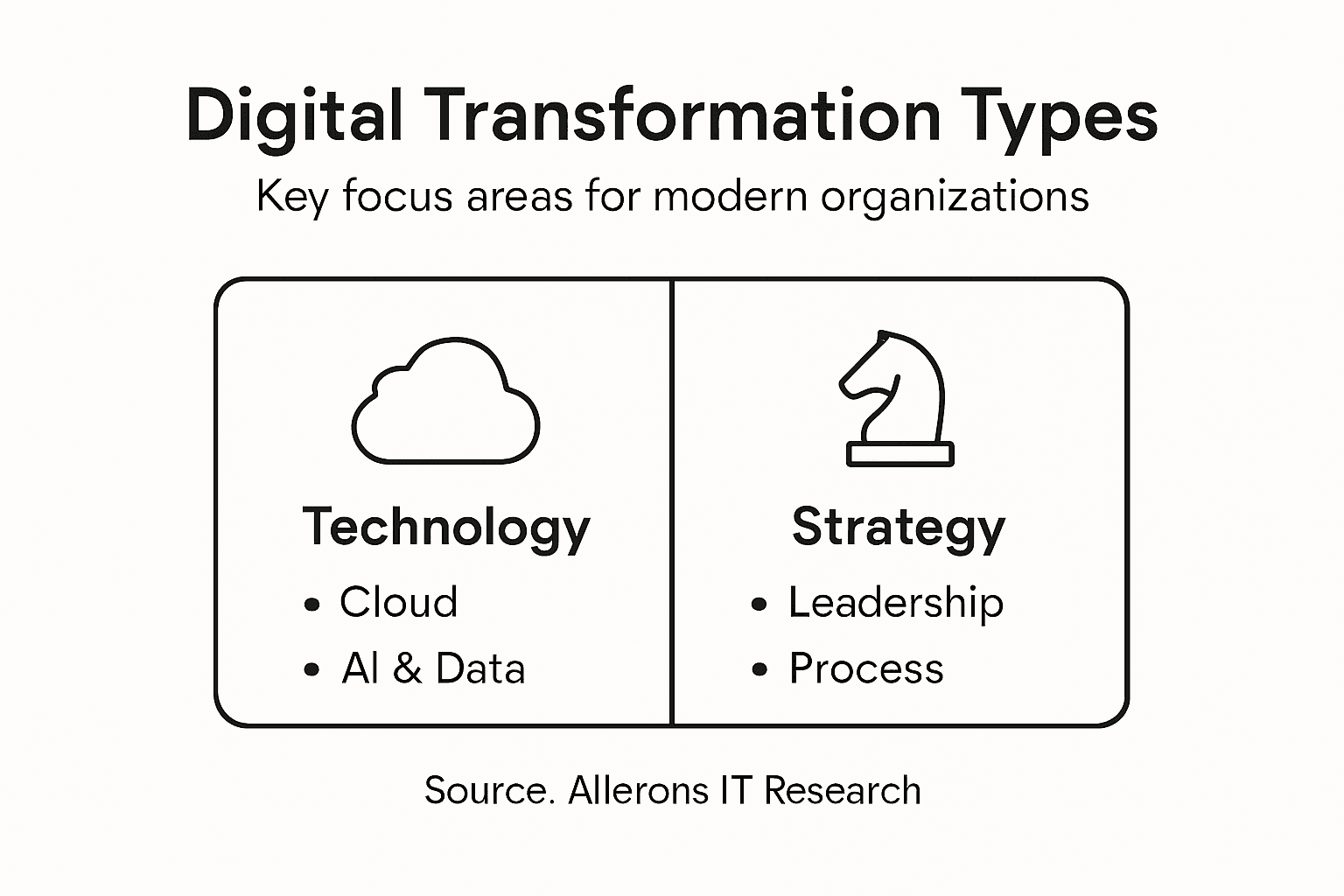
Digital transformation encompasses a diverse range of strategic initiatives that help organizations adapt and thrive in an increasingly technology-driven business landscape. Digital transformation initiatives involve complex organizational changes that extend far beyond simple technological implementation.
The primary categories of digital transformation initiatives include:
1. Process Transformation
- Automating manual workflows
- Implementing advanced analytics
- Streamlining operational efficiency
- Reducing human error through digital tools
2. Business Model Transformation
- Creating new digital revenue streams
- Developing digital product offerings
- Reimagining customer engagement strategies
- Exploring platform-based business models
3. Organizational Culture Transformation
- Fostering digital literacy
- Encouraging innovation and experimentation
- Building adaptive workforce capabilities
- Promoting continuous learning environments
4. Technology Infrastructure Transformation
- Implementing advanced digital learning platforms
- Modernizing legacy systems
- Adopting cloud computing solutions
- Enhancing cybersecurity infrastructure
Successful digital transformation requires a holistic approach that integrates technological capabilities with strategic vision, organizational culture, and human potential. Leaders must view these initiatives not as isolated projects, but as interconnected strategies driving comprehensive organizational evolution.
Pro tip: Develop a comprehensive digital transformation roadmap that aligns technological investments with your organization’s core strategic objectives and long-term growth vision.
Compare the major dimensions of digital transformation initiatives:
| Initiative Type | Primary Goal | Organizational Change Required |
|---|---|---|
| Process Transformation | Streamline workflow | Training and role redesign |
| Business Model Transformation | Create new revenue | Restructuring departments |
| Culture Transformation | Increase adaptability | Shift in values and behavior |
| Infrastructure Transformation | Modernize IT resources | Upgrading legacy systems |
Core Technologies Powering Transformation
Digital transformation is fueled by a constellation of cutting-edge technologies that are fundamentally reshaping how businesses operate and compete. Critical technologies drive digital platform ecosystems by enabling unprecedented levels of efficiency, innovation, and strategic agility.

The primary technological drivers of digital transformation include:
Artificial Intelligence and Machine Learning
- Predictive analytics
- Intelligent automation
- Advanced decision-making support systems
- Personalized customer experience optimization
Cloud and Edge Computing
- Scalable infrastructure
- Distributed computing capabilities
- Real-time data processing
- Enhanced computational flexibility
Internet of Things (IoT) Technologies
- Smart device interconnectivity
- Sensor-driven data collection
- Automated monitoring systems
- Predictive maintenance capabilities
Advanced technologies transform production processes by creating intelligent, interconnected ecosystems that enable organizations to respond dynamically to changing market conditions. These technologies are not merely tools, but strategic enablers that fundamentally reimagine business operations, customer interactions, and competitive strategies.
By integrating these technologies strategically, organizations can create adaptive, intelligent systems that continuously learn, optimize, and evolve. The most successful digital transformations view technology not as a standalone solution, but as an integrated approach to driving organizational innovation and growth.
Pro tip: Conduct a comprehensive technology audit to identify which emerging technologies align most closely with your organization’s specific strategic objectives and operational challenges.
Here’s how common digital transformation technologies impact key business areas:
| Technology | Business Impact | Strategic Benefit |
|---|---|---|
| Artificial Intelligence | Enhances data insights | Drives smarter decision making |
| Cloud Computing | Supports scalable operations | Reduces infrastructure costs |
| IoT | Improves real-time monitoring | Enables proactive maintenance |
| Edge Computing | Boosts speed and responsiveness | Powers instant analytics |
Steps to Plan and Implement Solutions
Successful digital transformation requires a strategic, methodical approach that goes beyond simply adopting new technologies. A structured framework guides digital transformation implementation by ensuring comprehensive organizational alignment and systematic progression.
The recommended implementation process involves several critical stages:
1. Assessment and Discovery
- Evaluate current technological infrastructure
- Analyze existing business processes
- Identify technological gaps and opportunities
- Measure digital maturity across organizational units
2. Strategic Vision Development
- Define clear digital transformation objectives
- Align technological initiatives with business goals
- Create measurable key performance indicators (KPIs)
- Establish realistic transformation timelines
3. Roadmap and Solution Design
- Prioritize transformation initiatives
- Select appropriate technological solutions
- Design phased implementation strategy
- Develop change management protocols
4. Implementation and Execution
- Deploy selected technological solutions
- Provide comprehensive staff training
- Monitor progress against established KPIs
- Implement feedback mechanisms
Digital transformation requires strategic technology adoption that addresses both technological infrastructure and organizational culture. Successful implementations recognize that transformation is not a one-time event, but a continuous journey of adaptation and innovation.
Critical to success is maintaining flexibility and creating an organizational culture that embraces technological change. Leaders must actively communicate the transformation vision, provide necessary resources, and foster an environment of continuous learning and experimentation.
Pro tip: Create a cross-functional digital transformation team with representatives from IT, operations, and strategic planning to ensure comprehensive perspective and organizational buy-in.
Common Pitfalls and How to Avoid Them
Digital transformation is a complex journey fraught with potential challenges that can derail even the most well-intentioned initiatives. Organizations must proactively identify and mitigate risks to ensure successful technological evolution.
Key Potential Pitfalls Include:
1. Lack of Clear Strategic Vision
- Implementing technology without aligned business goals
- Pursuing digital initiatives in isolation
- Failing to define measurable transformation outcomes
- Inconsistent leadership commitment
2. Cultural Resistance
- Insufficient employee engagement
- Inadequate change management
- Fear of technological disruption
- Limited digital skill development
3. Technology Implementation Mistakes
- Selecting inappropriate technological solutions
- Overlooking system integration challenges
- Underestimating implementation complexity
- Ignoring cybersecurity implications
4. Resource and Budget Mismanagement
- Unrealistic budget expectations
- Poor resource allocation
- Insufficient long-term investment planning
- Neglecting ongoing maintenance costs
Successful digital transformation requires a holistic approach that balances technological innovation with strategic organizational development. Leaders must create comprehensive change management strategies that address both technological and human factors.
To mitigate risks, organizations should develop flexible transformation frameworks that allow continuous learning, adaptation, and strategic realignment. This means creating cross-functional teams, maintaining open communication channels, and fostering a culture of continuous improvement and technological curiosity.
Pro tip: Conduct regular transformation progress assessments and maintain an adaptable implementation strategy that can quickly pivot based on emerging challenges and opportunities.
Unlock Your Business Potential with Expert Digital Transformation Support
Digital transformation can feel overwhelming with challenges like aligning new technologies to your strategic goals, overcoming cultural resistance, and avoiding costly implementation mistakes. This article highlights the need for a clear vision, adaptable culture, and strategic technology adoption to succeed. If you are striving to streamline processes, modernize IT infrastructure, or foster innovation within your organization, professional guidance is essential to avoid common pitfalls and accelerate meaningful change.
At Ailerons IT, we specialize in helping small to medium-sized businesses navigate this complex journey. With tailored consulting and IT services, we partner with you to assess your current technology landscape, design a clear roadmap, and implement effective solutions that align directly with your business objectives. Discover how our expertise can transform challenges into opportunities by visiting Ailerons IT and exploring our comprehensive approach to digital transformation.
Ready to redefine your business and stay ahead in a technology-driven world? Book a personalized consultation today to create the digital transformation strategy that fits your unique needs. Take the first step now by visiting Ailerons IT and let us accelerate your path to innovation and growth.
Frequently Asked Questions
What is digital transformation?
Digital transformation is a strategic shift where organizations reimagine their core business operations through technological innovation, integrating digital capabilities across all aspects of business performance.
Why is digital transformation important for businesses?
Digital transformation is crucial as it allows businesses to enhance operational efficiency, drive innovation, improve customer experiences, and maintain competitive advantages in an increasingly technology-driven market.
What are the main components of digital transformation?
Key components include strategic technology integration, organizational cultural adaptation, process optimization using digital tools, data-driven decision-making, and enhancing customer experiences.
What are the common pitfalls in digital transformation initiatives?
Common pitfalls include lack of a clear strategic vision, cultural resistance within the organization, technology implementation mistakes, and resource or budget mismanagement.