

Over 90 percent of American companies reported operational improvements after completing cloud migration. For IT managers and decision-makers, keeping up with rapid digital trends is no longer optional, especially as competitors across Europe and Asia continue to modernize. This guide gives you a clear overview of each step you need to evaluate, plan, and secure your journey from on-site servers to a robust cloud environment, focusing on practical strategies and risk mitigation for small to medium-sized enterprises.
Table of Contents
- Step 1: Assess Current Infrastructure and Cloud Readiness
- Step 2: Develop a Detailed Migration Plan and Timeline
- Step 3: Select Cloud Provider and Configure Environment
- Step 4: Migrate Data and Applications Securely
- Step 5: Test, Validate, and Optimize Cloud Performance
Quick Overview
| Key Insight | Explanation |
|---|---|
| 1. Conduct a Thorough Assessment | Create an inventory of your IT environment to identify potential challenges and migration needs. |
| 2. Develop a Phased Migration Plan | Categorize applications to minimize disruptions and establish a timeline with clear milestones. |
| 3. Choose the Right Cloud Provider | Evaluate providers on performance, security, and compliance to align with business needs. |
| 4. Ensure Secure Data Migration | Use encrypted data transfers and validate data integrity throughout the migration process. |
| 5. Implement Continuous Performance Monitoring | Regularly test and optimize cloud performance to prevent bottlenecks and ensure efficiency. |
Step 1: Assess Current Infrastructure and Cloud Readiness
Before launching into cloud migration, you need a comprehensive assessment of your existing IT environment. A cloud readiness evaluation will help you understand exactly what you’re working with and identify potential challenges before they become roadblocks.
Start by conducting a thorough inventory of your current infrastructure. This means mapping out every server, application, database, and network component. You’ll want to document details like hardware specifications, software versions, interdependencies between systems, and current performance metrics. Consider creating a detailed spreadsheet that captures each system’s characteristics such as processing power, storage capacity, current workload patterns, and potential compatibility with cloud platforms. Look specifically for legacy systems that might require special migration strategies or potential modernization before moving to the cloud.
The goal is to develop a crystal clear picture of your technological landscape. Strategic cloud readiness assessment helps you recognize not just technical requirements, but also align your migration with broader business objectives. This means evaluating factors beyond just technical specifications such as budget constraints, security requirements, compliance needs, and long term strategic goals. Ask yourself key questions: What are your performance expectations? What level of scalability do you need? What are your disaster recovery requirements?

Pro tip: Create a detailed migration risk register alongside your infrastructure assessment to proactively identify and mitigate potential challenges before they impact your cloud transition.
Here’s a summary of key factors to evaluate during a cloud readiness assessment:
| Evaluation Area | Why It Matters | Typical Business Impact |
|---|---|---|
| Hardware Specs | Identify upgrade needs | Prevent performance bottlenecks |
| Software Versions | Highlight legacy risks | Ensure compatibility and security |
| System Interdependencies | Map migration challenges | Minimize downtime during transition |
| Compliance & Security | Meet regulatory demands | Avoid fines and build trust |
| Budget Constraints | Scope project feasibility | Align migration with financial goals |
Step 2: Develop a Detailed Migration Plan and Timeline
Creating a comprehensive migration plan is your strategic roadmap to successful cloud transformation. Cloud migration planning requires careful orchestration of multiple moving parts to ensure a smooth transition.
Start by prioritizing your applications and workloads. Not all systems are created equal some are mission critical while others can be migrated with less urgency. Develop a phased migration approach that minimizes operational disruption. This means categorizing your applications based on complexity, interdependencies, and business impact. Create a sequential migration strategy where less complex systems move first creating a blueprint and proving ground for more intricate migrations. Consider establishing migration waves where groups of similar applications or workloads are transitioned together reducing overall risk and allowing for iterative learning.
Each migration phase needs a detailed timeline with specific milestones and clear ownership. Document expected duration for each migration wave including buffer time for potential complications. Your timeline should include preparatory steps like testing environments, cutover windows, potential rollback strategies, and post migration validation processes. Break down each migration wave into granular tasks with assigned responsibilities performance metrics and success criteria.
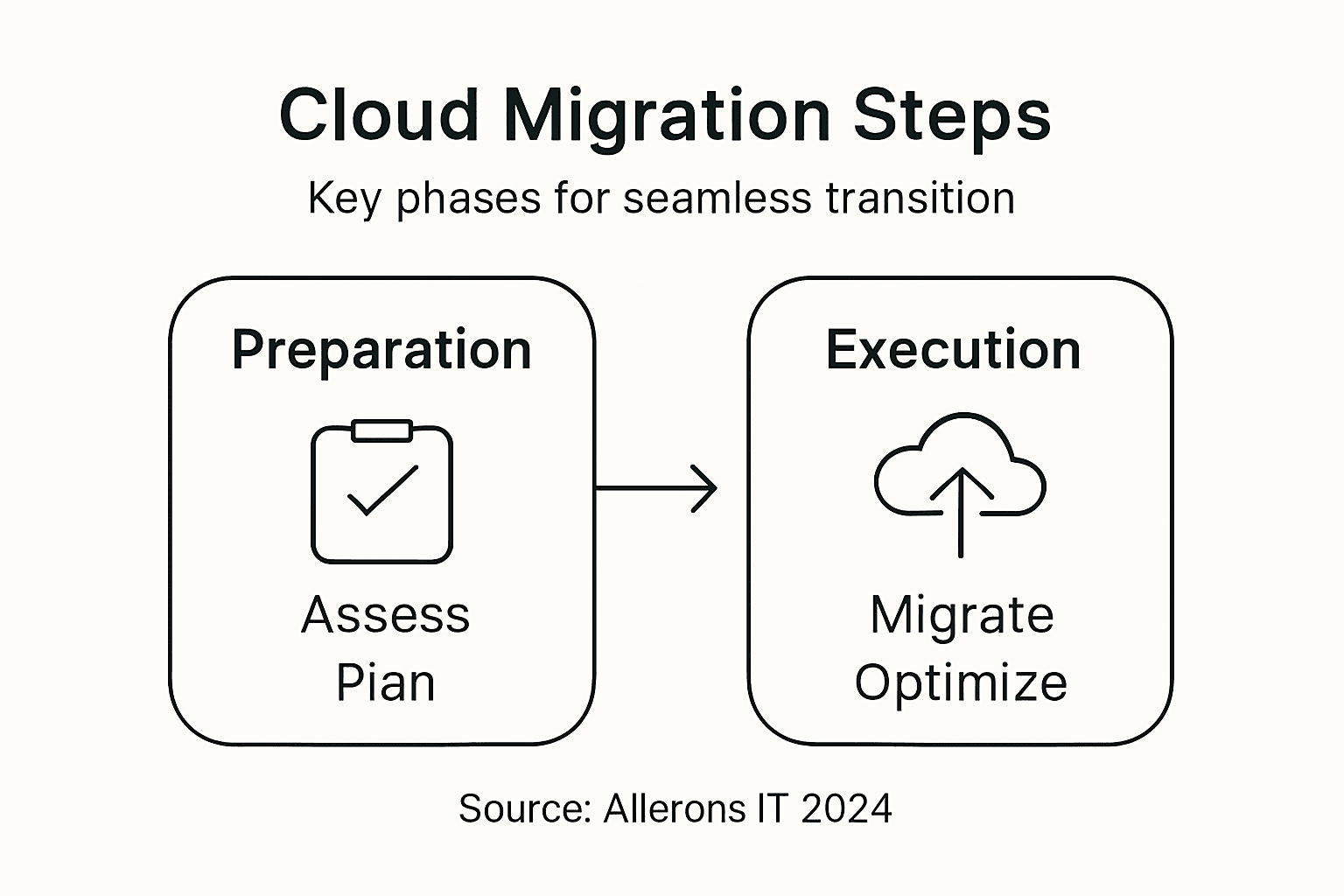
Pro tip: Build flexibility into your migration timeline by including 20 percent buffer time for unexpected technical challenges or performance tuning requirements.
Step 3: Select Cloud Provider and Configure Environment
Choosing the right cloud provider is a critical decision that will shape your entire digital infrastructure. Strategic cloud provider selection requires careful evaluation of multiple factors beyond just pricing and basic service offerings.
Begin by conducting a comprehensive assessment of potential cloud providers. Examine their service breadth, security protocols, compliance capabilities, and innovation track records. Cloud environment configuration involves more than just technical specifications it demands alignment with your specific business objectives. Consider factors like geographic data center locations, integration capabilities with your existing systems, scalability options, and long term support structures. Create a detailed comparison matrix that ranks providers across key criteria such as performance metrics, cost structure, security features, and specialized services relevant to your industry.
Once you have selected your primary provider, focus on creating a secure and optimized cloud environment. This means meticulously configuring network architecture, establishing robust identity and access management protocols, and implementing comprehensive compliance controls. Pay special attention to network segmentation, encryption standards, and access permissions. Set up monitoring tools that provide real time visibility into your cloud infrastructure performance and security posture.
Pro tip: Request detailed technical documentation and conduct a proof of concept migration with your shortlisted cloud providers to validate their actual performance against your specific organizational requirements.
Step 4: Migrate Data and Applications Securely
Secure data migration is the critical bridge between your existing infrastructure and cloud environment. Application migration strategies require meticulous planning and execution to ensure data integrity and minimal operational disruption.
Begin by selecting the appropriate migration method for each application and dataset. Some workloads might benefit from lift and shift approaches while others require more complex refactoring or replatforming. Utilize specialized migration tools that provide encrypted data transfer channels and comprehensive compatibility checks. Implement multi stage migration processes where you first create test environments to validate application performance and data integrity before full production migration. This approach allows you to identify potential compatibility issues network configuration challenges and performance bottlenecks before they impact your core business operations.
As you execute the migration ensure comprehensive security protocols are in place. This means implementing end to end encryption during data transfer establishing strict access controls and maintaining detailed migration logs for compliance and auditing purposes. Verify data integrity at each migration stage through checksums and validation processes. Pay special attention to sensitive information ensuring that all data transformations comply with your organizations security standards and relevant regulatory requirements.
Pro tip: Conduct a comprehensive data mapping exercise before migration to identify and classify sensitive information ensuring targeted encryption and access controls throughout the transfer process.
This table compares three common cloud migration strategies:
| Strategy | When to Use | Main Benefits | Key Considerations |
|---|---|---|---|
| Lift and Shift | Minimal changes needed | Quick migration, lower risk | May limit optimization |
| Refactoring | Needs feature improvements | Modern app capabilities | Higher complexity, cost |
| Replatforming | Partial updates to apps | Balanced cost and performance | Requires platform expertise |
Step 5: Test, Validate, and Optimize Cloud Performance
Cloud performance testing is your strategic checkpoint to ensure smooth and efficient operations after migration. Performance testing strategies are essential for understanding how your applications will function in the new cloud environment.
Begin with comprehensive performance testing that simulates real world scenarios. This means conducting load tests to understand system behavior under peak usage conditions, stress tests to identify breaking points, and scalability assessments to verify your infrastructure can handle growth. Use automated testing tools that can generate complex traffic patterns and simulate multiple user scenarios. Focus on key performance metrics like response time, resource utilization, network latency, and transaction processing speed. Create baseline measurements during initial testing and continuously compare subsequent performance to identify potential bottlenecks or degradation.
Optimization is an ongoing process that requires continuous monitoring and strategic resource allocation. Cloud performance improvement demands regular review of your cloud resources. Implement cloud native monitoring solutions that provide real time insights into application performance, resource consumption, and potential inefficiencies. Configure automatic scaling mechanisms that can dynamically adjust computing resources based on workload demands. This approach ensures you are not over provisioning expensive resources during low traffic periods while maintaining performance during high demand scenarios.
Pro tip: Develop a performance baseline before migration and create a regular optimization schedule to proactively identify and address potential performance issues before they impact user experience.
Streamline Your Cloud Migration Journey with Expert IT Support
Migrating your business to the cloud is a complex endeavor that demands careful planning, risk assessment, and ongoing optimization. This article highlights crucial steps like cloud readiness evaluation, detailed migration planning, and secure data transfer, reflecting the challenges many businesses face: avoiding downtime, ensuring compliance, and maximizing performance. If these pain points resonate with you, partnering with experienced IT consultants can make all the difference.
At Ailerons IT, we specialize in guiding small to medium-sized businesses through each phase of cloud migration. Our services include tailored cloud readiness assessments, customized migration strategies, and performance optimization to align your technology with your unique business goals. Take the uncertainty out of your cloud move and leverage our expertise for a seamless transition.
Thinking about your next move? Discover how our proven approach to cloud migration planning can help you minimize risks and accelerate your cloud adoption.

Get started today with a personalized consultation at Ailerons IT. Let us help you transform your IT infrastructure into a scalable, secure cloud environment that empowers your business growth.
Frequently Asked Questions
What is a cloud readiness evaluation and why is it important?
A cloud readiness evaluation assesses your current IT environment to identify challenges and ensure a smooth transition to the cloud. Begin by conducting a detailed inventory of your existing infrastructure, which helps pinpoint potential roadblocks and align your migration with business objectives.
How do I create a detailed migration plan and timeline?
To create an effective migration plan, categorize your applications based on their complexity and business impact. Establish a sequential migration strategy with specific milestones and responsibilities, aiming to complete initial migrations within 30 to 60 days to minimize disruption.
What factors should I consider when selecting a cloud provider?
When selecting a cloud provider, evaluate their service range, security capabilities, and compliance with your industry’s regulations. Develop a comparison matrix that ranks each provider based on performance, cost, and features to ensure alignment with your business goals.
What steps should I take to ensure secure data migration?
To ensure secure data migration, select the appropriate method for each application and implement encryption during data transfer. Conduct a comprehensive data mapping exercise to identify sensitive information and establish strict access controls throughout the migration process.
How can I test and optimize cloud performance after migration?
After migration, conduct performance testing for load handling and network latency to identify potential issues. Continuously monitor application performance and establish a regular optimization schedule to maintain efficiency and user experience.