

Operations managers and IT leaders in healthcare, legal, and financial services face a persistent challenge: maintaining efficient workflows while meeting stringent compliance requirements. Manual processes create bottlenecks, increase error rates, and limit scalability. Agentic AI offers a solution by automating multi-step tasks with reasoning and decision logic, but successful implementation requires a structured approach. This guide provides a practical, phased workflow specifically designed for SMBs and mid-market organizations operating in regulated environments, helping you deploy intelligent automation that enhances productivity without compromising compliance.
Table of Contents
- Key takeaways
- Understanding prerequisites and preparing for agentic AI implementation
- Executing the phased 90-day agentic AI implementation roadmap
- Maintaining compliance and security throughout implementation and operation
- Enhance your agentic AI implementation with expert support
- Frequently asked questions
Key Takeaways
| Point | Details |
|---|---|
| 90 day roadmap | A phased ninety day plan accelerates adoption by breaking work into manageable stages with clear milestones. |
| Risk led design | In regulated sectors risk led design defines what AI can do autonomously and when human approval is required. |
| Orchestrated oversight | Effective agentic systems coordinate specialized agents and human review to handle exceptions and maintain accountability. |
| PHI sanitization and audits | Implement PHI and PII data sanitization along with audit trails to minimize exposure and support compliance audits. |
| SMB productivity gains | Structured automation yields meaningful productivity improvements and cost savings for SMBs while maintaining regulatory controls. |
Understanding prerequisites and preparing for agentic AI implementation
Before launching your agentic AI initiative, you need solid groundwork. Start by identifying workflows with high ROI potential and significant compliance impact. Look for repetitive, rule-based processes that consume substantial staff time: appointment scheduling, document routing, billing reconciliation, or compliance reporting. These represent ideal candidates for initial automation.
Assess your current technology infrastructure. Document available APIs, database access points, and integration capabilities across your CRM, ERP, scheduling, and document management systems. Agentic AI works best when it can connect seamlessly with existing tools rather than requiring wholesale replacement. Catalog data formats, authentication methods, and any legacy systems that may need middleware.
Define compliance boundaries early. In regulated sectors, risk-led design phases establish clear parameters for what AI agents can and cannot do autonomously. Work with legal and compliance teams to map sensitive data flows, establish escalation procedures, and determine which decisions require human approval. For healthcare organizations, this means defining how agents handle protected health information. Financial services firms must specify transaction approval thresholds and audit requirements.
Implement foundational security controls before deployment:
- Attribute-based access control (ABAC) to enforce granular permissions based on user roles, data sensitivity, and context
- Data sanitization protocols for PHI and PII to prevent unauthorized exposure
- Audit trail mechanisms that log every agent action, decision, and data access
- Exception handling procedures that route edge cases to human operators
Engage stakeholders across IT, operations, legal, and compliance departments. Each group brings critical perspective: IT understands technical constraints, operations knows workflow pain points, legal identifies regulatory requirements, and compliance validates control effectiveness. This cross-functional alignment prevents costly mid-project pivots.
Pro Tip: Create a compliance matrix that maps each workflow step to relevant regulations and required controls. This becomes your implementation checklist and helps demonstrate due diligence to auditors.
Prepare your team for the shift from task execution to AI oversight. Staff will transition from performing routine work to managing exceptions, validating outputs, and refining agent instructions. This requires training on how agentic systems make decisions and when human judgment remains essential. Understanding AI compliance and security standards helps teams recognize their role in maintaining system integrity. Clear communication about job evolution rather than elimination builds support and reduces resistance.
Executing the phased 90-day agentic AI implementation roadmap
The 90-day implementation roadmap breaks deployment into manageable phases with clear deliverables. This structured approach reduces risk while building organizational confidence in agentic AI capabilities.
Phase 1: Audit and validation (Weeks 1-2)
- Conduct workflow analysis to identify bottlenecks, handoffs, and decision points in target processes
- Document current performance metrics including cycle time, error rates, and resource consumption
- Validate technical readiness by testing API connections and data access across integrated systems
- Establish baseline measurements for comparison after implementation
- Define success criteria with specific, measurable targets for efficiency and compliance
During this phase, you create the blueprint for your agentic AI system. Map each workflow step, noting where agents will operate autonomously and where human oversight is required. Identify data sources, decision logic, and output destinations. This detailed documentation becomes your implementation specification.
Phase 2: Pilot deployment (Weeks 3-4)
- Select one high-ROI workflow with manageable complexity for initial deployment
- Configure the orchestrator agent to coordinate task assignment and monitor execution
- Deploy specialized agents for specific functions like data extraction, validation, or system updates
- Implement human-in-the-loop checkpoints at critical decision points
- Run parallel processing where agents handle tasks alongside existing manual processes
- Monitor performance daily and collect feedback from staff interacting with the system
The pilot phase proves concept viability without full organizational commitment. Choose a workflow where failure has limited consequences but success demonstrates clear value. Healthcare organizations might automate appointment reminders with escalation for complex scheduling conflicts. Legal firms could deploy document intake and initial classification with attorney review before filing.
Phase 3: Optimization and scaling (Months 2-3)
- Analyze pilot results against baseline metrics and success criteria
- Refine agent instructions based on error patterns and exception frequency
- Optimize orchestration logic to improve task routing and resource allocation
- Expand to 2-3 additional workflows using lessons learned from the pilot
- Implement retry mechanisms and schema enforcement to improve reliability
- Establish ongoing monitoring procedures and performance dashboards
| Implementation Phase | Duration | Key Activities | Success Indicators |
|---|---|---|---|
| Audit and validation | 2 weeks | Workflow mapping, technical validation, baseline metrics | Complete documentation, stakeholder alignment |
| Pilot deployment | 2 weeks | Single workflow automation, parallel processing, feedback collection | System operational, initial efficiency gains |
| Optimization and scaling | 8 weeks | Performance refinement, multi-workflow expansion, monitoring setup | 30%+ efficiency improvement, reduced error rates |
The orchestrator serves as the central coordinator, assigning tasks to specialized agents based on workflow requirements and current system state. When a document arrives, the orchestrator might route it to a classification agent, then a data extraction agent, then a validation agent, and finally a filing agent. Each specialized agent focuses on its specific function while the orchestrator maintains overall workflow coherence.

Integration with existing tools happens through APIs and webhooks. Agents authenticate using service accounts with least-privilege access, retrieve necessary data, perform their assigned tasks, and update systems with results. This approach preserves your current technology investments while adding intelligent automation on top.
Pro Tip: Implement comprehensive logging from day one. Detailed logs of agent decisions, data accessed, and actions taken become invaluable for troubleshooting, compliance audits, and continuous improvement.
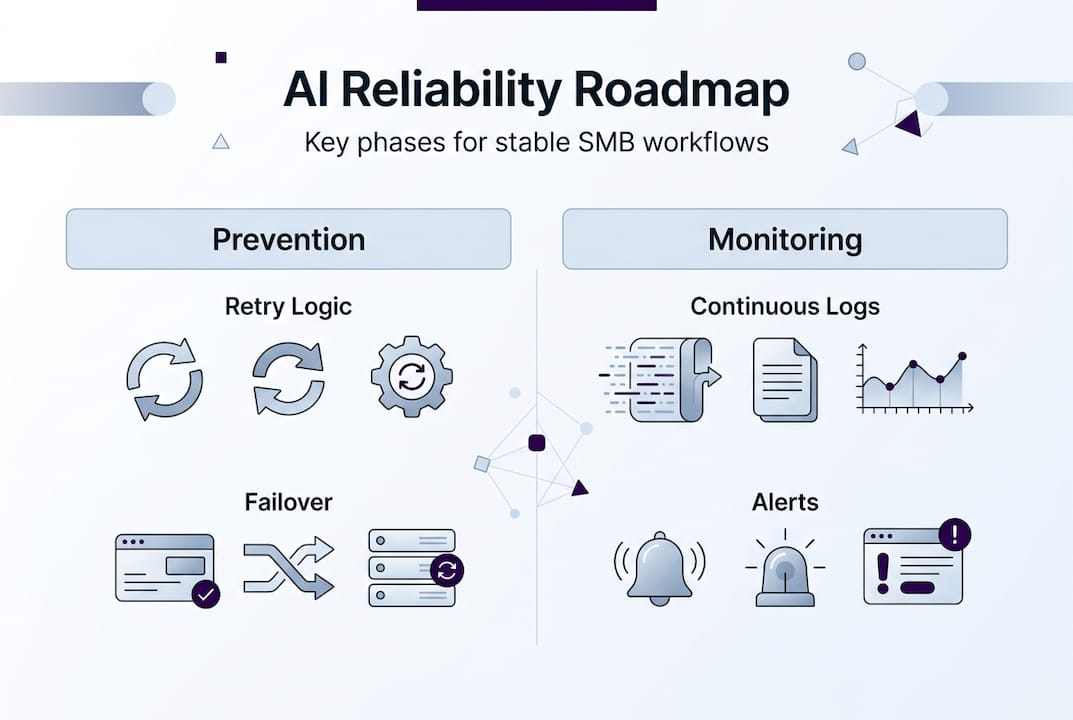
Reliability mechanisms prevent cascading failures. Retry logic handles temporary system unavailability or network issues. Schema enforcement validates data before processing to catch format errors early. Circuit breakers prevent repeated attempts when a service is genuinely down. These patterns, borrowed from software engineering, make agentic AI systems production-ready rather than fragile prototypes. Exploring AI trends in office operations reveals how leading organizations build resilient automation architectures. Understanding agentic AI workflow automation provides additional implementation insights specific to regulated environments.
Maintaining compliance and security throughout implementation and operation
Compliance cannot be an afterthought in regulated industries. Embedding controls during the build phase prevents costly retrofits and reduces deployment risk. The 3-phase agentic workflow design emphasizes risk assessment before, during, and after implementation.
Start with adversarial testing before production deployment. Deliberately feed agents malformed data, edge cases, and scenarios designed to trigger errors. Document how the system handles each situation. Does it fail gracefully? Does it escalate appropriately? Does it maintain data integrity? This proactive testing identifies vulnerabilities while they are still easy to fix.
Implement attribute-based access control (ABAC) to enforce granular permissions. Unlike role-based access control, ABAC considers multiple attributes: user role, data classification, time of access, location, and action requested. An agent might access patient demographics for appointment scheduling but be blocked from viewing clinical notes. ABAC, PHI sanitization, and audit trails form the foundation of HIPAA-compliant AI systems.
Data sanitization protects sensitive information:
- Redact PHI and PII before agents process data for analytics or reporting
- Use tokenization to replace sensitive values with non-sensitive equivalents
- Implement encryption for data at rest and in transit
- Establish data retention policies that automatically purge unnecessary information
- Apply differential privacy techniques when aggregating data across records
Audit trails provide transparency and accountability. Log every agent action with sufficient detail to reconstruct decision logic. Capture timestamps, data accessed, rules applied, and outputs generated. These logs serve multiple purposes: compliance documentation, performance analysis, and incident investigation. Regulators increasingly expect organizations to explain AI decisions, making comprehensive logging essential.
Human-in-the-loop oversight maintains control over critical decisions. Define clear escalation criteria: transaction amounts exceeding thresholds, data quality below acceptable levels, or situations not covered by existing rules. When agents encounter these scenarios, they pause and request human review. This hybrid approach combines AI efficiency with human judgment.
| Aspect | Traditional Workflows | Agentic AI Workflows |
|---|---|---|
| Compliance monitoring | Manual audits, periodic reviews | Continuous automated monitoring with real-time alerts |
| Data protection | Access controls, manual redaction | ABAC, automated sanitization, encryption by default |
| Audit trails | Incomplete logs, manual documentation | Comprehensive automated logging of all actions |
| Exception handling | Inconsistent, depends on individual judgment | Standardized escalation with documented decision logic |
| Regulatory reporting | Time-consuming manual compilation | Automated generation from structured audit data |
Continuous monitoring detects drift and degradation. Agent performance may decline as data patterns change or integrated systems evolve. Establish dashboards that track key metrics: task completion rates, error frequency, escalation volume, and processing time. Set alerts for anomalies that indicate potential issues. Continuous monitoring in multi-agent workflows prevents small problems from becoming major failures.
Regular compliance reviews validate ongoing adherence to requirements. Schedule quarterly assessments where compliance staff examine agent logs, test control effectiveness, and verify policy alignment. Document findings and remediation actions. This proactive approach demonstrates due diligence and catches issues before external audits. Resources on secure AI systems compliance and process automation with compliance focus provide additional guidance for maintaining regulatory standards.
Explainability mechanisms help stakeholders understand agent decisions. Implement logging that captures not just what agents did but why they made specific choices. When an agent denies a request or escalates a case, the explanation should reference specific rules, data conditions, or thresholds. This transparency builds trust and simplifies compliance demonstrations.
Enhance your agentic AI implementation with expert support
Implementing agentic AI successfully requires both technical expertise and industry-specific knowledge. Ailerons specializes in deploying compliant, efficient agentic AI systems for healthcare, legal, and financial services organizations. Our team understands the unique challenges of regulated environments and designs solutions that enhance productivity without compromising security.
Explore detailed case studies showing how similar organizations achieved measurable results through thoughtful agentic AI implementation. These real-world examples demonstrate practical approaches to common challenges and provide insight into realistic timelines and outcomes.
Our consulting services guide you through every phase: workflow analysis, architecture design, pilot deployment, optimization, and scaling. We bring proven frameworks that accelerate implementation while reducing risk. Rather than learning through trial and error, you benefit from established best practices refined across multiple engagements.
Whether you are exploring agentic AI possibilities or ready to begin implementation, Ailerons provides the expertise and support needed to transform operations while maintaining compliance. Connect with our team to discuss your specific requirements and develop a customized roadmap for your organization.
Frequently asked questions
What is an agentic AI implementation workflow?
An agentic AI implementation workflow is a structured process for deploying AI systems that autonomously reason, plan, and execute multi-step tasks across business operations. Unlike traditional automation that follows rigid scripts, agentic AI adapts to context, makes decisions based on defined logic, and coordinates multiple specialized agents to complete complex workflows from start to finish.
How long does agentic AI implementation typically take?
Most SMB implementations follow a 90-day phased approach: two weeks for workflow audit and validation, two weeks for pilot deployment of a single workflow, and eight weeks for optimization and scaling to additional processes. Organizations with complex compliance requirements or legacy system integration challenges may extend the timeline, while those with modern infrastructure and clear workflows can sometimes accelerate.
How do you ensure compliance during agentic AI implementation?
Compliance is embedded through risk-led design that defines boundaries and controls before deployment. Key practices include implementing attribute-based access control, sanitizing sensitive data, maintaining comprehensive audit trails, establishing human-in-the-loop oversight for critical decisions, and conducting adversarial testing before production launch. Continuous monitoring and quarterly compliance reviews maintain standards over time.
What benefits do SMBs see from agentic AI workflows?
SMBs typically report 30-40% productivity improvements in automated workflows, significant reductions in error rates, faster cycle times for routine processes, and better resource allocation as staff shift from repetitive tasks to higher-value work. Healthcare organizations see improved appointment scheduling and billing accuracy, while legal and financial services firms benefit from faster document processing and enhanced compliance monitoring.
Where can I learn more about agentic AI trends and best practices?
Stay current with evolving agentic AI capabilities and implementation strategies by exploring resources focused on AI trends in professional services, which cover emerging patterns, technology developments, and practical applications across regulated industries. Industry publications, vendor case studies, and consulting firms specializing in AI implementation provide additional insights into successful deployment approaches.
Recommended
- Step by Step Business Automation Guide for SMBs | Ailerons IT Consulting
- Step-by-Step Guide to AI-Driven Office Automation Success | Ailerons IT Consulting
- Process Automation Tutorial for Agentic AI in Compliance Workflows | Ailerons IT Consulting
- Improving Business Workflows with AI: Achieve Automation | Ailerons IT Consulting